

Table of Contents
- The Reality of Competing in Oregon’s Saturated Service Market
- The Numbers Don’t Lie: Local SEO Drives Real Revenue
- Why Guesswork SEO Fails—and How Lithium Marketing Uses Data to Win
- Why Oregon Service Businesses Need a Specialized Local SEO Partner
- Inside Lithium Marketing’s Client-First SEO Framework
- Key Takeaways
Oregon’s digital marketplace has become a battleground where visibility equals survival. With over 394,000 small businesses competing for customer attention—representing 99.4% of all enterprises in the state—local service providers face an unprecedented challenge: how do you stand out when everyone is fighting for the same Google search results?
The answer lies not in louder advertising or bigger billboards, but in strategic dominance of local search results. Modern consumers in Portland, Eugene, and Salem have fundamentally changed how they find and vet service providers. When your water heater breaks at midnight or your HVAC system fails during a heatwave, you’re not flipping through the Yellow Pages—you’re searching Google on your smartphone.
The statistics are striking: 76% of people who search for something nearby on their smartphones visit a business within a day, and 28% of those searches result in a purchase. This isn’t just a trend—it’s the new reality of customer acquisition. Traditional marketing tactics like print ads, radio spots, and generic SEO strategies are delivering diminishing returns in this saturated digital landscape.
Lithium Marketing has built its reputation on understanding this fundamental shift. Unlike generalist agencies that treat every client the same, Lithium specializes exclusively in helping Oregon service businesses—plumbers, HVAC technicians, electricians, and other local service providers—dominate their markets through hyper-localized, conversion-focused SEO methodology.
This article examines why Lithium Marketing’s data-driven, local-first SEO approach makes them the top choice for Oregon service businesses looking to achieve predictable, measurable growth in an increasingly competitive market.
The Reality of Competing in Oregon’s Saturated Service Market

The sheer density of Oregon’s small business ecosystem creates what industry experts call a “visibility crisis.” With 394,000+ small businesses competing for the same local search queries, the digital landscape has become exponentially more challenging. In Portland alone, dozens of plumbers, electricians, and HVAC companies are vying for the same “near me” searches that drive high-intent customers.
This saturation fundamentally changes the game. A decade ago, simply having a website and a listing on Yelp might have been enough. Today, if your business isn’t appearing in the top three Google Map Pack results—those coveted local listings that appear at the top of search results—you’re essentially invisible to the majority of potential customers actively looking for your services.
Consumer behavior has undergone a massive shift away from traditional outbound marketing. Direct mail campaigns, radio advertisements, and print ads have been largely replaced by digital search as the primary customer acquisition channel. The numbers tell the story: 87% of consumers use Google to evaluate local businesses, and an overwhelming 98% read online reviews at least occasionally when considering a service provider.
Key Insight: The visibility gap isn’t just about being online—it’s about being found at the exact moment when customers are ready to make a purchasing decision.
This behavioral shift creates both a challenge and an opportunity. The challenge is clear—competition for those top search positions has never been fiercer. The opportunity, however, belongs to businesses that understand how to leverage modern SEO strategies designed specifically for local service companies.
When someone searches “emergency plumber Portland” or “24-hour HVAC repair near me,” they’re not casually browsing—they’re ready to hire. Missing out on these high-intent searches means leaving money on the table for competitors who have invested in proper local SEO.
The Numbers Don’t Lie: Local SEO Drives Real Revenue
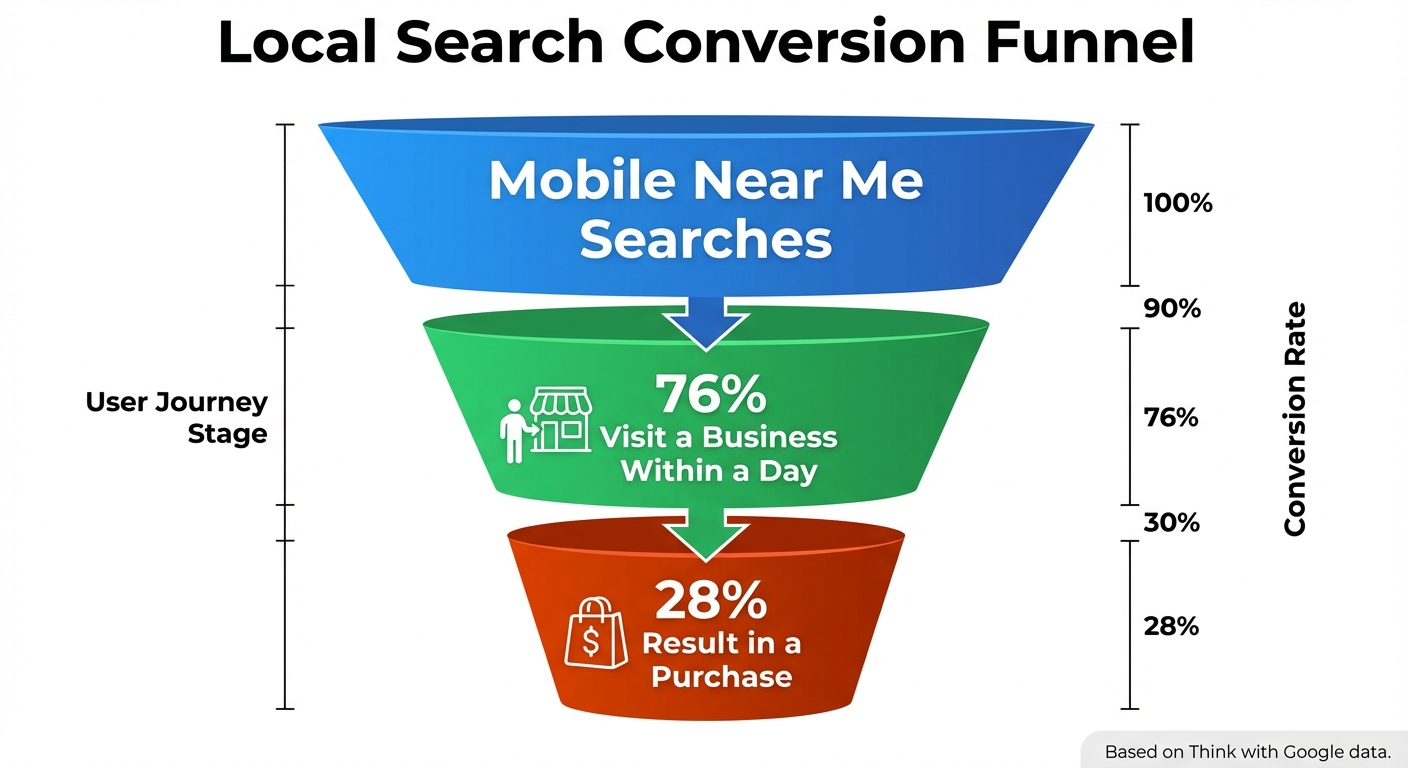
The statistical case for prioritizing local SEO isn’t just compelling—it’s overwhelming. When we examine conversion data and consumer behavior research, a clear picture emerges: local SEO must be the primary marketing focus for service businesses operating in competitive markets like Oregon.
The conversion pathway starts with mobile search. 76% of people who conduct a “near me” search on their smartphone visit a business within 24 hours. Even more impressive, 28% of those searches convert directly into purchases or service bookings. This represents an extraordinarily high conversion rate compared to traditional advertising channels, where conversion rates typically hover in the single digits.
Understanding Google’s Local Ranking Factors
Google’s local algorithm evaluates businesses based on three core factors:
- Proximity: How close your business is to the searcher’s location
- Relevance: How well your business matches what the searcher is looking for
- Prominence: How well-known and reputable your business is, based on factors like reviews, citations, and backlinks
The Google Map Pack—those top three local results that appear with map pins—captures the lion’s share of clicks and calls. Studies consistently show that businesses ranking in these positions receive exponentially more traffic than those appearing further down the page or on subsequent pages. The difference between position three and position four in local results can mean the difference between a thriving business and one struggling to fill its schedule.
Important Distinction: E-commerce SEO and local service SEO operate under entirely different principles. A strategy that works for selling products online will fail miserably for a plumber trying to rank for local service calls.
Local SEO requires dedicated Google Business Profile optimization, hyper-localized content creation, strategic review management, and technical implementation of local business schema markup.
Perhaps most sobering is the finding from Ahrefs’ comprehensive study of over one billion web pages: 90.63% of all web pages receive zero organic search traffic from Google. The primary culprits? Poor strategy, lack of authoritative backlinks, and content that fails to match user intent. This statistic underscores why working with an agency that understands the nuances of local SEO isn’t just beneficial—it’s essential for survival in today’s digital marketplace.
Why Guesswork SEO Fails—and How Lithium Marketing Uses Data to Win
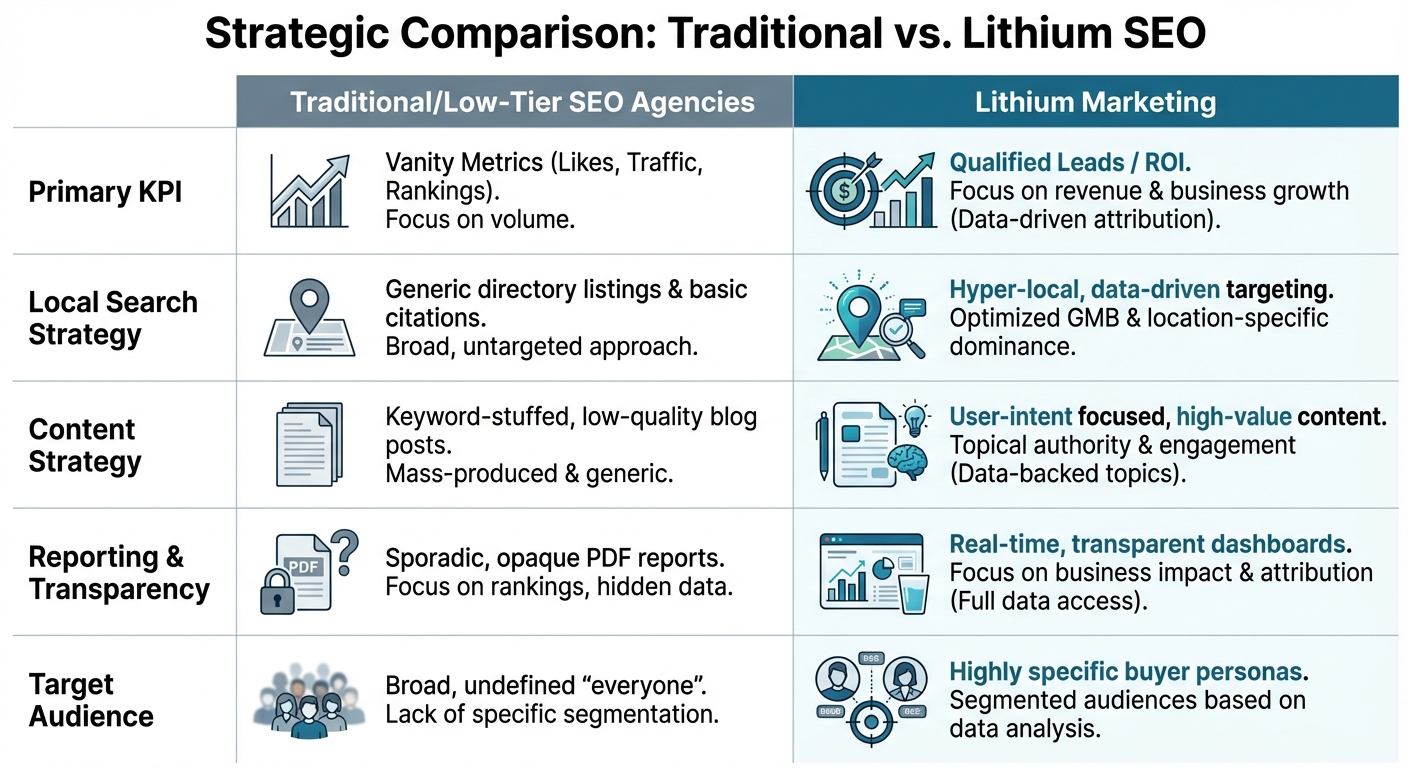
The digital marketing industry has long been plagued by outdated tactics that produce vanity metrics without real business results. Traditional SEO agencies often focus on keyword rankings as their primary success metric, celebrating page one positions for terms that may never generate a single phone call or service booking.
This “spray and pray” approach typically involves keyword stuffing, pumping out high volumes of generic blog posts, and building low-quality directory citations. The result? Websites that rank for irrelevant terms, attract unqualified traffic, and fail to convert visitors into paying customers.
Lithium Marketing’s Three Data-Driven Pillars
Lithium Marketing takes a fundamentally different approach grounded in three data-driven pillars:
| Strategy Component | Description | Business Impact |
|---|---|---|
| Entity-Based SEO & NLP | Structures content around Google’s semantic understanding, ensuring comprehensive expertise in service areas | Higher rankings for relevant topical queries |
| Conversion Rate Optimization | Tracks user behavior, implements call tracking, optimizes based on lead quality | More qualified leads and higher ROI |
| Technical SEO Excellence | Addresses Core Web Vitals, implements structured data, optimizes site architecture | Better user experience and crawling efficiency |
Entity-Based SEO & Natural Language Processing: Modern search algorithms don’t just match keywords—they understand context, intent, and topical authority. Lithium structures content around Google’s semantic understanding, ensuring that your website demonstrates comprehensive expertise in your specific service area. This means creating content that includes the specific topical vectors and entity relationships that Google expects for service queries.
Conversion Rate Optimization (CRO): Rankings without conversions are meaningless. Lithium tracks user behavior flow, implements call tracking to understand which marketing channels drive qualified leads, and continuously optimizes based on lead quality—not just traffic numbers. This approach ensures that every optimization decision is tied directly to revenue impact.
Technical SEO Excellence: The foundation of successful local SEO extends far beyond content. Lithium addresses Core Web Vitals to ensure fast, responsive user experiences. They implement structured data markup—specifically LocalBusiness and Service schemas—that explicitly tell Google what services you offer, where you serve, and why you’re relevant. Site architecture is optimized for both user experience and algorithmic crawling efficiency.
The Real Difference: Traditional agencies report rankings; Lithium reports qualified leads, conversion rates, and return on investment. While other agencies celebrate moving from position seven to position five for a keyword that generates little business value, Lithium focuses on dominating high-intent queries that fill your schedule with profitable jobs.
This distinction matters enormously for service businesses with limited marketing budgets. Every dollar spent on SEO should generate measurable returns. Data-driven agencies can demonstrate exactly how their work translates into phone calls, form submissions, and booked appointments—not just improved “visibility” or “brand awareness.”
Why Oregon Service Businesses Need a Specialized Local SEO Partner
Specialization isn’t just a marketing buzzword—it’s a competitive necessity in modern SEO. Most digital marketing agencies position themselves as full-service providers capable of helping any business in any industry. This generalist approach fundamentally misunderstands the unique challenges and opportunities facing local service businesses.
Lithium Marketing has made a strategic choice to focus exclusively on local service businesses in Oregon and the broader Pacific Northwest. This specialization delivers concrete advantages:
The Advantages of Oregon-Focused Specialization
- Deep Understanding of Regional Competition: Portland metro, Eugene, Salem, and Bend each present unique competitive landscapes with different search volumes, competitor densities, and consumer behaviors. Lithium’s Oregon focus means they understand these nuances intimately—they know which neighborhoods generate the most service calls, which suburbs are underserved, and how seasonal factors impact search behavior across different regions.
- Industry-Specific Optimization Strategies: The SEO tactics that work for emergency service businesses differ significantly from those effective for scheduled maintenance services. Lithium understands how to optimize for high-intent queries like “emergency plumber Portland” or “24-hour HVAC repair near me”—searches that indicate immediate need and high likelihood of conversion.
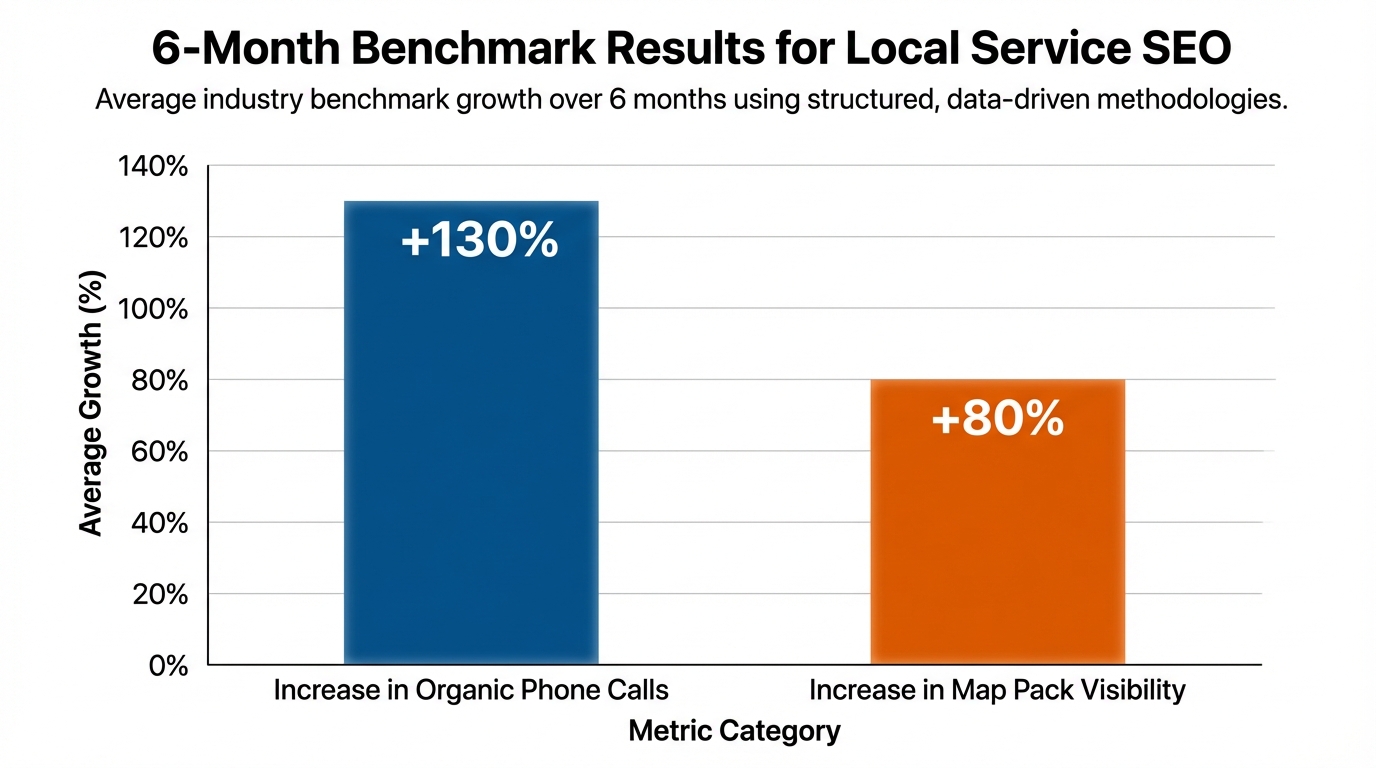
- Proven Performance Benchmarks: Agencies implementing Lithium’s structured methodologies consistently achieve impressive results. Industry benchmarks show an average 130% increase in organic phone calls within six months and over 80% increase in Google Map Pack visibility. These aren’t isolated success stories—they represent reproducible results driven by systematic, data-informed strategies.
The transparency and accountability that come with specialization also matter tremendously. Lithium provides:
- Live dashboards that show real-time performance metrics
- Clear attribution modeling that connects specific SEO activities to business outcomes
- Regular strategy pivots based on actual performance data rather than gut feelings or industry assumptions
For Oregon service businesses evaluating SEO partners, the question isn’t whether you need local SEO—the data makes that answer obvious. The question is whether you want to work with a generalist agency learning on your dime or a specialist that has already mapped the path to success in your specific market.
Inside Lithium Marketing’s Client-First SEO Framework

Understanding what separates exceptional SEO from mediocre execution requires examining the specific tactical elements that drive results. Lithium Marketing’s service delivery framework consists of several interconnected components:
Core Service Components
Google Business Profile (GBP) Mastery: Your GBP listing is often the first impression potential customers have of your business. Lithium goes far beyond basic profile setup. They implement advanced optimization techniques including:
- Geo-grid tracking to monitor rankings across multiple locations
- Strategic review generation programs that build social proof
- Regular profile updates that signal activity and relevance to Google’s algorithms
Hyper-Localized Content Strategy: Generic blog posts about industry trends don’t drive phone calls. Lithium creates intent-mapped service pages that target specific geographic areas and service combinations. Instead of a single “Services” page, they build dedicated pages like /portland-emergency-plumber or /salem-hvac-repair that speak directly to the searches your ideal customers are actually conducting.
Actionable Tip
Create separate landing pages for each service-location combination you want to rank for. A page optimized for “Portland emergency plumbing” will significantly outperform a generic services page trying to rank for everything.
Authentic Link Building: The PNW business community offers unique opportunities for building legitimate, valuable backlinks. Lithium helps clients establish relationships through:
- Local sponsorships
- Business association memberships
- Strategic partnerships—not spammy directory submissions that Google devalues
These authentic links signal regional relevance and authority.
Schema Implementation Excellence: Structured data tells search engines exactly what services you offer, where you operate, and why you’re relevant for specific queries. Lithium implements comprehensive schema markup that gives your business maximum visibility in search results, including eligibility for rich snippets and enhanced local listings.
Continuous Optimization Culture: SEO isn’t a set-it-and-forget-it strategy. Lithium conducts monthly performance reviews, runs A/B tests on landing pages and call-to-action elements, and responds proactively to algorithm updates. This continuous improvement approach ensures your SEO investment delivers compounding returns over time.
The combination of these elements creates a comprehensive ecosystem that dominates local search results. Each component reinforces the others—your optimized GBP listing drives traffic to intent-optimized landing pages, which convert visitors through strategically tested elements, while authentic local links and proper schema implementation boost your visibility across all platforms.
Key Takeaways
Oregon’s competitive digital landscape demands more than generic marketing tactics—it requires specialized, data-driven SEO executed by partners who understand the unique challenges facing local service businesses.
The consumer behavior data is unambiguous: 76% of local searches lead to store visits within 24 hours, and 28% result in purchases. For service businesses, these searches represent not just potential customers, but high-intent prospects ready to hire. Missing out on this traffic means leaving predictable, profitable growth on the table.
Lithium Marketing’s empirical methodology, Oregon specialization, and transparent reporting distinguish them from agencies still relying on outdated tactics and vanity metrics. Their focus on conversion-driven results—measured in qualified leads and actual revenue rather than arbitrary rankings—provides service businesses with the accountability and ROI they need from their SEO investment.
For Oregon service business owners tired of wasted marketing budgets and disappointing results from generalist agencies, the path forward is clear. Evaluate your current SEO partner against the data-driven standards outlined here. Ask tough questions about methodology, measurement, and proven results in your specific market.
The businesses that will thrive in Oregon’s competitive service landscape aren’t necessarily the largest or oldest—they’re the ones that dominate local search results when customers are ready to hire.
Ready to Dominate Your Local Market?
If you’re ready to implement proven, data-driven SEO strategies that deliver measurable business growth, it’s time to partner with specialists who understand the Oregon market.
References:
- U.S. Small Business Administration (SBA) Office of Advocacy. (2022). Oregon Small Business Economic Profile. https://advocacy.sba.gov/wp-content/uploads/2022/08/Small-Business-Economic-Profile-OR.pdf
- Think with Google. (2019). Mobile Search Trends: Consumers to Stores. https://www.thinkwithgoogle.com/marketing-strategies/search/mobile-search-trends-consumers-to-stores/
- BrightLocal. (2023). Local Consumer Review Survey 2023. https://www.brightlocal.com/research/local-consumer-review-survey/
- Ahrefs. (2024). Search Traffic Study: Why 90.63% of Pages Get No Organic Search Traffic. https://ahrefs.com/blog/search-traffic-study/
- Search Engine Journal. (2023). A Complete Guide to Local SEO. https://www.searchenginejournal.com/local-seo/
- HubSpot. (2024). State of Marketing Report: SEO Trends and Agency Performance. https://www.hubspot.com/state-of-marketing
- Search Engine Land. (2023). How Local Service Businesses Can Dominate the Google Map Pack. https://searchengineland.com/local-seo-service-businesses-map-pack-393241