
 Glass
GlassDixie Glass
76%more conversions
January vs the January before
- ads conversion rate
- 15.57%
- ads conversion rate
- organic traffic
- +18.2%
- organic traffic
The person requesting work matters
With 75.3% of Arvada’s occupied homes owner-occupied, get web design that lets remodeling customers explain their role and the proposed work clearly.
 Google PartnerView our Partners listing
5.0on Google · read our reviews
Google PartnerView our Partners listing
5.0on Google · read our reviews
Businesses
we’ve worked with
Businesses we’ve worked with
A project request can involve several people
Lithium Marketing builds Arvada remodeling websites that help the person making an inquiry explain their connection to the project. Arvada has 49,881 occupied housing units. That count does not identify who is entitled to approve work at an individual property; the request route needs the customer’s explanation.
Consider a remodeler receiving messages from an owner, a tenant and a relative about the same proposed project. A generic quote form can leave staff unsure who should receive the response. Agree on an opening question that establishes the requester’s role without treating an inquiry as permission to begin work.
A designer query differs from a project brief
The recorded phrase “web design arvada” has 70 monthly searches, and “website design arvada” also has 70. Treat each as an agency-search estimate, without adding them into a claim about remodeling customers. The form question should come from your actual project process.
An owner may arrive ready to discuss a renovation, while a tenant wants to know whether the firm accepts an initial question. Review the service page and its request form together. Staff should receive the requester’s role and proposed work so the first reply addresses the right conversation.
| Search | Searches a month | Cost per click |
|---|---|---|
| web design arvada | 70 | not reported |
| website design arvada | 70 | not reported |
| web designer arvada | under 10 | not reported |
Source: Google Ads keyword data, average monthly U.S. searches. "Under 10" = below Google’s reporting floor.
Source: one Google results page for “plumber arvada”, as Google showed it to a searcher located in Arvada. Search ad counts exclude sponsored local listings. Results shift by searcher and day.
A housing figure cannot approve a project
Arvada’s median home value is $632,600. A home-value statistic does not supply a remodeling budget or establish what the person submitting the form can approve. Explain the firm’s first discussion and ask for the project information staff actually needs.
Across Jefferson County, 70.7% of occupied homes are owner-occupied. The county figure has a different scope from the city record. Keep property ownership separate from the visitor’s stated role, and let the responsible contractor confirm any further approval needed for a particular job.
Sources: U.S. Census Bureau 2025 population estimates, ACS 2020–2024 and 2023 County Business Patterns.
Describe the work, then the request
Jefferson County records 352 residential remodelers and 107 new home builders. Those categories describe establishments; they do not make a proposed renovation a new-build inquiry. Have the business confirm which project descriptions belong with its remodeling offer.
The trade chart cannot identify who controls a particular property or which firm should assess the work. Use your own approved service descriptions alongside actual project photographs. A clear request route should preserve the distinction between someone asking a question and someone approving a proposal.
County Business Patterns
Trade and home service businesses in Jefferson County
Establishments by industry, 2023
Source: U.S. Census Bureau, 2023 County Business Patterns (NAICS establishment counts).
Build around the first useful response
Bring a confusing project inquiry and the reply staff needed to send, so the opening form can ask a useful question.
Decide how an owner, tenant or representative should describe their involvement. Use language a visitor can answer without legal or internal terminology.
Choose the project details staff needs at first contact. Keep an initial inquiry distinct from the later assessment and approval process.
Review the service explanation and contact instructions together. A customer should know which remodeling discussion the business accepts.
Follow a sample request on a phone and check whether staff can identify the appropriate reply. Adjust a confusing prompt before the site is launched.
What every Lithium website includes
The same eight parts go into every website build, wherever the business is.
Glass company work and a carpet-and-rug owner’s account
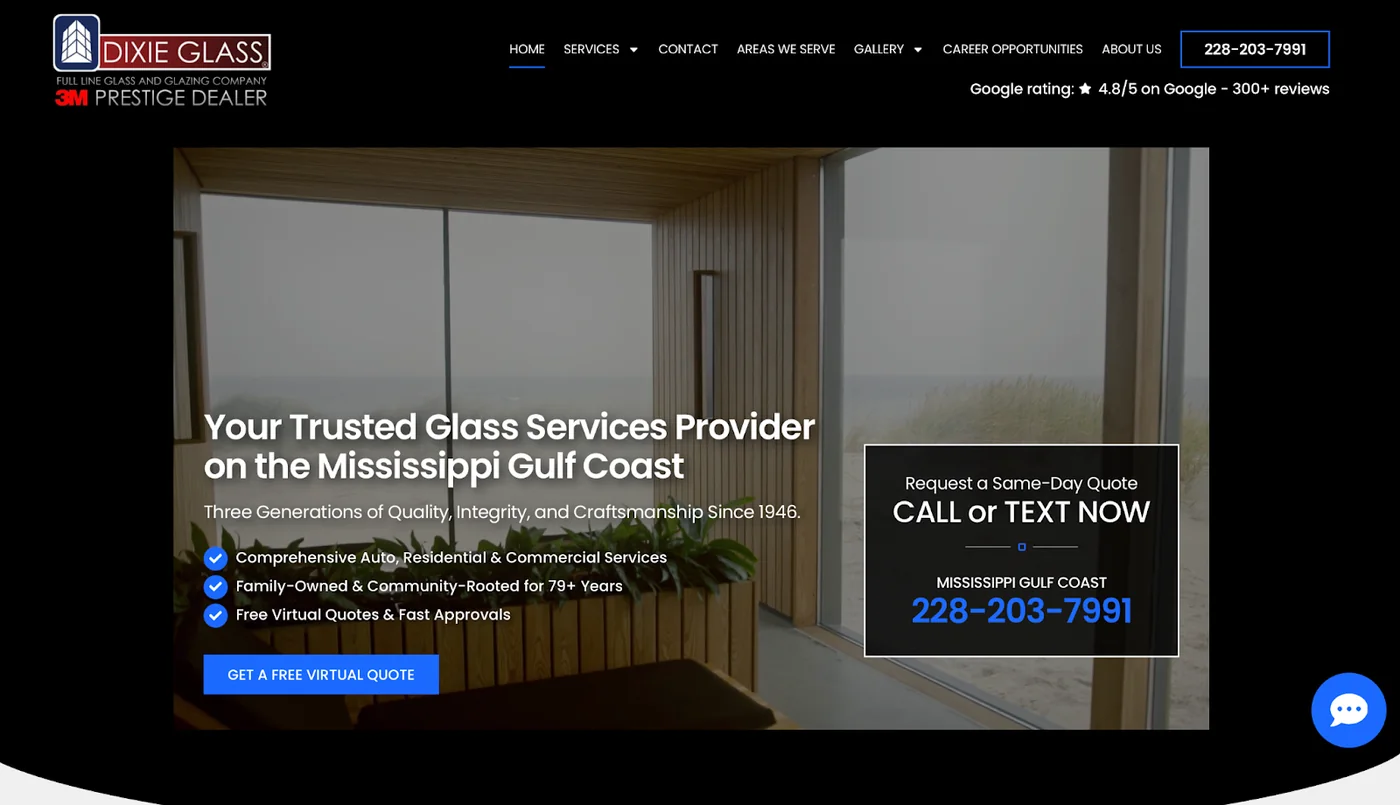
Dixie Glass serves the Mississippi Gulf Coast. Lithium’s documented program included its website, SEO and Google Ads, as the linked case explains. Kevin Atiyeh of Atiyeh Bros, a carpet and rug business, speaks separately about Lithium understanding his company. The two records describe their own work rather than a remodeling approval process.
Glass76%more conversions
January vs the January before
“Lithium Marketing has done a good job with understanding our Company and what we specialize in and applying that to our digital marketing.”
 Kevin AtiyehAtiyeh Bros Carpet
Discuss the project territory
Westminster, Lakewood, Thornton, Boulder, Denver and Highlands Ranch have linked web-design pages, followed by the Colorado page. Identify the remodeler’s working territory before choosing city references for its site; a visitor’s stated location still needs to fit the firm’s offer.
Published price
$5,000
typical project
Larger sites get a fixed proposal after a 30-minute discovery call. Six to nine weeks from kickoff to launch. You own the domain, hosting account, WordPress install and content.
FAQ

Still curious?
Call (503) 766-5964 or email [email protected].
A tenant can submit an inquiry if the business accepts that kind of conversation. The site should let them state their role without suggesting they have approved the work. The remodeler should decide what further information or authorization is needed before offering a proposal.
They should identify who is making the request and how they are involved. A relative or representative can provide context without presenting themselves as the owner. Agree on the information staff needs so the response reaches the appropriate person.
Ask for it only if it helps the business decide how to begin the discussion. Make the question understandable and avoid assigning a spending level from a property value. The actual scope and proposal remain part of the contractor’s project process.
Describe the work the photograph actually shows. If it illustrates only one service, give it that context instead of implying both. Supply real project material the firm is authorized to publish so the website can explain the offer accurately.
The business should direct it to the person responsible for that existing project. A website inquiry should not silently begin a second project discussion. Tell Lithium how the firm distinguishes a current customer’s question from a first request before finalizing the contact route.
Free action plan
Bring the project form and a request whose sender’s role was unclear. On a short video call, a co-founder can help identify the question the site should ask before staff replies.
What we’ll cover
2000 NE 42nd Ave Ste D Unit 2370, Portland, OR 97213
Prefer to pick a time? Book a 30-minute call with DJ