
Bennington Websites for Service Teams That Need Trust Early
Calm, credible pages that help visitors understand and act.
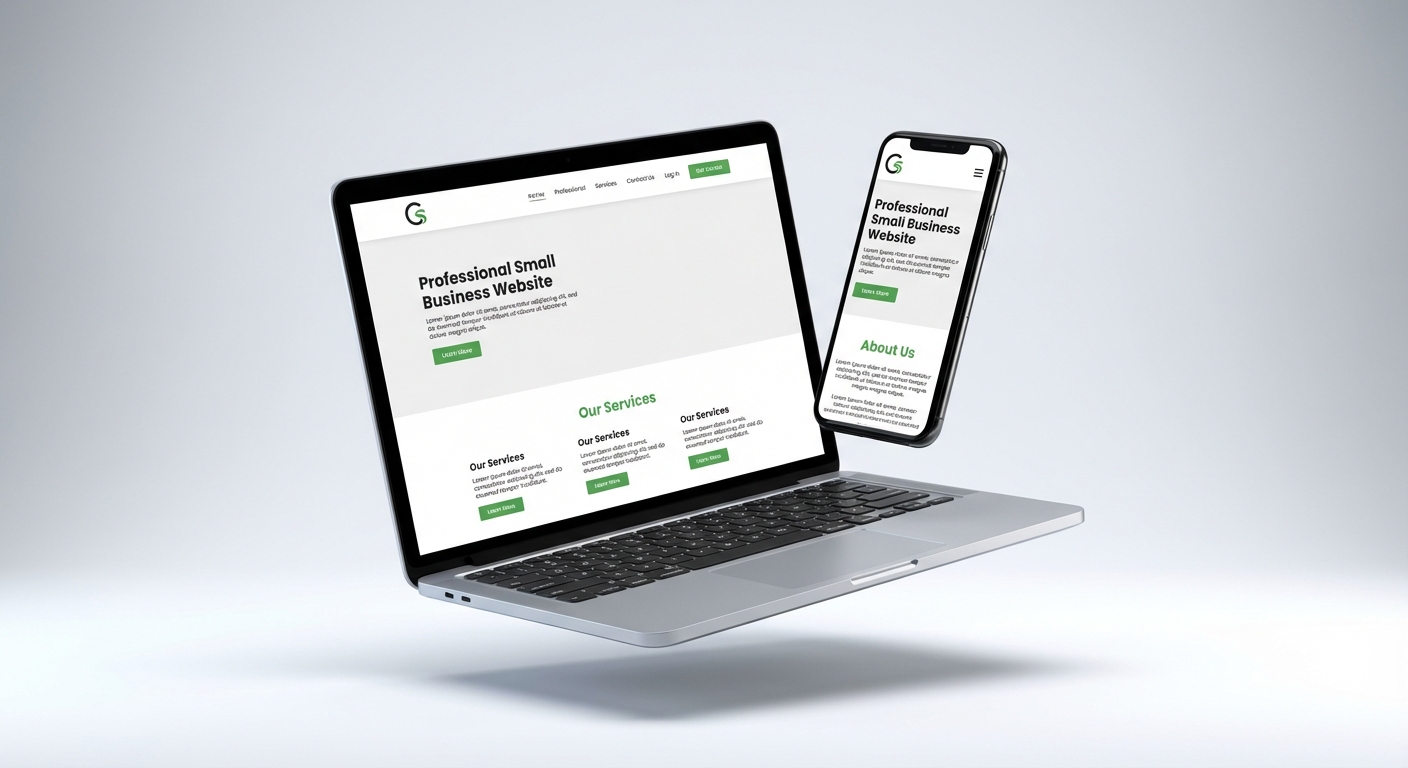
Bennington companies often rely on reputation, referrals, and practical local search working together. We design websites that explain the offer clearly, show proof before skepticism grows, and make calls, bookings, forms, or quote requests easy to start from a phone.
- Google Partner certified
- Meta Business Partner
- 5.0 ★ across 30+ Google reviews
- 100+ clients served nationwide
- $10M+ in Google Ads managed
- Marketing services since 2010
Partner
A polished site still fails when the decision feels hidden.
A Bennington visitor may be comparing a Main Street business, a trade contractor, a medical office, or a regional professional service from a phone. The site has to feel credible quickly because small-market buyers often look for proof before starting a conversation.
“ Good design removes doubt before it asks for action.
The most useful searches usually name the service first and the place second. A page has to answer those searches with enough local relevance and proof to keep the visitor from returning to the results: Bennington contractor website design or Bennington therapy practice website Those visitors need clear service pages, readable copy, proof close to the claim, and contact actions that feel simple on mobile. A refined look is useful only when it helps the decision happen.
Lithium builds the site around the moments that influence trust: the first screen, the service explanation, proof sections, forms, local search structure, accessibility, and tracking that shows which inquiries are useful.
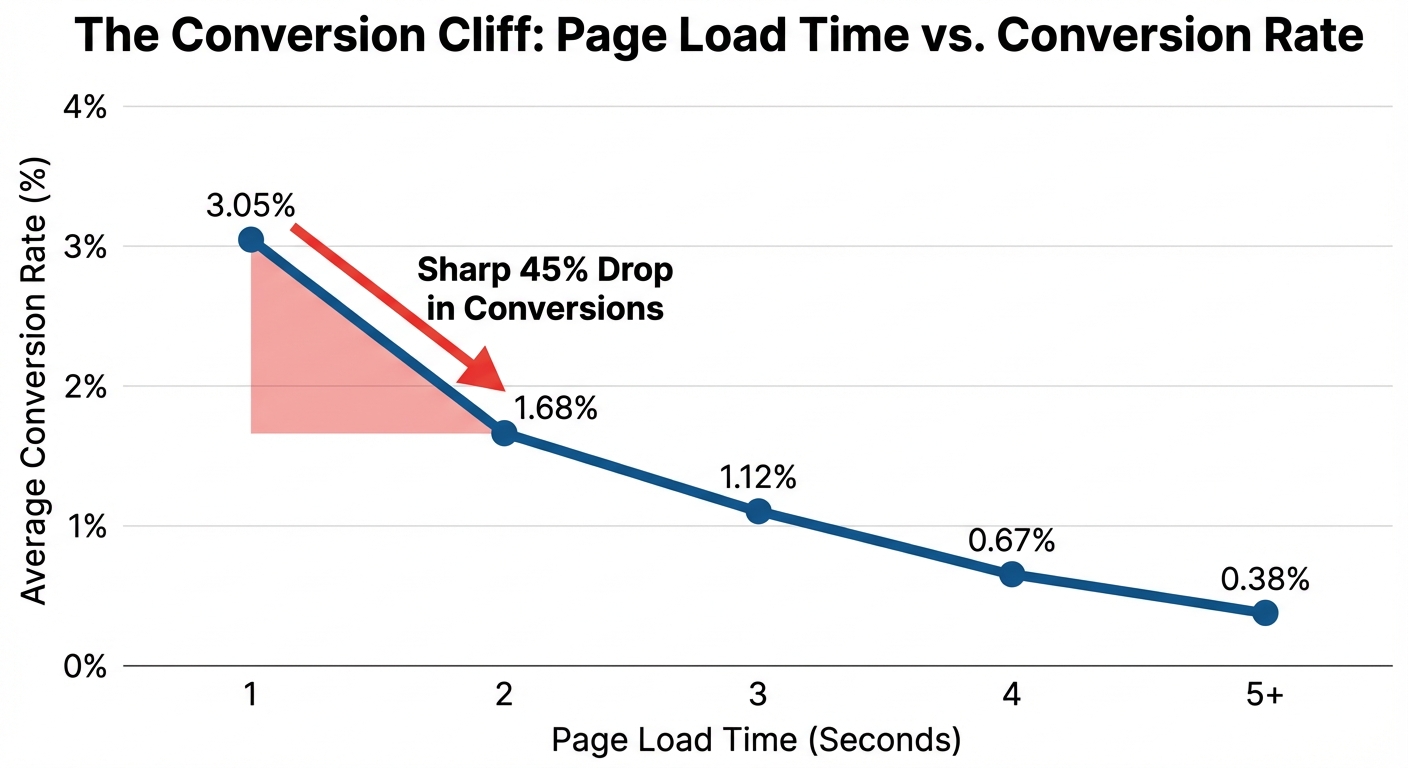
Slow mobile load = lost lead
Mobile speed is part of the service experience. We reduce media weight, scripts, layout shifts, and avoidable friction so a visitor comparing local options can reach the service details before attention fades.
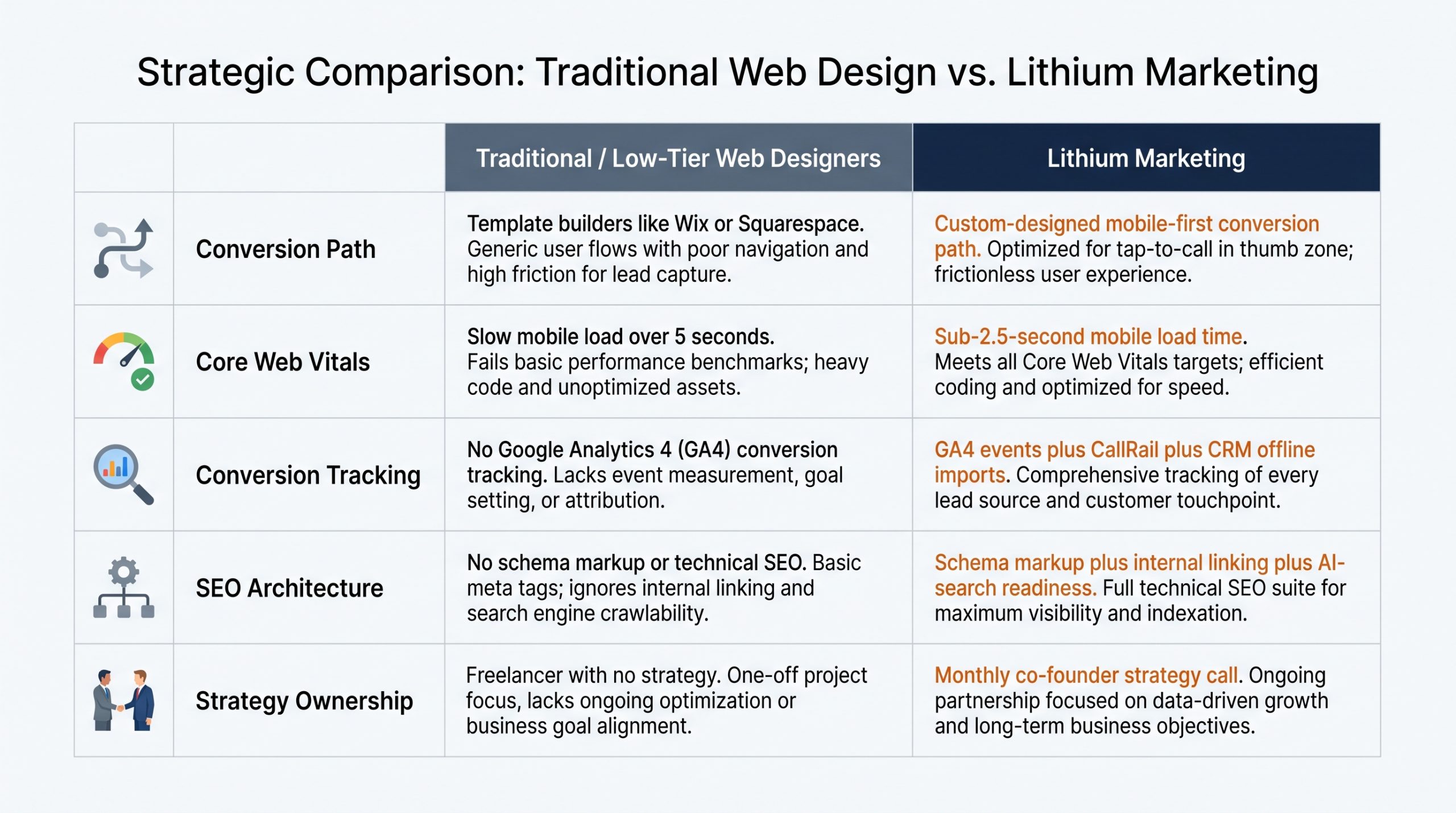
No one-tap path to call you
Contact should feel like the natural next step after proof, not a separate search. Calls, bookings, and forms are placed near the content that answers whether the company is capable, available, and relevant.
Built for looks, not for ranking
Local search structure supports the design. We organize pages, URLs, schema, headings, internal links, and profile consistency so the site can be understood by search engines and by people comparing providers.
No proof above the fold
Bennington buyers often look for reassurance before making contact. Reviews, staff context, project examples, credentials, service boundaries, and clear process language help the page feel accountable instead of decorative.
The website pieces that make a local page easier to trust.
The build starts with the decision the page needs to support. We shape messaging, page order, mobile behavior, forms, proof, accessibility, and analytics around the point where a cautious visitor decides to reach out.
Sub-2.5-second mobile load
Performance is handled as a usability issue, not a final checklist. Images, scripts, plugins, hosting behavior, font loading, and layout stability are reviewed so the site feels composed on ordinary mobile connections.
Mobile actions that stay easy to reach
Mobile actions should stay available without making the page feel pushy. The visitor needs enough space to read, compare, and trust before the call button, booking link, or form earns the tap.
Above-the-fold value proposition
The hero section should identify the service, audience, and reason to trust in plain language. We avoid vague welcomes and make the first screen work like a useful introduction to the business.
SEO-ready architecture
Local SEO structure built into the site
Local search structure starts with accurate business facts. We align NAP details, service categories, location language, schema, internal links, and profile references so the site does not contradict the public footprint.
Real proof, placed where it converts
Proof works best when it answers a specific doubt. We place reviews, case notes, project photos, certifications, and process details where they support the visitor’s next decision.
Tracking that ties leads to revenue
GA4 events fire on every form submission, booking action, and click-to-call. Call tracking connects conversations back to traffic source, and conversion tags are wired to Google Ads before campaigns send paid traffic into the new site.
WCAG-aware, AI-search-ready
We design for clarity across people, crawlers, and answer engines. Semantic sections, readable contrast, keyboard support, concise answers, and consistent business facts give AI systems cleaner source material.
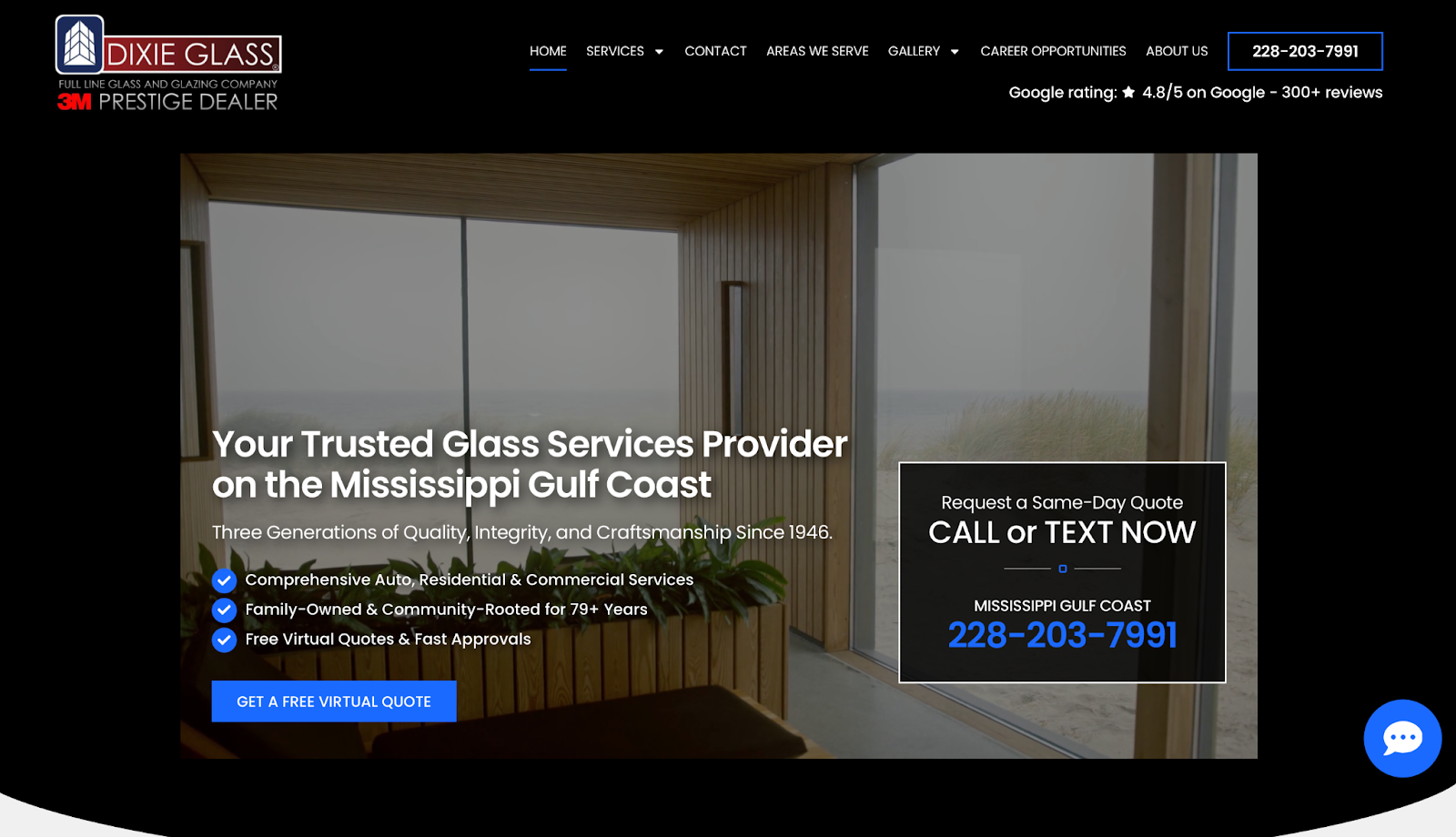
How a third-generation Gulf Coast glass company drove 76% more conversions after we rebuilt their site.
A Gulf Coast glass company needed more than a visual refresh. Lithium rebuilt the site, clarified quote requests, repaired conversion tracking for PPC, and strengthened SEO so the business could see which channels produced useful inquiries.
More conversions
Organic traffic growth
Search visibility growth
DIXIE GLASS | WEBSITE REBUILD CASE STUDY

Local organizations where clarity changes the first conversation.
This approach fits trades, healthcare offices, nonprofits, restaurants, retail, lodging, professional firms, and specialty services that need a visitor to understand value before contact. The site should reduce uncertainty, not add another layer of questions.
Home-service websites need to work when the problem is active. We organize repairs, installs, maintenance, service areas, reviews, and SEO foundations so homeowners can confirm fit quickly.
Healthcare and wellness sites have to reduce uncertainty. We structure service pages around provider credibility, appointment options, patient questions, reviews, and directions so a visitor can decide whether the practice fits.
Contractor websites should make the best job types easier to understand and request. We organize service pages, project categories, photos, warranties, reviews, and estimate language around how homeowners compare options.
Professional-service sites need disciplined messaging. We clarify who the firm helps, what problems it solves, what proof supports the claim, and how a first consultation or inquiry works.
Hospitality websites should make the visit, reservation, or event inquiry easy to plan. We bring menus, booking details, photos, reviews, hours, and location information into a mobile-friendly structure.
Automotive visitors may need help immediately. We build pages for repair, collision, tires, towing, detailing, and fleet work with calls, estimates, reviews, location clarity, and paid traffic measurement in mind.
Retail sites should help shoppers decide whether to visit, call, or browse further. Categories, brands, product detail, photos, hours, reviews, and directions need to be easy to scan.
B2B websites often support a longer evaluation. We organize capabilities, use cases, industries, proof, team context, and inquiry forms so a qualified prospect can understand fit before reaching out.
From kickoff to launch in six to nine weeks, with weekly decisions instead of mystery delays.
A website project needs momentum and decisions. We keep strategy, copy, design, build, QA, and launch tasks visible so feedback happens while the work is still easy to refine.
Discovery & strategy
Discovery looks at services, seasonal patterns, referral behavior, existing analytics, content gaps, and the competitors a Bennington buyer sees online. That context sets the page priorities before design work begins.
Information architecture & content plan
Planning defines the sitemap, page briefs, URL structure, schema, content needs, proof requirements, conversion points, and SEO structure. Search visibility and buyer clarity are planned together instead of treated as separate phases.
Design direction
The visual system is shaped by the audience and the offer. We define typography, spacing, page rhythm, proof treatment, and mobile components before rolling the design across the full site.
Build, content, integrations
We build the site in Elementor on WordPress and write SEO-optimized copy in parallel. The build phase also includes forms, GA4 events, call tracking, Google Ads conversion tags, Google Business Profile alignment, schema, and any CRM or booking integrations needed to make leads trackable.
QA, launch, indexing
Launch review covers forms, phone taps, mobile breakpoints, redirects, schema, analytics events, speed, and search-console setup. We also check whether the service explanation still makes sense without a salesperson nearby.
30 / 60 / 90-day tracking
After launch, reporting should show whether the page is helping real decisions. We watch calls, forms, search queries, page performance, and which service sections appear to create useful inquiries.
Engineered to surface in Google AI Overviews, ChatGPT, Perplexity, and Claude when buyers ask.
Answer systems need clear source material. Consistent business details, direct service explanations, FAQs, reviews, clean SEO pages, and structure for AI systems make the organization easier to understand.
Quotable answer blocks
We write service sections so a visitor can understand the answer before reading the nuance. The same structure gives AI tools clearer passages to summarize.
Fact density and citations
Useful specificity might include appointment steps, service limits, staff credentials, project types, seasonal timing, or local context. Those details make the page sound like a real business rather than a formatted template.
Schema for generative engines
Structured data reinforces the visible page. LocalBusiness, Service, FAQ, Breadcrumb, and review markup are used where appropriate so the site’s facts are easier to understand.
Brand consistency across the web
The website should not contradict the places where buyers and search systems already see the business. We compare public profiles, reviews, listings, and page copy for consistency.
Topical authority and entity coverage
A useful site answers the surrounding questions, not just the headline service. Related pages, FAQs, project proof, and internal links help visitors move from research to inquiry.
llms.txt + AI crawler controls
AI crawler access should be intentional. We help the site define usable source pages, robots.txt rules, and llms.txt guidance so important content is easier to discover on the owner’s terms.
How website choices change the quality of inquiries
Service businesses Lithium has built websites for.
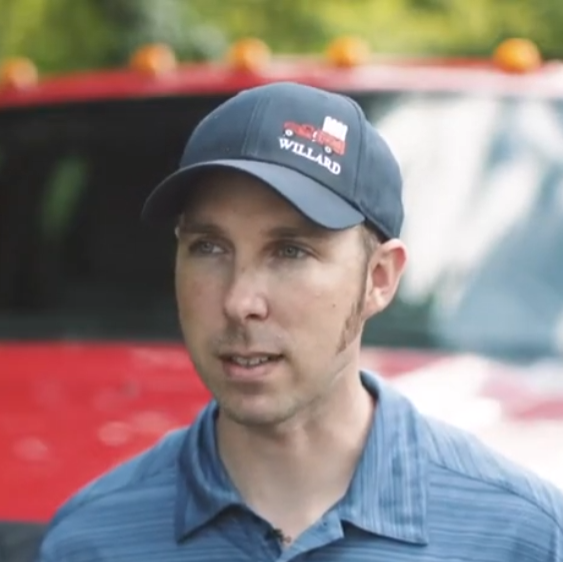
Willard Power Vac
“Lithium Marketing has been amazing for our business. They have greatly increased our web traffic and helped us land hundreds of jobs.”
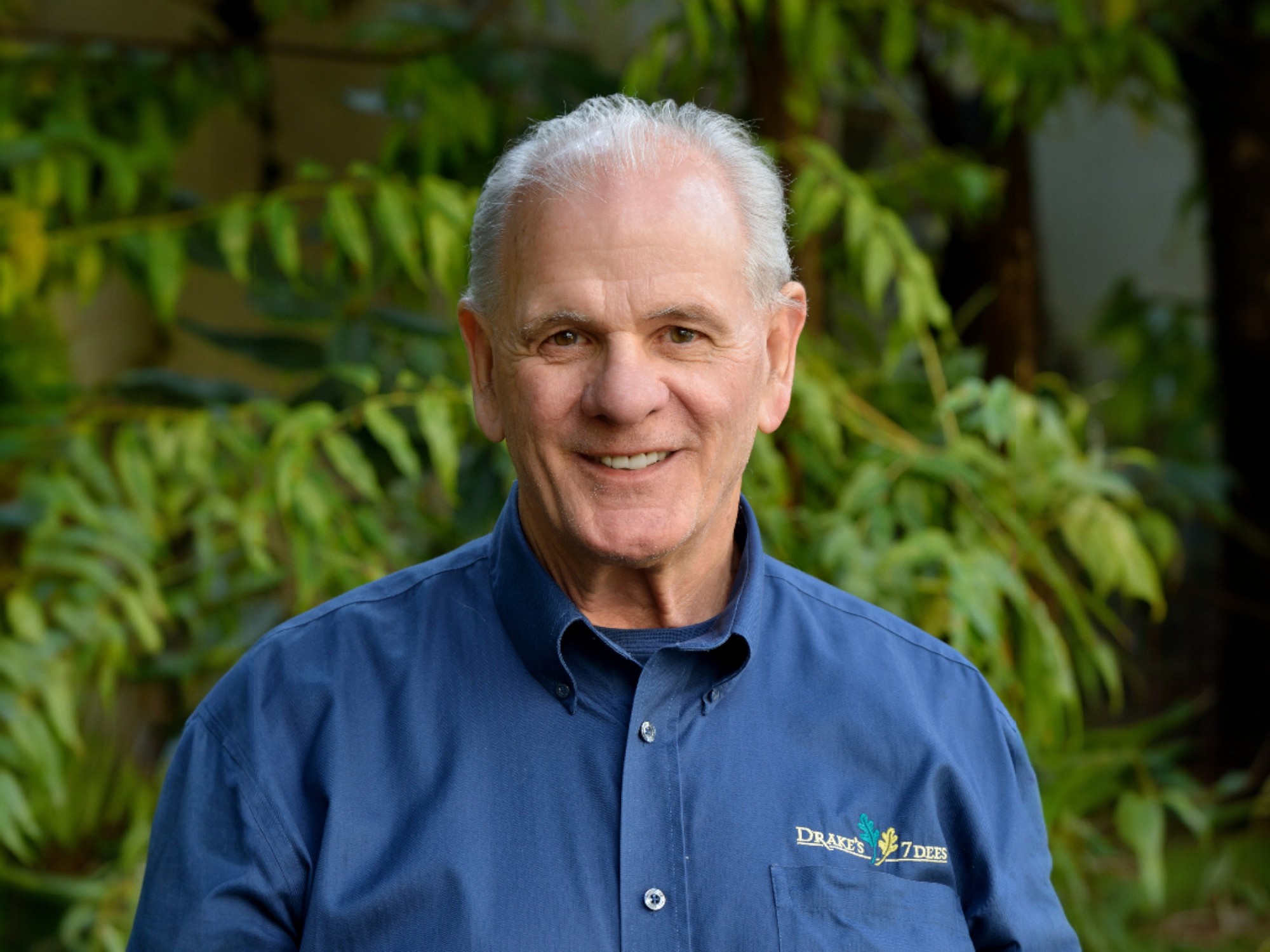
Drake’s 7 Dees
“Lithium has moved us to page 1 in Google search organically.”
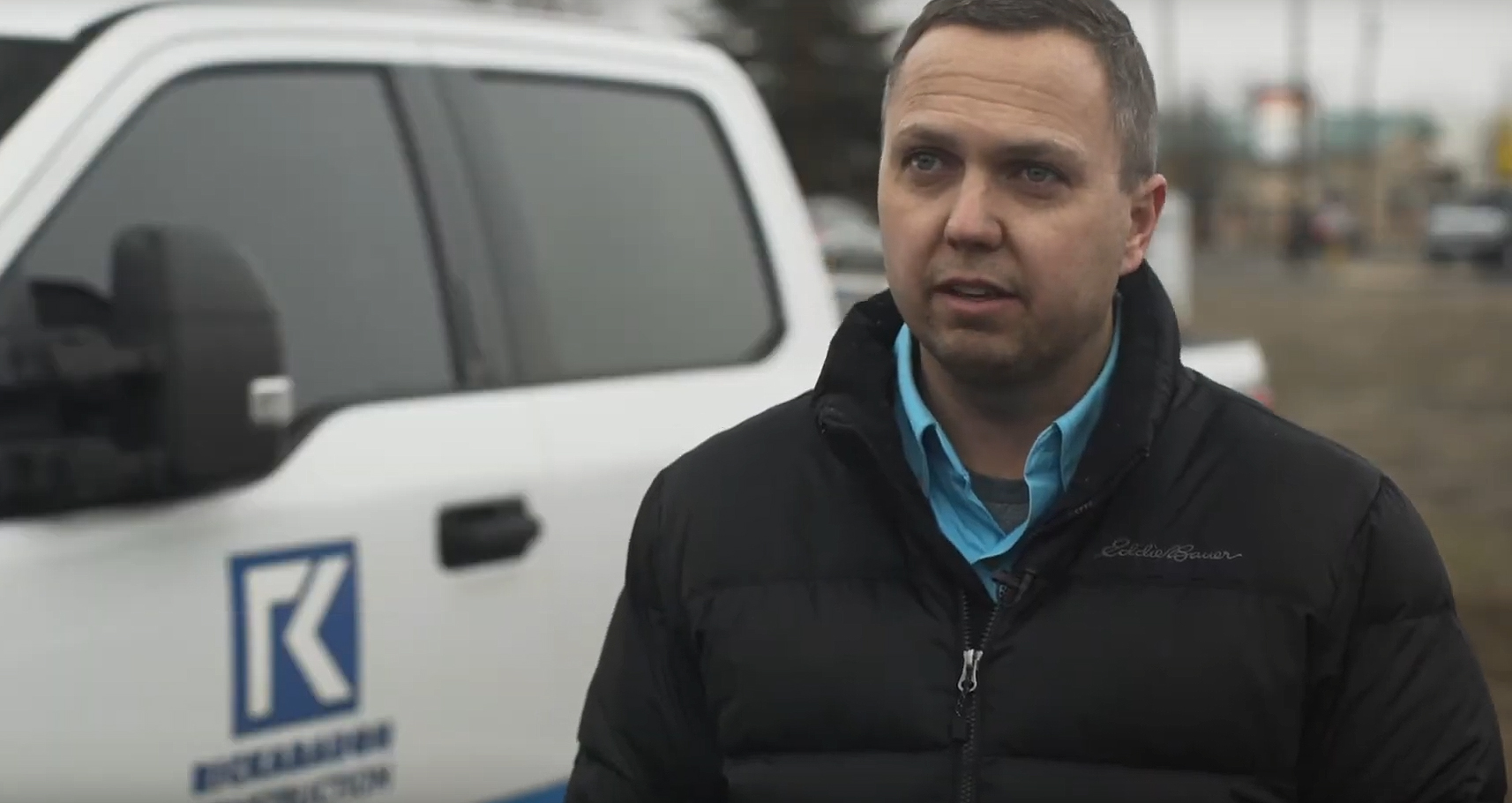
Rickabaugh Construction
“Working with Lithium Marketing has been awesome.”
Bennington website questions, answered in plain terms.
Budget depends on the number of pages, content complexity, forms, integrations, design depth, local SEO structure, and whether paid traffic measurement is part of launch. We scope the work after reviewing the business goals and current site.
A focused site can move faster when content, approvals, and access are ready. Larger builds need more time for service architecture, copy, design rounds, integrations, QA, redirects, analytics, and launch planning. Approvals and content access have the largest effect on schedule.
A rebuild can remove technical and content barriers that hold back SEO. It should improve page structure, speed, internal links, schema, service depth, and local relevance, but ongoing content and authority work still matter after launch.
The finished website should belong to the business. We clarify ownership for the WordPress build, approved content, design assets, custom work, hosting, and domain access so there is no confusion after launch. Those details are documented before launch so ownership is clear.
Your team can edit normal pages, text, images, and many layout sections in WordPress after launch. We still recommend keeping complex template, tracking, and performance changes with someone who understands the build. That keeps routine updates simple while protecting the parts that affect performance.
A remote team can work well when the process is clear. We use calls, shared docs, Loom videos, analytics reviews, and project notes to understand Bennington buyers, then build pages that support search, conversion, and paid campaigns where needed.
The workflow is remote by default. Strategy calls, content reviews, design walkthroughs, QA notes, and launch planning happen through shared tools so decisions are documented and easy to revisit. That record keeps feedback clear for both teams throughout the project.

DJ Van Zanten leads the first strategy review
The review is led by DJ Van Zanten, not passed immediately to a junior sales rep. He connects the website issues to positioning, search, tracking, and the business goals behind the project.
Get a free Bennington website review
We review the site like a visitor, a search engine, and a business owner. Speed, mobile experience, service clarity, proof, forms, tracking, local structure, and page hierarchy all get a practical look.
- No sales pitch
- 30 minutes
- You keep the audit either way