
 Glass
GlassDixie Glass
76%more conversions
January vs the January before
- ads conversion rate
- 15.57%
- ads conversion rate
- organic traffic
- +18.2%
- organic traffic
Give pest customers the right preparation answer
Build a Cape Coral pest-control website that explains your services and approved preparation while giving customers a simple way to ask about their situation.
 Google PartnerView our Partners listing
5.0on Google · read our reviews
Google PartnerView our Partners listing
5.0on Google · read our reviews
Businesses
we’ve worked with
Businesses we’ve worked with
A general preparation guide needs a useful question route
Lithium Marketing can design a pest-control website with clear service pages, an approved preparation guide and a mobile request form. A customer should be able to understand the general first-visit process and ask about a circumstance the guide does not cover. We make that question easy to send with the property location and service concern.
Lee County has 119 pest-control establishments. Your site can explain your company's actual services, assessment process and visit instructions within that category. Staff receives the customer's specific concern instead of assuming every visitor's situation matches a general FAQ.
Keep the service explanation beside the request
The recorded "pest control cape coral" phrase has 1,000 monthly searches. We can organize relevant service information so a visitor can move from their concern to the appropriate description, preparation guidance and inquiry. The form remains readable on a phone and can preserve the question they need your team to answer.
A website build gives those pages a clear structure and contact route. Ongoing search management and advertising have their own scopes. Before handoff, we check the agreed form path so the team can receive useful service and location information from the customer.
| Search | Searches a month | Cost per click |
|---|---|---|
| web design cape coral | 260 | $9.61 |
| website design cape coral | 260 | $9.61 |
| web designer cape coral | 20 | not reported |
Source: Google Ads keyword data, average monthly U.S. searches. "Under 10" = below Google’s reporting floor.
Source: one Google results page for “plumber cape coral”, as Google showed it to a searcher located in Cape Coral. Results shift by searcher and day.
Ask who can arrange access and discuss the visit
For a pest visit in Cape Coral, where 77.2% of occupied homes are owner-occupied, the form can ask who is arranging the work and the property's location. The guide supplies approved general information while a separate question field lets the visitor describe a preparation concern.
For customers in Lee County, where 74.3% of occupied homes are owner-occupied, we can make the service request equally clear. A staff member receives the relevant person, concern and location together. That gives your team a practical starting point for answering the individual question.
Sources: U.S. Census Bureau 2025 population estimates, ACS 2020–2024 and 2023 County Business Patterns.
Keep approved guidance accessible when customers need it
Cape Coral's wet season runs from May to October. An approved visit guide can be easy to find when a customer has a question about preparing for the service, with a clear contact route for anything that requires staff advice. The site explains your own process rather than treating weather as a diagnosis of a pest problem.
Cape Coral's dry season runs from November to April. The same readable page can present your current preparation information and the means to ask about a particular visit. We build simple navigation, labeled content and a useful inquiry route so customers do not have to search several pages to reach your team.
County Business Patterns
Trade and home service businesses in Lee County
Establishments by industry, 2023
Source: U.S. Census Bureau, 2023 County Business Patterns (NAICS establishment counts).
Build the content and inquiry path together
Explain your actual offer, present approved guidance and deliver the customer's question to staff.
Make your pest services and assessment route understandable before the customer requests work.
Present the company's approved guide with a route for individual questions.
Collect concern, location and contact details without making technical knowledge a requirement.
Check the agreed request path and show your team how to maintain the WordPress content.
What every Lithium website includes
The same eight parts go into every website build, wherever the business is.
Glass marketing and a separate construction testimonial
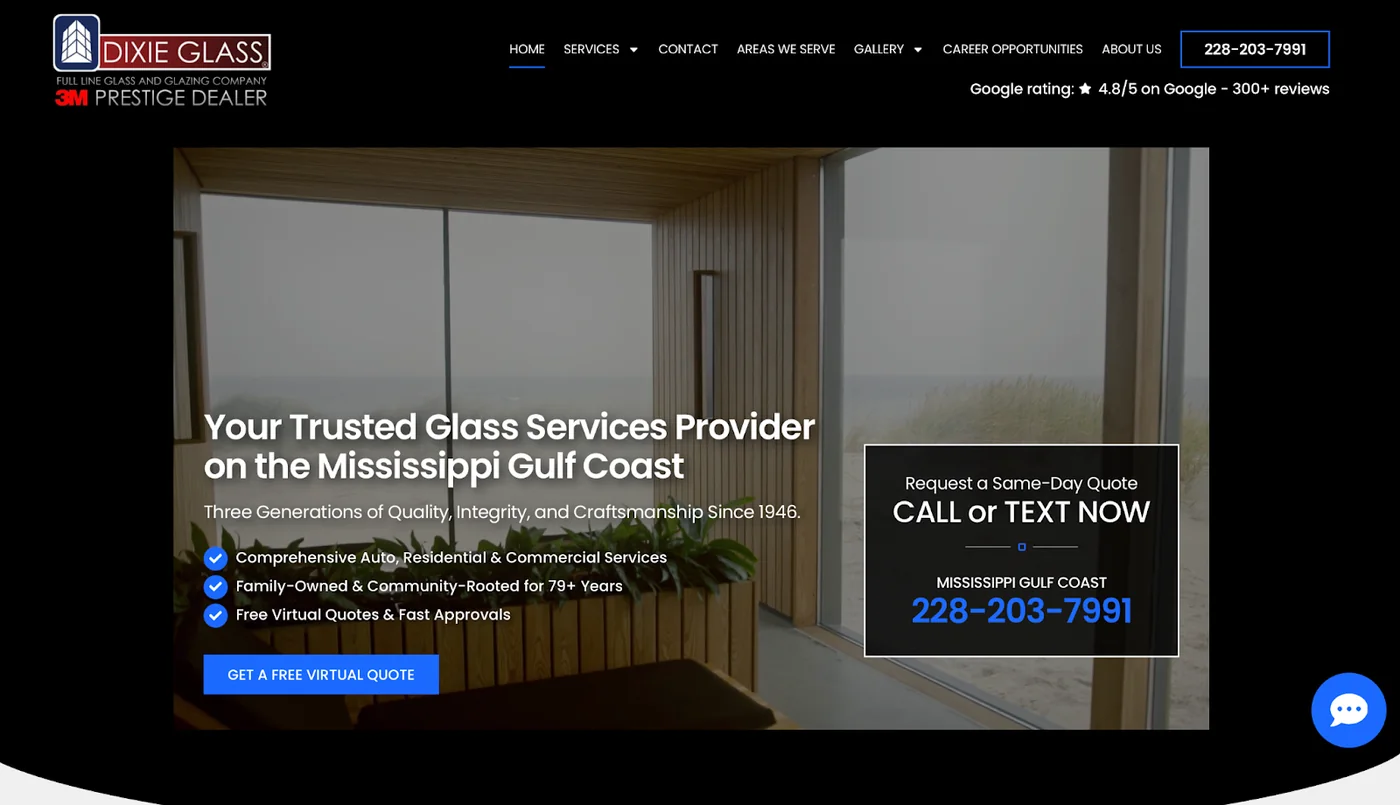
Dixie Glass is the Mississippi Gulf Coast glass business in this combined website design, SEO and Google Ads case. Rickabaugh Construction's Marc Rickabaugh supplies the separate testimonial about website and SEO work with Lithium Marketing.
Glass76%more conversions
January vs the January before
“We used the team at Lithium Marketing to update our website and increase our SEO. We couldn't have been happier with the results! We receive compliments about our updated website on a regular basis!”
 Marc RickabaughRickabaugh Construction
Put the service boundary beside the customer's location
The Florida directory organizes web design pages for Clearwater, Lakeland, Tampa, Brandon, St. Petersburg and Fort Myers. On your own pest website, a coverage explanation helps visitors decide whether to send a request. Their exact property and question then reach staff together.
Published price
$5,000
typical project
Larger sites get a fixed proposal after a 30-minute discovery call. Six to nine weeks from kickoff to launch. You own the domain, hosting account, WordPress install and content.
FAQ

Still curious?
Call (503) 766-5964 or email [email protected].
Yes. A clear question field can accompany the service concern and location so staff can answer the individual situation under your company's process.
Your business owns the domain, hosting, WordPress installation and site content. We provide Loom handoff videos so your team can maintain the content after delivery.
We build the form for phone use and check the agreed delivery route. The customer can send their contact details, property location and question to your team.
Those services are scoped separately. The website provides the content and request foundation; ongoing search or paid work needs its own plan and reporting.
Start with the service pages, approved guide and contact path customers need. A typical build takes six to nine weeks, with content inputs and review turnaround affecting delivery. Job value, your qualified-request booking rate and verified acquisition costs help decide whether additional marketing scope is useful.
Free action plan
Bring your service descriptions and current preparation questions to a short video conversation with a co-founder. We'll define the pages and mobile inquiry path that can help customers reach your team.
What we’ll cover
2000 NE 42nd Ave Ste D Unit 2370, Portland, OR 97213
Prefer to pick a time? Book a 30-minute call with DJ