
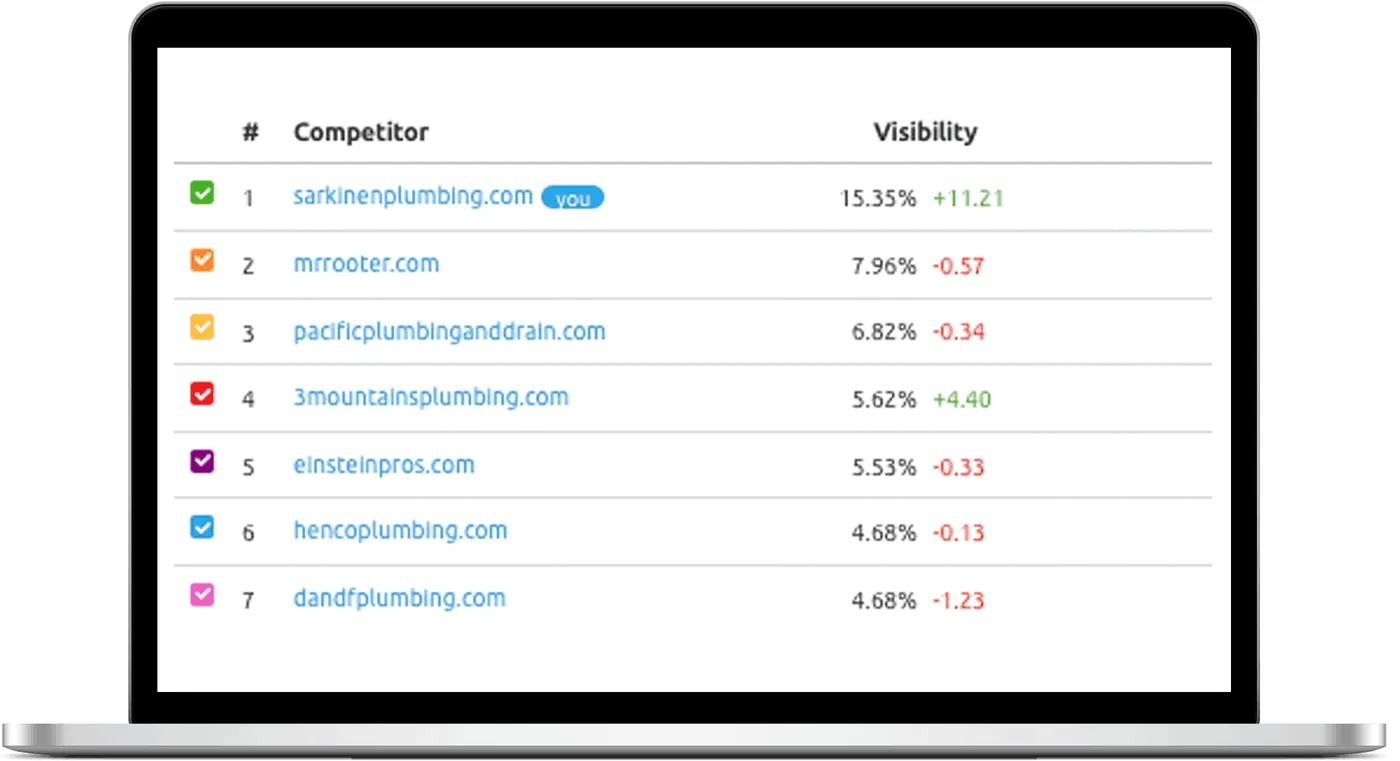
 Plumbing
Sarkinen Plumbing
2Xleads
on the same budget
- search visibility
- 3.75X
- search visibility
- ads conversion rate
- 27.37%
- ads conversion rate
WordPress websites for service businesses
Give Chula Vista customers a clear reason to request an estimate on a WordPress website your business owns.
 Google PartnerView our Partners listing
5.0on Google · read our reviews
Google PartnerView our Partners listing
5.0on Google · read our reviews
Businesses
we’ve worked with
Businesses we’ve worked with
Help customers recognize their project
Lithium Marketing turns a Chula Vista service business’s work into a WordPress website that helps customers choose a service and request an estimate. Homes built before 1980 make up 42.4% of Chula Vista’s housing. If your company works on older properties, explain what you handled in those projects alongside the photographs.
A homeowner looking at a finished bathroom needs to know who did the remodeling. A customer comparing painters wants to see the surfaces and preparation involved. We write those details into the site and keep calling or sending a project description easy, including on a small screen.
From search result to estimate
There are about 260 monthly searches for “garage door repair chula vista”. A visitor with a repair question should land on a repair explanation, with contact options nearby. Installation work can have its own page and photographs, so the customer does not have to guess which part of the business they are looking at.
An attractive homepage is only part of the build. We organize your service pages so ads, search results and customer recommendations can lead to the right information. Each page answers what you do, where you do it and how to ask about a job.
| Search | Searches a month | Cost per click |
|---|---|---|
| web design chula vista | 50 | not reported |
| website design chula vista | 50 | not reported |
| web designer chula vista | under 10 | not reported |
Source: Google Ads keyword data, average monthly U.S. searches. "Under 10" = below Google’s reporting floor.
Source: one Google results page for “plumber chula vista”, as Google showed it to a searcher located in Chula Vista. Search ad counts exclude sponsored local listings. Results shift by searcher and day.
A website for different kinds of homes
Chula Vista has 90,273 housing units. A single photograph cannot explain every kind of work a service business does across that market. We select examples by the service being sold, with captions about the problem, the work and the result, using details your team can verify.
Housing built in 2010 or later accounts for 11.6% of Chula Vista’s homes. If you take on upgrades or projects in newer properties, include those examples alongside work on older homes. A mixed portfolio lets visitors find a project closer to their own without assuming what any particular property needs.
Sources: U.S. Census Bureau 2025 population estimates, ACS 2020–2024 and 2023 County Business Patterns.
Give each service the right detail
Painting contractors account for 456 San Diego County establishments. Show more than a color change: explain the room or exterior surfaces you painted and the preparation included. Those details give a homeowner something concrete to discuss when requesting an estimate.
New home builders have 657 establishments in San Diego County. Building and remodeling projects need space for the customer to describe their plans, while a repair customer may prefer to call. We design forms around what your team needs to start the job discussion, without making visitors answer technical questions they cannot know.
County Business Patterns
Trade and home service businesses in San Diego County
Establishments by industry, 2023
Source: U.S. Census Bureau, 2023 County Business Patterns (NAICS establishment counts).
The website project
Copy, design and development happen with your review, so the finished site describes the business you run.
We discuss your customers, collect job photos and agree which services need their own pages. Lithium writes the copy from that material.
You see how the pages work on mobile and desktop. We review the service explanations, photographs and estimate prompts with you before completing the build.
The WordPress build includes form and phone-link testing, GA4 and call tracking. We check that customers can contact you and that the messages reach the right recipient.
We address redirects from the previous site and prepare the launch. You receive access to the finished website and a private Loom walkthrough for making edits.
What every Lithium website includes
The same eight parts go into every website build, wherever the business is.
Website work with search and advertising
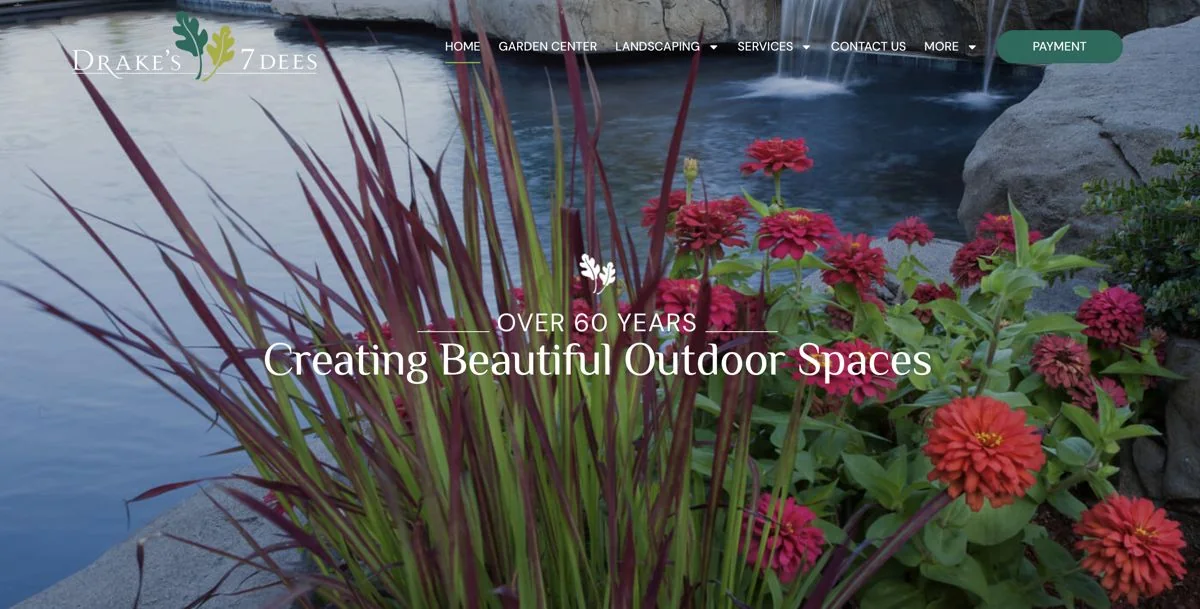
Sarkinen Plumbing is a Portland-area business whose program with Lithium included a website, SEO and Google Ads. Its results reflect that scope. Drake Snodgrass, who runs the garden-center business Drake’s 7 Dees, shares a separate account of the website redesign and search work.
Plumbing2Xleads
on the same budget
“Lithium has moved us to page 1 in Google search organically. Prior to working with them we spent a huge part of our marketing budget on paid search. Website redesign was a great experience.”
 Drake SnodgrassDrake’s 7 Dees
Website planning elsewhere
The web design guides for Carlsbad, Oceanside and Escondido offer other California market perspectives. San Diego, El Cajon and Temecula are linked here too, with the state directory available for a broader coverage plan. Use the places where you work to decide which area pages belong on your own site.
Published price
$5,000
typical project
Larger sites get a fixed proposal after a 30-minute discovery call. Six to nine weeks from kickoff to launch. You own the domain, hosting account, WordPress install and content.
FAQ

Still curious?
Call (503) 766-5964 or email [email protected].
A typical service business website costs $5,000, with larger builds priced in a fixed proposal. The number of service pages and the amount of project content affect the scope. We discuss what customers need to see before estimating the work, so you can compare the proposal with your sales priorities.
Allow six to nine weeks from kickoff to launch for a typical project. We need your service details, photographs and feedback on the copy and designs to keep the work moving. The agreed schedule accounts for those reviews, and the site is tested before publication.
You own the domain, hosting, WordPress installation and content, so the site can move with you. We provide access and a walkthrough of your website. Keeping Lithium for future maintenance is a separate choice from paying for the build.
The optional $99/month plan covers secure private hosting on a dedicated high-speed server, daily backups, software and security updates, and basic website changes. It is separate from the build price. You can choose it if you want Lithium to handle that ongoing maintenance.
We review existing traffic and URLs before replacing the site, then preserve strong content and plan redirects where addresses change. Tell us about pages that bring calls or appear in customer searches. That information helps protect valuable content through the rebuild, although rankings can still change.
Free action plan
Bring your existing site, a few project photographs and the questions customers ask before requesting an estimate. During a short video call, a co-founder will map out a free website plan with the proposed scope and timing.
What we’ll cover
2000 NE 42nd Ave Ste D Unit 2370, Portland, OR 97213
Prefer to pick a time? Book a 30-minute call with DJ