
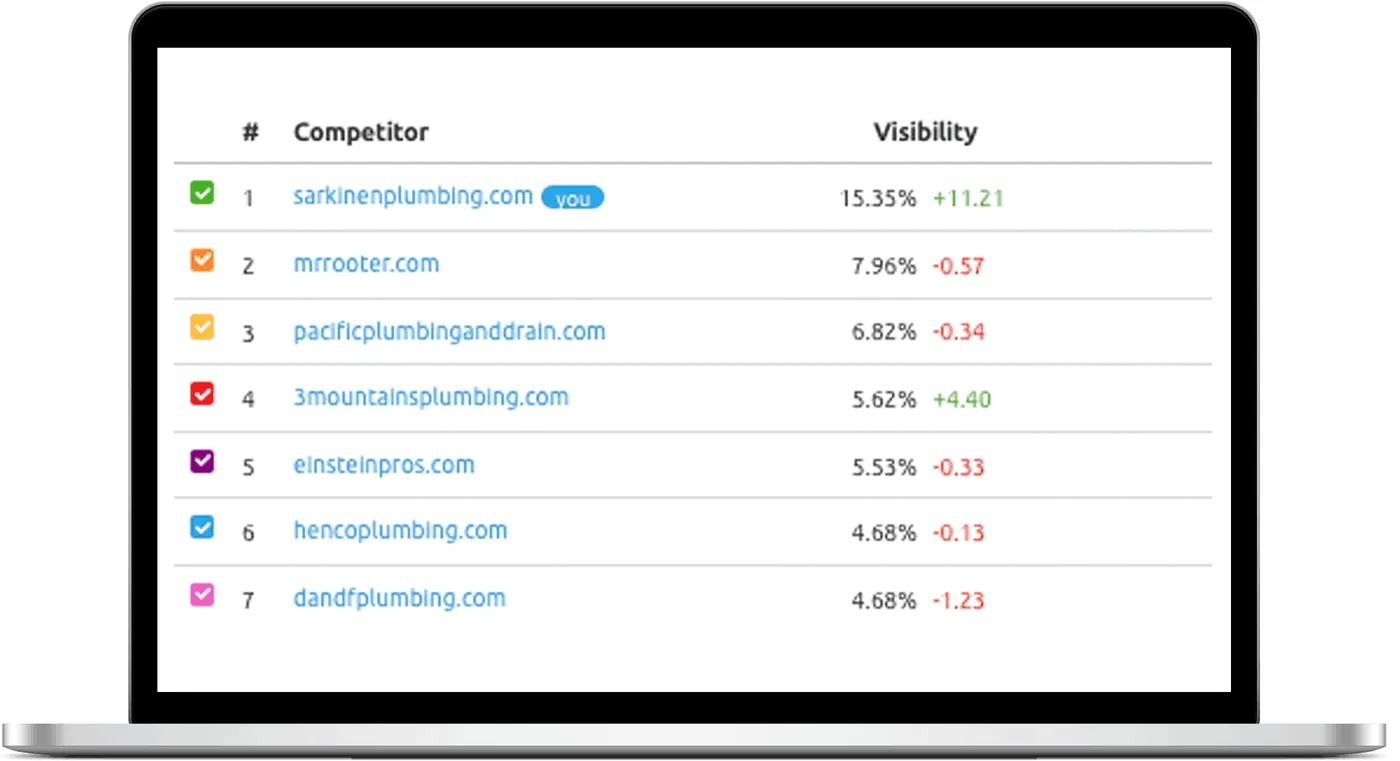
 Plumbing
Sarkinen Plumbing
2Xleads
on the same budget
- search visibility
- 3.75X
- search visibility
- ads conversion rate
- 27.37%
- ads conversion rate
Websites for Cincinnati service companies
Show Cincinnati customers the work you do with a WordPress website built for calls and estimates, with full ownership after launch.
 Google PartnerView our Partners listing
5.0on Google · read our reviews
Google PartnerView our Partners listing
5.0on Google · read our reviews
Businesses
we’ve worked with
Businesses we’ve worked with
Help a customer decide
Lithium Marketing builds Cincinnati service business websites around the questions a customer needs answered before hiring. In Cincinnati city, 79.9% of homes were built before 1980. If you repair or improve older properties, your website should show that experience through real jobs, explain what you did and make requesting similar work easy.
We write the copy, design the phone and desktop layouts, and build the site on WordPress. A visitor can find the service, see your work and contact you without hunting through a gallery or brochure. You review the content before launch, and your business keeps control of the finished website.
What happens after the click
Customers search “roofing company cincinnati” about 1,600 times a month. Someone reaching your site from that phrase should immediately see the roofing work you offer and how to request it. The same principle applies to every trade: put the service explanation and contact option together.
Searches for “landscaping cincinnati” average 1,000 a month. An installation project deserves space for photos and an explanation of the work, while a maintenance customer needs to see the ongoing service you offer. We organize both around what a buyer needs to decide, with clear links to the next step.
| Search | Searches a month | Cost per click |
|---|---|---|
| web design cincinnati | 880 | $17.64 |
| website design cincinnati | 880 | $17.64 |
| web designer cincinnati | 140 | $34.70 |
Source: Google Ads keyword data, average monthly U.S. searches. "Under 10" = below Google’s reporting floor.
Source: one Google results page for “plumber cincinnati”, as Google showed it to a searcher located in Cincinnati. Search ad counts exclude sponsored local listings. Results shift by searcher and day.
Write for the property and the person
The median year built for Cincinnati city housing is 1951. Your completed-job photos can show how you work with existing spaces: the problem, what changed and the service involved. Those captions help a customer connect a finished room or exterior with the work they want to discuss.
Owners occupy 39.8% of occupied homes in Cincinnati city. If you serve rental properties, explain how a landlord or property manager requests work and what you need to prepare an estimate. The contact form can identify the property and the person arranging the job without assuming every visitor owns the home.
Sources: U.S. Census Bureau 2025 population estimates, ACS 2020–2024 and 2023 County Business Patterns.
Different jobs need different detail
With 280 residential remodeling establishments in Hamilton County, a remodeler needs to make its experience visible. Describe the kinds of projects you take on, show completed work and explain the estimate process. A visitor should know what you are asking them to do before starting a form.
Hamilton County also has 60 painting contractor establishments. Photos can explain preparation and finishes alongside the service being sold. For a plumbing or electrical repair page, the priority may be a clear description of the problem you handle and a prominent call button. We set that emphasis separately for each service.
County Business Patterns
Trade and home service businesses in Hamilton County
Establishments by industry, 2023
Source: U.S. Census Bureau, 2023 County Business Patterns (NAICS establishment counts).
A build you can follow
Your team supplies the knowledge of the work; we turn it into a site customers can read and use.
We review your services, coverage and job photos with you. Existing traffic and important URLs help shape the page plan before design starts.
You see phone and desktop designs with the service details, photos and contact options in place. We revise the layout around how a customer finds and requests the work.
We develop the WordPress site, check forms and phone links, and add analytics and call tracking. Your team checks the service information before publication.
We plan redirects for changed URLs and check the launch. You receive access to the domain, hosting, WordPress and content, plus a private Loom walkthrough for editing the site.
What every Lithium website includes
The same eight parts go into every website build, wherever the business is.
A website within a wider marketing project
The case study features Sarkinen Plumbing, a Portland-area business that hired Lithium for a website, SEO and Google Ads. Marc Rickabaugh of Rickabaugh Construction shares his own experience of the team’s website and SEO work in the accompanying quote.
Plumbing2Xleads
on the same budget
“We used the team at Lithium Marketing to update our website and increase our SEO. We couldn't have been happier with the results! We receive compliments about our updated website on a regular basis!”
 Marc RickabaughRickabaugh Construction
Website planning in other markets
A service-area page should describe work you can show in that location. The linked web design guides offer housing and search context for other markets across Ohio, Kentucky and Indiana, while the Ohio guide helps you explore the rest of the state.
Published price
$5,000
typical project
Larger sites get a fixed proposal after a 30-minute discovery call. Six to nine weeks from kickoff to launch. You own the domain, hosting account, WordPress install and content.
FAQ

Still curious?
Call (503) 766-5964 or email [email protected].
A typical build covers a WordPress website planned around your services, with copy, design, contact forms, analytics and call tracking. A website is typically $5,000. A larger page count or additional functions can change that price, and we provide a fixed proposal after discussing the site you need.
Most website projects take six to nine weeks from kickoff to launch. Your team needs time to supply job photos and service details, review designs and confirm the finished copy. We agree those responsibilities early so missing material or delayed decisions can be dealt with before they hold up the build.
You retain ownership of the domain, hosting, WordPress installation and content. The site is built for your business, and you receive the access needed to manage it. That means a later change of provider does not require starting again with a rented website you cannot take with you.
You can make your own changes or choose our optional hosting and maintenance plan at $99/month. The plan includes hosting, daily backups, software and security updates, and basic website changes. We also provide a private walkthrough of your site so you know how to update its content.
A build establishes the technical structure and service content; ongoing SEO develops search visibility over time. We plan redirects for changed pages and check tracking during launch. If you need more visibility across Cincinnati services or locations, we scope that continuing work separately from the website project.
Free action plan
Send your website link and the questions customers still ask before requesting an estimate. Your free website plan will identify where those answers belong, with a co-founder walking you through the recommendations on a short video call.
What we’ll cover
2000 NE 42nd Ave Ste D Unit 2370, Portland, OR 97213
Prefer to pick a time? Book a 30-minute call with DJ