Gulfport SEO for Urgent Coastal Decisions
Show availability, proof, and service fit when timing matters.
Gulfport SEO should reflect the way people search along the Mississippi coast: sometimes planned, sometimes weather-driven, often from a phone. We strengthen technical health, service pages, Google profile details, reviews, and tracking so the business looks ready when the need becomes immediate.
- Classic SEO: technical foundation, on-page, content, schema
- AI Search: AEO and GEO for AI Overviews, ChatGPT, Perplexity, Claude
- Local SEO: Google Business Profile and Map Pack visibility
- Reporting tied to leads and revenue. Google Partner. 5.0 across 30+ Google reviews
Partner
Coastal searches often carry urgency the page must answer.
Gulfport search behavior is shaped by the coast. Property repairs, tourism, port work, military families, medical needs, and storm-season questions can all create sudden demand, so the page has to show availability, trust, and practical next steps quickly.
“ Coastal SEO has to answer timing, risk, and reliability together.
The highest-value searches often include a situation that cannot wait for a slow sales process. They may come from a homeowner, a visitor, a property manager, or a business trying to solve something before conditions change: Gulfport emergency AC repair after storm or Gulfport waterfront restaurant private dining Those visitors need pages that explain response windows, service limits, reviews, location details, photos, and the right contact method before they decide whether the company can handle the job.
Many Gulfport sites look acceptable until a busy season exposes the gaps. Service details are thin, profiles disagree, old photos weaken trust, and tracking cannot show which coastal searches turned into calls. The rewrite brings those pieces into one workable system.
Ranking for queries that do not convert
A visitor with water damage, a hot rental unit, a delayed trip, or a same-day service need will not wait through a sluggish page. Mobile performance, visible contact options, and clear response language affect whether the call happens at all.
Technical debt blocking growth
Conversion design should fit the risk of the request. Emergency service needs call buttons, hospitality needs booking and directions, medical practices need appointment clarity, and contractors need estimate paths that explain what happens after contact.
Generic content that says nothing local
Local search structure has to handle Gulfport, nearby coastal communities, and service-area limits without overclaiming. Pages, schema, citations, maps data, and profile categories should all describe the same business reality.
No measurement tied to revenue
Proof is different on the coast because buyers often ask whether the provider has handled similar conditions. Storm work, insurance familiarity, waterfront access, seasonal staffing, project photos, reviews, and credentials can matter more than broad promotional copy.
Search work built around timing, proof, and coastal intent.
We start by identifying where demand is being lost: slow templates, weak service-area language, disconnected reviews, missing emergency details, outdated photos, incomplete profile services, or analytics that hide the calls and forms that actually mattered.
Technical SEO foundation
The technical audit checks whether coastal demand can reach the page cleanly. We review crawl access, indexation, redirects, Core Web Vitals, mobile layouts, image size, forms, schema, internal links, and server behavior during normal traffic spikes.
Mobile-first indexing readiness
Mobile testing is practical and impatient. We check whether a visitor can find the right service, confirm coverage, see proof, call, request help, or get directions while standing in a parking lot, rental property, or job site.
Keyword strategy tied to revenue per lead
Keyword research is organized by situations: storm recovery, seasonal tourism, home repair, appointments, food and entertainment, commercial support, and planned upgrades. Each group needs a page that matches the urgency and information depth of the search.
On-page SEO depth on every page
On-page improvements focus on making the promise concrete. Titles, headings, FAQs, internal links, schema, photos, and service sections should explain what is available, where it is available, and what a visitor should do next.
Local SEO and GBP optimization
Google Business Profile work keeps maps visibility aligned with real operations. Categories, services, hours, photos, review prompts, updates, and coastal service areas should be accurate before busy periods push more visitors into map results.
Authority From Coastal and Industry Sources
Authority building looks for references that match the market: trade groups, supplier pages, tourism resources, business associations, local sponsorships, project mentions, chamber listings, and industry publications that make sense for a Gulfport company.
Tracking that ties traffic to revenue
Reporting separates curiosity from useful action. We review calls, forms, directions, profile actions, organic clicks, service-page performance, and search terms so the next month of work supports the inquiries with the highest value.
AI search and generative engine optimization
AI search readiness starts with durable facts. The site should make services, geography, emergency conditions, credentials, FAQs, and proof easy to extract without forcing answer systems to infer whether the company serves a coastal need.
How a service business put 225% more conversions on the board with technical SEO and a content rebuild.
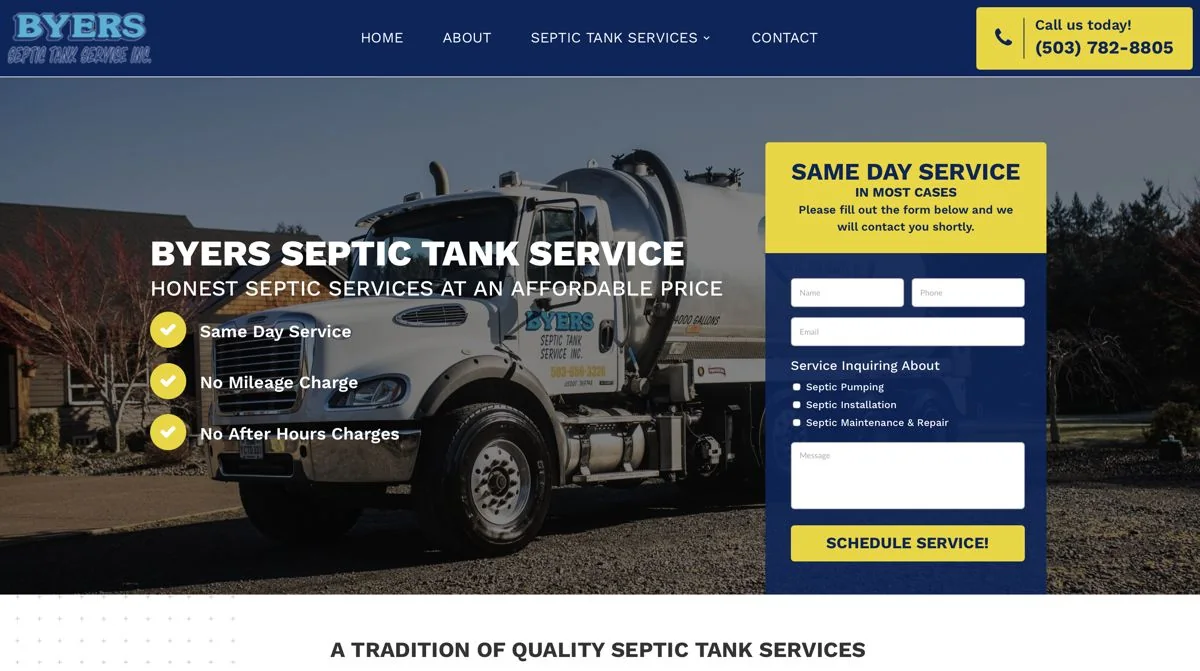
Sarkinen Plumbing showed how service SEO improves when urgency is written clearly. Lithium rebuilt core pages, fixed technical friction, aligned local profile data, and connected call tracking, helping conversions increase 225 percent while cost per acquisition decreased 40 percent.
Coastal businesses where timing changes the decision.
Gulfport SEO fits companies whose customers ask practical questions before acting: repair providers, medical offices, restaurants, hotels, legal teams, contractors, retailers, marine-adjacent services, and property-focused businesses that need to look responsive and credible.
Home-service companies need pages that handle urgency and seasonality. HVAC, roofing, restoration, plumbing, pest control, electrical, remodeling, and landscaping content should cover response windows, service territory, estimates, warranties, and proof from similar coastal work.
Healthcare and wellness sites need appointment information that respects busy local families, military households, retirees, and visitors. Provider details, insurance notes, location cues, forms, reviews, and procedure pages should reduce confusion before contact.
Contractor SEO should make the scope visible before the estimate request. Materials, codes, moisture concerns, project photos, financing, licensing, scheduling, and service-area limits help Gulfport property owners understand whether the contractor is a fit.
Professional firms need content that explains risk, process, and qualifications. Legal, accounting, consulting, insurance, and financial pages should clarify who the firm helps, what documents or intake steps are needed, and why the team is trustworthy.
Hospitality and restaurant SEO has to support planning. Menus, private rooms, events, hotel amenities, parking, hours, photos, reviews, reservation options, and profile updates should stay current when visitor traffic changes quickly.
Auto and marine-adjacent services need pages for urgent repair, scheduled maintenance, towing, tires, glass, body work, detailing, dealership needs, and fleet support. Visitors should know what can be handled today and what requires an appointment.
Retail pages should help shoppers decide before they cross town or leave a resort area. Product categories, pickup details, store policies, photos, inventory language, reviews, and directions can make the visit feel worthwhile.
Commercial service providers need pages that speak to facility managers, hospitality operators, port-adjacent businesses, builders, and regional buyers. Capability, safety, response standards, contracts, and project examples matter more than generic service claims.
From audit to compounding organic traffic in ninety days, with monthly reporting tied to leads and revenue.
SEO is a compounding system, not a one-time project. The Lithium process starts with a technical audit and a keyword strategy locked to revenue per lead, then ships fixes and content on a weekly cadence with monthly reporting that ties impressions to booked work.
Discovery and full SEO audit
Discovery reviews the market during both normal and high-demand periods. We compare search results, maps listings, service pages, reviews, competitors, analytics, call quality, and profile engagement to find where Gulfport demand is slipping away.
Keyword strategy and content roadmap
The roadmap orders work by urgency and leverage. Emergency pages, profile cleanup, technical repairs, seasonal content, review prompts, citation fixes, internal links, photos, and tracking improvements are sequenced so the business is not waiting on low-impact tasks.
Technical fixes and on-page work
Core Web Vitals optimization on the pages buyers actually land on, render-blocking JavaScript removal, image compression with lazy loading, schema deployment (LocalBusiness, Service, FAQPage, BreadcrumbList, Article), internal linking restructure, sitemap cleanup, and indexation pruning. Every schema change validated in Google’s Rich Results Test before it ships.
Content production and on-page SEO
Content planning starts with services that people need to understand fast. Supporting articles can then cover preparation, cost ranges, storm readiness, visitor planning, maintenance, and comparison questions without distracting from the main service page.
Local SEO and link earning
Local cleanup checks every public touchpoint a coastal buyer may see. Categories, hours, phone numbers, services, photos, descriptions, and review responses should match across the site, Google profile, directories, and industry listings.
Measurement and monthly iteration
Monthly strategy looks at what changed in real behavior. We review which searches produced calls, which pages supported forms, how maps engagement moved, what reviews mention, and whether technical health held up under demand.
Engineered to surface in Google AI Overviews, ChatGPT, Perplexity, and Claude.
SEO, answer optimization, and generative search readiness should all describe the same Gulfport business. A page can rank, answer a specific question, and support AI summaries only when services and proof are stated plainly.
Quotable answer blocks
Answer blocks should be useful in a hurry. We lead with availability, service limits, timing, or process, then add the coastal detail that helps a person decide whether to call, book, or keep comparing.
Fact density and citations
Useful specificity may include response hours, storm-related limits, service territories, licensing, photos, insurance familiarity, booking windows, parking notes, appointment steps, or seasonal details that a Gulfport searcher would actually care about.
Schema for generative engines
Schema is used to reinforce facts that are visible on the page. LocalBusiness, Service, FAQPage, BreadcrumbList, Article, and review markup should be accurate, validated, and aligned with the business information users can confirm.
Brand consistency across the web
Generative tools may cross-check the website with maps, reviews, tourism listings, directories, and social profiles. We reduce conflicting descriptions so the business is not summarized as something narrower or broader than it is.
Topical authority and entity coverage
Topical depth should reflect coastal buying questions. Core service pages, seasonal guides, comparison content, emergency FAQs, proof pages, and internal links need to show expertise without repeating the same sentence across the site.
llms.txt + AI crawler controls
An llms.txt file can identify preferred source pages for AI crawlers, but it cannot fix vague services or stale profiles. It belongs after the sitemap, robots rules, and business facts are already dependable.
How each search layer supports coastal decisions.
Service businesses Lithium has driven SEO results for.
Willard Power Vac
“Lithium Marketing has been amazing for our business. They have greatly increased our web traffic and helped us land hundreds of jobs.”
Drake’s 7 Dees
“Lithium has moved us to page 1 in Google search organically.”
Rickabaugh Construction
“Working with Lithium Marketing has been awesome.”
Gulfport SEO questions, answered plainly.
Some fixes can improve visibility within a few months, especially technical cleanup and Google Business Profile corrections. More competitive Gulfport searches usually take six to twelve months because stronger service pages, reviews, authority, and local consistency need time to build.
Paid search can be useful when seasonal or storm-related demand appears quickly. SEO turns the lessons from those campaigns into better pages, profile details, FAQs, and tracking that continue helping the business after the ad budget changes.
Most local SEO retainers for service businesses fall between $1,300 and $3,000 per month. Scope depends on the site condition, competition, number of priority services, profile cleanup needs, review strategy, tracking requirements, and how quickly the market needs attention.
No agency can guarantee a particular ranking, especially in markets affected by seasonality and changing demand. We can commit to the work, the reporting, and the adjustments: technical repairs, content improvement, profile management, review support, and measurement.
Traditional SEO helps pages earn organic and map visibility. Answer optimization makes direct questions easier to satisfy, while generative search preparation keeps facts consistent enough for newer tools to summarize the business accurately. Clear source pages make that possible.
We measure Gulfport SEO with rankings, impressions, organic clicks, map actions, calls, forms, direction requests, booking starts, page conversion rates, and profile engagement. The useful report shows which services produced movement, not only where a keyword moved.
A retainer may include monitoring, content updates, technical work, Google Business Profile management, citation cleanup, review support, authority development, tracking, and strategy calls. The mix changes when urgent services, seasonal services, or local competition require more attention.
Yes, but the early plan should build enough trust for the first real comparisons. New Gulfport businesses usually need service pages, profile setup, citations, photos, reviews, analytics, and specific lower-competition searches before pursuing tougher terms.
Your SEO strategy call is led by DJ Van Zanten.
DJ Van Zanten leads the strategy review with a focus on how search visibility becomes useful business action. Kurt Schell supports the technical and content evaluation so the recommendations cover both market opportunity and implementation details.
Get a free 30-minute Gulfport SEO review.
The review covers Core Web Vitals, local search visibility, Google Business Profile accuracy, content gaps, indexation, schema, backlink quality, review signals, and the competitors Gulfport buyers are most likely to compare before calling.
- No-obligation 30-minute call with DJ Van Zanten, not a junior
- Written priority list of the top 5 to 10 changes that will move leads
- Google Partner with a 5.0 rating across 30+ Google reviews