
McAllen SEO Built for Companies That Need Search to Convert
Make local pages, technical health, and search reporting support real inquiries.
Lithium helps McAllen service businesses improve the parts of search that affect calls, forms, and booked appointments: crawlability, speed, service-page depth, Google Business Profile accuracy, local content, review proof, and conversion tracking.
- Classic SEO: technical foundation, on-page, content, schema
- AI Search: AEO and GEO for AI Overviews, ChatGPT, Perplexity, Claude
- Local SEO: Google Business Profile and Map Pack visibility
- Reporting tied to leads and revenue. Google Partner. 5.0 across 30+ Google reviews
Partner
Search visibility is wasted when the page does not clarify fit.
McAllen businesses compete across a Rio Grande Valley market shaped by healthcare, retail, professional services, logistics, home services, and cross-border commerce. Buyers often compare providers in English and Spanish contexts, so pages need clear facts, proof, and easy contact options.
“ Search works better when the page sounds useful before it sounds promotional.
High-value searches usually come from a person who already knows the problem and wants a credible provider. A visitor may compare McAllen and Valley options with phrases like: McAllen AC repair financing or McAllen immigration attorney SEO Those searches need fast pages, accurate service-area language, practical proof, and business details that stay consistent across Google, the site, and public listings. The page should reduce confusion, especially when buyers are comparing several providers at once.
The common failure is a disconnected system: service pages written too thin, technical issues left in place, profile data drifting, reviews separated from claims, and reporting that does not explain which searches turned into real conversations.
Ranking for queries that do not convert
A slow mobile page can push away a buyer who is ready to compare. We review image weight, scripts, hosting behavior, Core Web Vitals, and layout stability so visitors across the Valley can read and act without technical friction.
Technical debt blocking growth
Calls, forms, appointment links, and directions need to appear where the decision happens. A visitor comparing clinics, contractors, attorneys, or retailers should not have to search the page again after deciding the business is worth contacting.
Generic content that says nothing local
Local visibility depends on clean structure and consistent facts. Crawlable service pages, organized URLs, schema, accurate listings, and a complete Google Business Profile help search engines connect McAllen services with the right buyer intent.
No measurement tied to revenue
Proof should answer the hesitation a buyer actually has. Reviews, case context, project photos, credentials, service-area notes, financing or payment language, and bilingual clarity can make one provider feel safer than another.
A search foundation built for service clarity, proof, and measurable action.
We begin by identifying what keeps search visibility from becoming useful business conversations. The constraint may be speed, thin content, local data, weak proof, internal links, profile quality, or unclear reporting, so the plan is ordered by impact.
Technical SEO foundation
Technical SEO covers crawl errors, redirects, sitemap health, indexation, image weight, JavaScript behavior, schema validity, and Core Web Vitals. A stronger technical base helps Google read the site and helps buyers move through it with less friction.
Mobile-first indexing readiness
Mobile review matters because many service searches happen away from a desktop. We check tap targets, sticky actions, forms, page speed, content order, and readability so the page still works when a visitor is scanning quickly.
Keyword strategy tied to revenue per lead
Keyword strategy separates urgent service searches, planned comparison searches, bilingual opportunities, and broader informational topics. We prioritize pages where search improvement is most likely to create a qualified call, form, appointment, or quote request.
On-page SEO depth on every page
On-page SEO improves titles, descriptions, headings, internal links, schema, page sections, and service copy. The page should answer the query clearly, show why the business is credible, and give search systems an organized source to read.
Local SEO and GBP optimization
Local SEO aligns services, categories, photos, reviews, citations, business details, and service-area language. For McAllen companies, that can include clarifying Rio Grande Valley coverage while keeping names, phones, and categories consistent.
Authority That Fits the Market
Authority should come from sources that make sense: associations, suppliers, local coverage, industry references, partner pages, sponsorships, and useful citations. We look for relevant mentions and monitor link quality so reputation signals stay credible.
Tracking that ties traffic to revenue
Measurement has to show useful action. GA4 events, call tracking, Search Console, Looker Studio dashboards, and monthly notes connect organic pages to calls, forms, appointment requests, quote requests, and other signals the business can review.
AI search and generative engine optimization
AI search optimization starts by making facts easier to understand. Services, locations, credentials, pricing context, reviews, process details, and source pages should be clear enough for answer engines to summarize without inventing missing information.
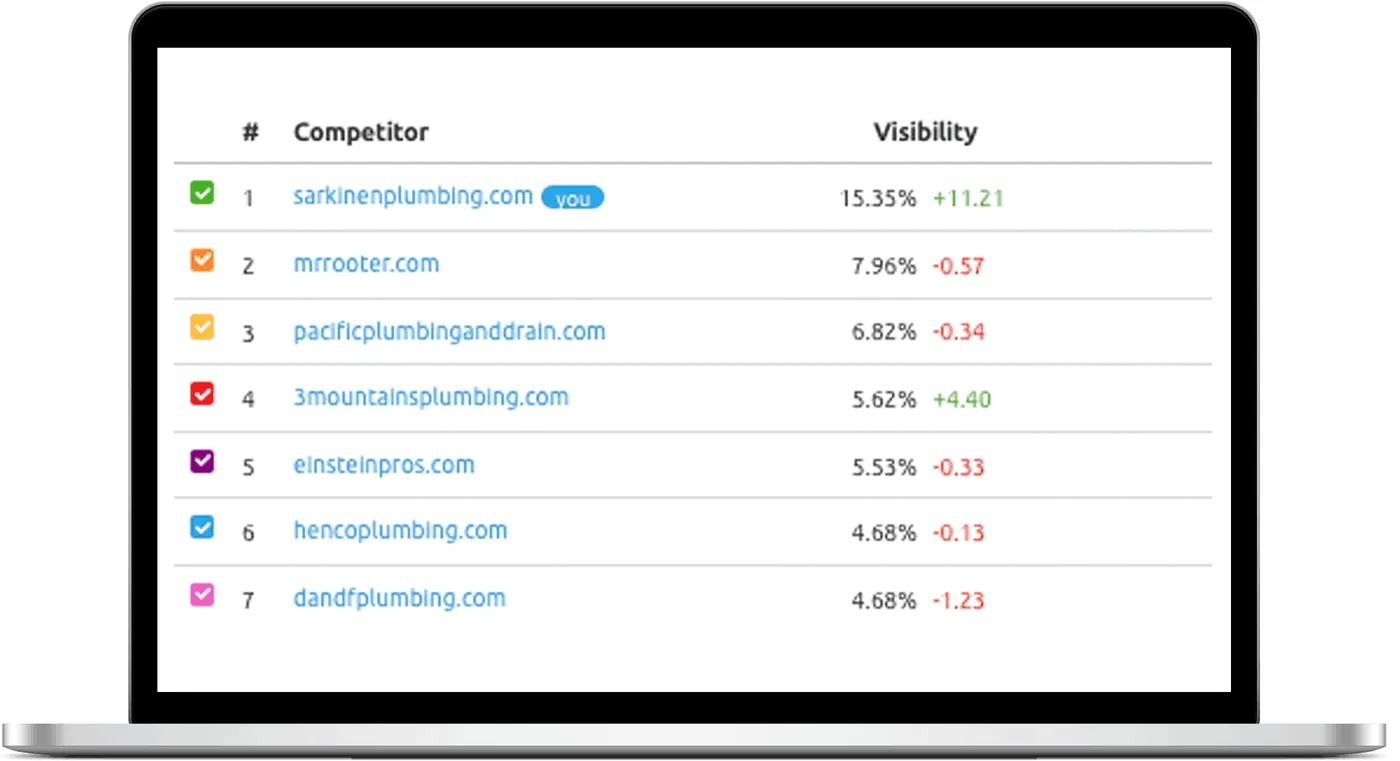
How a service business put 225% more conversions on the board with technical SEO and a content rebuild.
Sarkinen Plumbing needed the right searches to produce more value. Lithium rebuilt service content, improved technical SEO, refined the Google Business Profile, and tracked calls, forms, and quote requests with more precision. Conversions increased 225 percent while cost per acquisition fell 40 percent.
McAllen businesses that need search to support better conversations.
The best fit is an operator who needs search to help buyers understand services, trust the business, and make contact. These verticals benefit from clearer pages, accurate local data, proof near decisions, and reporting that shows real action.
Home-services SEO supports HVAC, plumbing, electrical, roofing, remodeling, restoration, pest control, landscaping, and cleaning companies. Pages need urgent service clarity, financing or estimate language, service-area details, reviews, and Google Business Profile alignment.
Healthcare, dental, therapy, chiropractic, and specialty-care SEO needs service pages that explain appointments, insurance, payment options, providers, reviews, and access. Patients should understand the practice before they pick up the phone.
Contractor SEO works when the site proves capability before asking for an estimate. Galleries, project categories, service pages, credentials, warranties, financing notes, and quote language help property owners decide whether the company fits.
Professional-service SEO for attorneys, accountants, consultants, insurance agencies, and advisors needs credibility. Practice pages, bios, credentials, case context, reviews, and consultation details should answer careful questions before the first call.
Restaurants, venues, caterers, hotels, and hospitality businesses need details that stay accurate across search and the website. Menus, hours, reservations, events, parking, photos, reviews, and maps should support quick decisions.
Auto-service SEO helps repair shops, body shops, tire stores, glass companies, detailers, towing providers, and fleet service teams explain services quickly. Pages should cover scheduling, reviews, warranties, turnaround expectations, and practical next steps.
Specialty retail SEO helps shoppers compare local stores, marketplaces, and social recommendations. Product categories, inventory cues, photos, return policies, reviews, store details, and location information help turn online research into a visit or question.
B2B, logistics, manufacturing, professional-service, education, and technology companies need content that explains capability and process. Useful pages clarify industries served, service territory, certifications, outcomes, and the first step for a serious buyer.
From audit to compounding organic traffic in ninety days, with monthly reporting tied to leads and revenue.
SEO is a compounding system, not a one-time project. The Lithium process starts with a technical audit and a keyword strategy locked to revenue per lead, then ships fixes and content on a weekly cadence with monthly reporting that ties impressions to booked work.
Discovery and full SEO audit
Discovery reviews Search Console, GA4, Google Business Profile data, crawl results, rankings, conversions, and backlink quality. We compare those signals with service mix, sales questions, buyer intent, and competitors visible in McAllen search results.
Keyword strategy and content roadmap
The roadmap gives the work a practical order: technical fixes, page priorities, keyword clusters, internal links, content briefs, profile cleanup, review work, and authority opportunities. High-intent services move to the front of the queue.
Technical fixes and on-page work
Core Web Vitals optimization on the pages buyers actually land on, render-blocking JavaScript removal, image compression with lazy loading, schema deployment (LocalBusiness, Service, FAQPage, BreadcrumbList, Article), internal linking restructure, sitemap cleanup, and indexation pruning. Every schema change validated in Google’s Rich Results Test before it ships.
Content production and on-page SEO
Core content should answer the decision before the site adds volume. Service pages, location pages, FAQs, comparison sections, proof pages, and supporting articles need to handle real buyer questions in plain language.
Local SEO and link earning
Local search work connects profile management, citations, reviews, services, service areas, and relevant mentions. We clean up conflicting facts, improve profile content, and track whether visibility is improving for the searches that matter.
Measurement and monthly iteration
Monthly reporting covers Core Web Vitals, organic calls, form completions, local visibility, keyword movement, search terms, and page performance. The review focuses on which changes produced useful action and what should happen next.
Engineered to surface in Google AI Overviews, ChatGPT, Perplexity, and Claude.
SEO, AEO, and GEO each support a different search behavior. SEO improves classic result visibility, AEO helps direct answers, and GEO helps generative systems understand the business through consistent facts and structured source content.
Quotable answer blocks
Answer-ready sections should open with the direct answer, then add context and proof. That structure helps buyers scan and gives search systems a clearer passage when summarizing services, costs, timing, or fit.
Fact density and citations
Useful facts can include services, languages, credentials, service areas, process steps, photos, review themes, payment details, and pricing context. Specificity helps when it answers a buyer’s question instead of padding a page.
Schema for generative engines
Schema gives search engines structured facts behind visible content. LocalBusiness, Service, FAQPage, Article, BreadcrumbList, and Review markup can clarify identity, services, questions, and related pages when implemented correctly.
Brand consistency across the web
Public facts should agree across the website, Google Business Profile, directories, reviews, social profiles, and local references. Consistency helps buyers and answer engines understand categories, services, coverage, and contact details.
Topical authority and entity coverage
Topical depth comes from connected pages, not repeated wording. Services, FAQs, comparison answers, internal links, proof, and supporting guides should help people and search systems understand what the business actually does.
llms.txt + AI crawler controls
llms.txt can help point AI crawlers toward important source pages. It is most useful when paired with robots.txt guidance, clean service copy, a healthy sitemap, and consistent business facts across the site.
What each SEO approach gives a local owner
Service businesses Lithium has driven SEO results for.
Willard Power Vac
“Lithium Marketing has been amazing for our business. They have greatly increased our web traffic and helped us land hundreds of jobs.”
Drake’s 7 Dees
“Lithium has moved us to page 1 in Google search organically.”
Rickabaugh Construction
“Working with Lithium Marketing has been awesome.”
McAllen SEO questions, answered plainly.
Most local SEO programs need 60 to 90 days before early movement is visible, and six to twelve months for more competitive terms. Technical cleanup, indexing repair, and profile improvements may move sooner; page depth and authority usually need steady work.
Google Ads can create fast visibility while SEO builds a stronger organic base. For a McAllen business, the right mix depends on urgency, budget, competition, service value, and current search data. Ads can test terms while SEO strengthens durable pages.
Most local SEO retainers for service businesses fall between $1,300 and $3,000 per month. Scope depends on site condition, competition, content needs, service-area complexity, review strategy, bilingual requirements, authority opportunities, and the value of a booked customer.
No ethical agency can guarantee a specific Google ranking. The work can be guaranteed: technical repair, page improvements, content production, local data cleanup, reporting, and priority recommendations. Rankings usually improve when the right work is consistent, but search results remain outside agency control.
SEO focuses on classic search results, AEO supports direct-answer surfaces, and GEO helps generative systems understand the business. The shared work includes clear facts, structured data, useful service content, consistent profiles, and pages that deserve to be referenced.
We measure SEO with progress indicators and business outcomes. That can include impressions, rankings, Map Pack visibility, clicks, landing-page conversion rate, calls, forms, booked appointments, and attributed organic activity from GA4 or call tracking when sales data is available.
A retainer usually includes technical monitoring, on-page updates, content production, Google Business Profile work, citation cleanup, review strategy, authority work, reporting, and a monthly strategy call. Some accounts include conversion testing when enough traffic exists to learn reliably.
Yes, but new businesses need a realistic runway. Early work usually focuses on the website foundation, Google Business Profile, citations, service pages, reviews, and lower-competition searches. Paid search can help while organic visibility earns trust.
Your SEO strategy call is led by DJ Van Zanten.
DJ Van Zanten joined Lithium as co-founder in 2018 and leads strategy for client partnerships. He connects search findings to business priorities while Kurt Schell directs technical, content, PPC, and conversion execution from more than twenty years of SEO work.
Get a free 30-minute McAllen SEO review.
On the call, we review Core Web Vitals, organic keywords, Google Business Profile health, backlink quality, schema, indexation, and content gaps against local competitors. You leave with a written priority list, whether or not Lithium is the right fit.
- No-obligation 30-minute call with DJ Van Zanten, not a junior
- Written priority list of the top 5 to 10 changes that will move leads
- Google Partner with a 5.0 rating across 30+ Google reviews