
Oceanside Web Design for Service Businesses That Need Better Inquiries
Websites built to explain the offer and make contact easy.
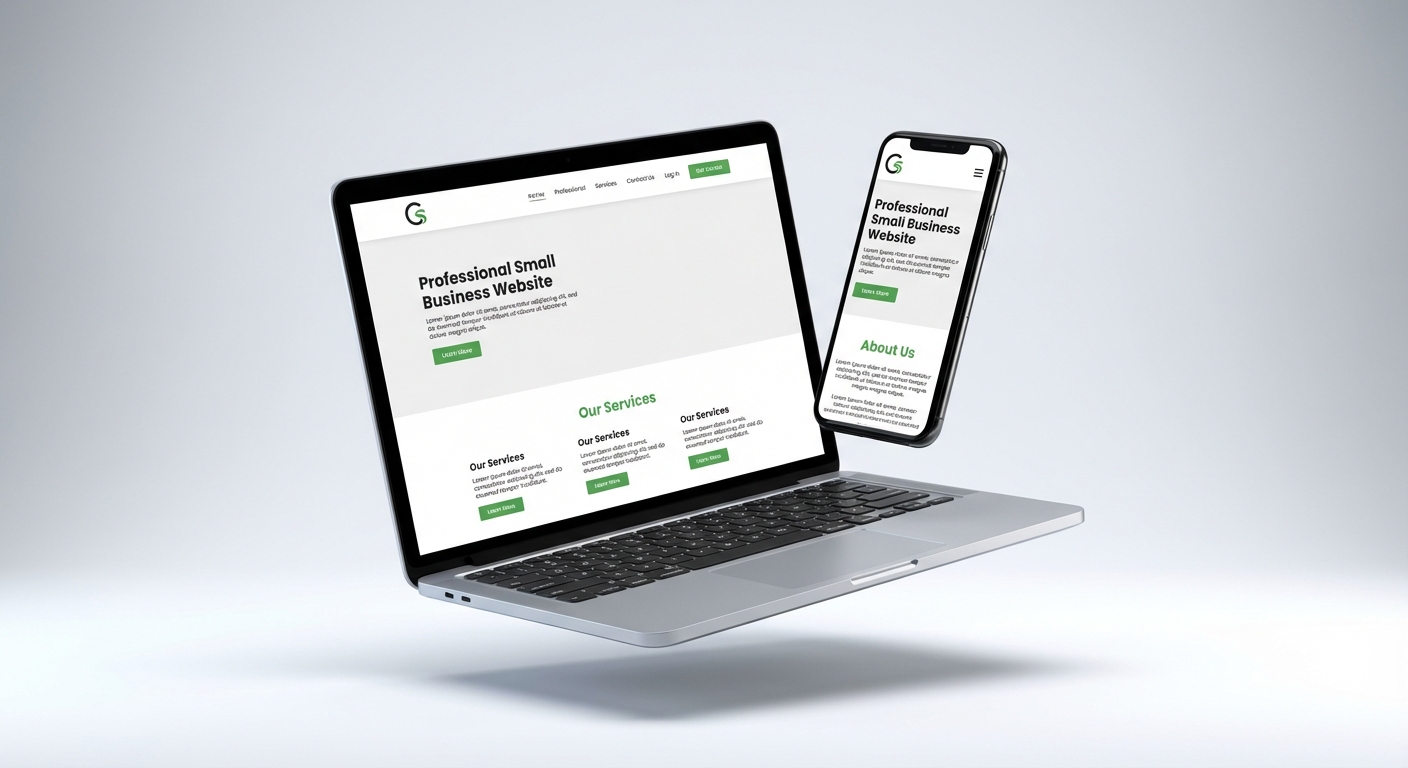
Your site should help Oceanside buyers decide whether your company is the right fit. We build fast, clear pages for contractors, clinics, retailers, hospitality teams, professional firms, and B2B companies that need calls, forms, bookings, and quote requests to work on mobile.
- Google Partner certified
- Meta Business Partner
- 5.0 ★ across 30+ Google reviews
- 100+ clients served nationwide
- $10M+ in Google Ads managed
- Marketing services since 2010
Partner
Most local sites make ready buyers work too hard.
Oceanside visitors often compare providers from a phone while balancing work, base life, beach traffic, tourism, and North County errands. The first page has to clarify the offer, prove the business, and make the next step simple.
“ A useful site makes the right action feel obvious.
The searches that bring real opportunities are usually plain and service-driven, not polished marketing language. A homeowner, patient, manager, or traveler may be comparing options in the same sitting after searching: Oceanside contractor website design or Oceanside dental website redesign Those visitors need fast loading, direct language, proof near the decision, and contact options that work without a desktop screen. Decorative pages lose value when they hide the practical answer.
A stronger website turns the business into a clearer choice. That means service pages people can scan, mobile actions they can use, local search structure Google can read, and tracking that shows where serious inquiries start.
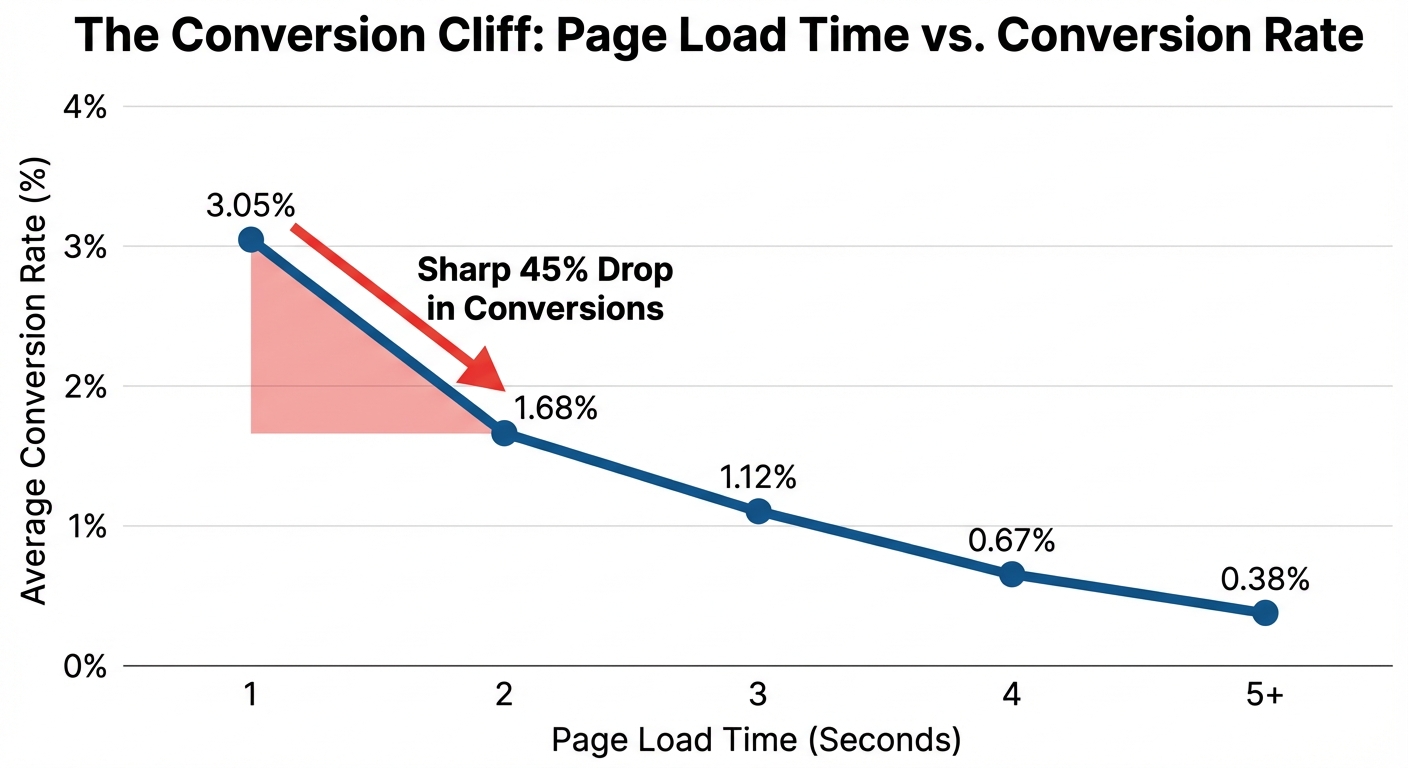
Slow mobile load = lost lead
A slow page loses attention before the visitor understands the service. We look at image weight, scripts, layout shifts, Core Web Vitals, and real mobile behavior because a heavy site gives competitors an easy opening.
No one-tap path to call you
Contact options should appear where the decision is forming. Tap-to-call buttons, short forms, booking links, quote requests, and directions need to stay easy to reach as visitors move from the hero into proof and service detail.
Built for looks, not for ranking
Technical structure helps people and search engines understand the business. Clean URLs, schema, service pages, internal links, Core Web Vitals, and Google Business Profile alignment give the site a stronger local foundation.
No proof above the fold
Visitors scan for proof before they slow down. Reviews, project photos, credentials, service areas, warranties, team notes, and examples should support the claims nearby instead of sitting in a detached section few people reach.
Eight essentials every service-business website should have before launch.
Each build starts with the practical foundation: clear positioning, fast mobile performance, readable service pages, useful calls to action, local SEO structure, visible proof, accessibility basics, and tracking that shows what visitors actually do.
Sub-2.5-second mobile load
We target strong Core Web Vitals, including a fast largest contentful paint, low interaction delay, and stable layouts. The goal is a site that feels responsive on real phones, not only in a polished desktop mockup.
Primary Actions Built for Mobile
Calls, quote requests, booking links, and forms are designed for a thumb, not a conference-room screen. We keep the next action visible, readable, and easy to complete as the visitor moves through service information.
Above-the-fold value proposition
The hero should answer what you do, who you help, why the visitor should believe you, and what to do next. We avoid vague welcome copy and visuals that say nothing about the actual business.
SEO-ready architecture
Local Search and Google Profile Integration
Business name, phone details, service areas, categories, and schema should match the way the company appears across Google Business Profile and core listings. That consistency helps the site support local search without inventing locations.
Real proof, placed where it converts
Proof should sit close to the claim it supports. Reviews, case examples, awards, licenses, photos, and guarantees make the site feel accountable to someone comparing options from a small screen.
Tracking that ties leads to revenue
GA4 events fire on every form submission, booking action, and click-to-call. Call tracking connects conversations back to traffic source, and conversion tags are wired to Google Ads before campaigns send paid traffic into the new site.
WCAG-aware, AI-search-ready
Accessible structure helps visitors and search systems use the page. We plan headings, contrast, keyboard behavior, short answer blocks, and AI systems context so the business is easier to parse.
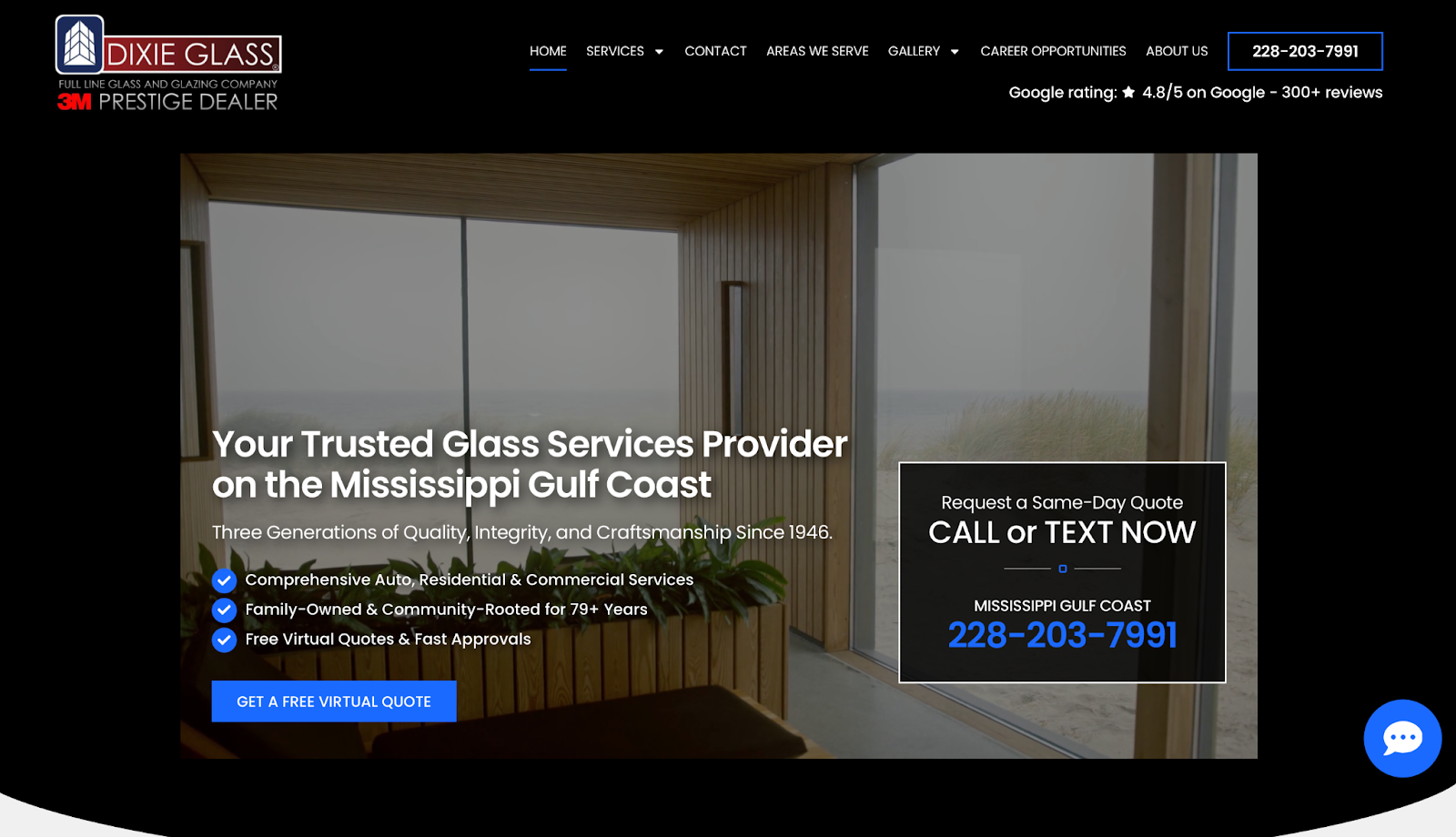
How a third-generation Gulf Coast glass company drove 76% more conversions after we rebuilt their site.
Dixie Glass needed a site and marketing system that could turn interest into measured inquiries. Lithium rebuilt the WordPress experience, improved quote actions, connected local PPC measurement, and supported the launch with local SEO structure. Conversions rose 76 percent in twelve months.
More conversions
Organic traffic growth
Search visibility growth
DIXIE GLASS | WEBSITE REBUILD CASE STUDY

Service businesses where a better website can change the first conversation.
Oceanside has a practical mix of home services, healthcare, hospitality, military-adjacent households, retail, trades, and professional firms. A strong site respects that mix with clear services, fast pages, proof near decisions, and tracking that separates serious inquiries from browsing.
Home-service companies need pages that work for urgent and planned decisions. HVAC, plumbing, electrical, roofing, restoration, landscaping, and cleaning sites should pair service clarity with local SEO structure, reviews, photos, and fast contact options.
Dental, medical, chiropractic, therapy, and specialty-care sites need to reduce patient uncertainty. Insurance notes, appointment options, provider bios, reviews, treatment pages, and mobile forms should be easy to scan before the first call.
Contractors, remodelers, roofers, painters, and specialty trades need more than a gallery. The site should show project fit, process, credentials, service areas, estimate options, and proof that the team can be trusted around the property.
Professional-service firms sell trust before they sell the service. Attorneys, accountants, consultants, advisors, and agencies need practice pages, team credibility, reviews, case context, and clear consultation actions.
Restaurants, cafes, hotels, venues, caterers, and tourism-adjacent businesses need sites that answer quickly. Menus, reservations, hours, private events, parking, photos, and ordering actions should be polished and practical on mobile.
Auto repair, detailing, tire, glass, towing, and fleet service businesses often depend on fast decisions. Service categories, estimate language, reviews, warranties, phone actions, and paid search landing pages should work together.
Specialty retail sites need to help shoppers decide whether a visit is worth it. Inventory cues, brand story, product categories, location details, photos, reviews, and merchant data all support local discovery and in-store traffic.
B2B, logistics, industrial, training, technology, and professional firms need credibility before pricing is discussed. The site should explain capabilities, markets served, certifications, process, service territory, and what qualifies a good inquiry.
From kickoff to launch in six to nine weeks, with weekly decisions instead of mystery delays.
The process runs on a weekly rhythm of review, decide, and build. You see the strategy, content, design, and launch requirements as they form, so the final site is not a surprise at the end.
Discovery & strategy
We map your services, buyer questions, revenue per inquiry, competitive set, and current data. Search Console, GA4, ad history, and profile details are reviewed when available before we choose the conversion goal.
Information architecture & content plan
You receive a sitemap, URL plan, schema outline, content brief, and page priorities. The architecture is planned with local SEO in mind before design begins, so launch pages support search and paid traffic.
Design direction
Design starts from the agreed strategy. We show the core desktop and mobile direction, refine from useful feedback, and extend the approved system across the remaining pages so the experience stays consistent.
Build, content, integrations
We build the site in Elementor on WordPress and write SEO-optimized copy in parallel. The build phase also includes forms, GA4 events, call tracking, Google Ads conversion tags, Google Business Profile alignment, schema, and any CRM or booking integrations needed to make leads trackable.
QA, launch, indexing
Before launch, we test the site like buyers and crawlers will use it. Mobile layouts, forms, phone clicks, redirects, schema, analytics events, speed basics, and Search Console setup are checked before traffic depends on them.
30 / 60 / 90-day tracking
Launch creates the first useful round of data. We monitor traffic, form activity, phone clicks, search movement, Core Web Vitals, lead quality, and the pages where a better message or layout could improve contact rates.
Engineered to surface in Google AI Overviews, ChatGPT, Perplexity, and Claude when buyers ask.
AI search tools need clear business entities, useful answers, reviews, citations, and service content. We build pages that support SEO and AI systems without filling the site with thin keyword copy.
Quotable answer blocks
Important questions should open with the direct answer, then add context. That format helps visitors scan quickly and gives AI systems cleaner passages to interpret from the page.
Fact density and citations
A local page should sound like it came from a real business. Services, proof, process notes, dates, team details, pricing context, and limitations make the site more useful than broad claims.
Schema for generative engines
We use schema to make business identity, service categories, FAQ answers, article-style context, breadcrumbs, and action options easier for search engines to parse. Valid markup supports the visible content instead of replacing it.
Brand consistency across the web
A confused web presence can produce confused summaries. We align the site with profiles, reviews, listings, and other public mentions so answer engines and buyers see a more consistent business entity.
Topical authority and entity coverage
Depth beats repetition. A strong service site uses related pages, FAQs, proof sections, internal links, and topical clusters so visitors and search systems understand more than one generic services page.
llms.txt + AI crawler controls
For companies that care about AI visibility, crawler guidance matters. We pair structured content with llms.txt and robots.txt thinking for major AI crawlers while keeping the public page useful for people first.
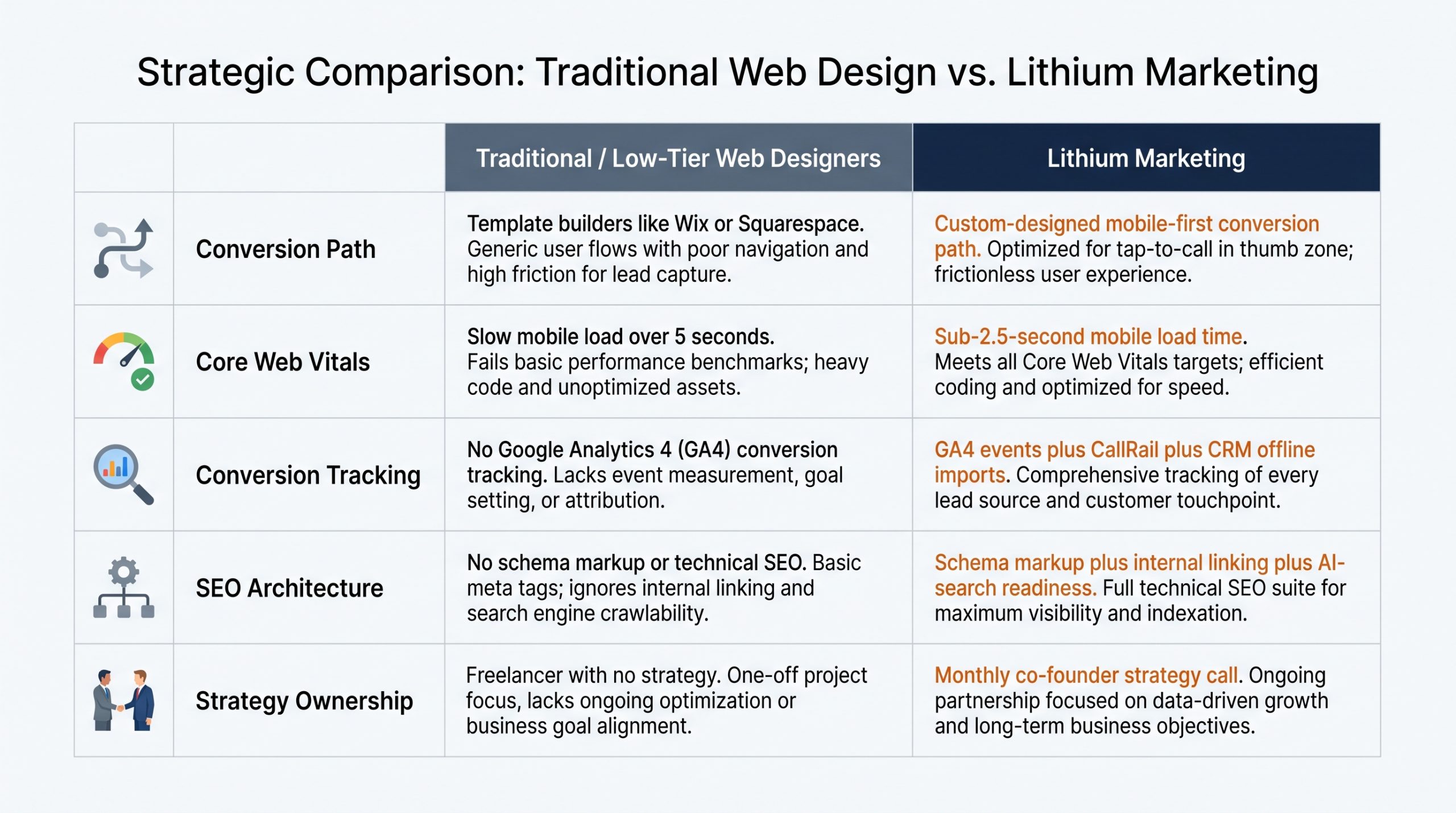
What service businesses get from each web design approach
Service businesses Lithium has built websites for.
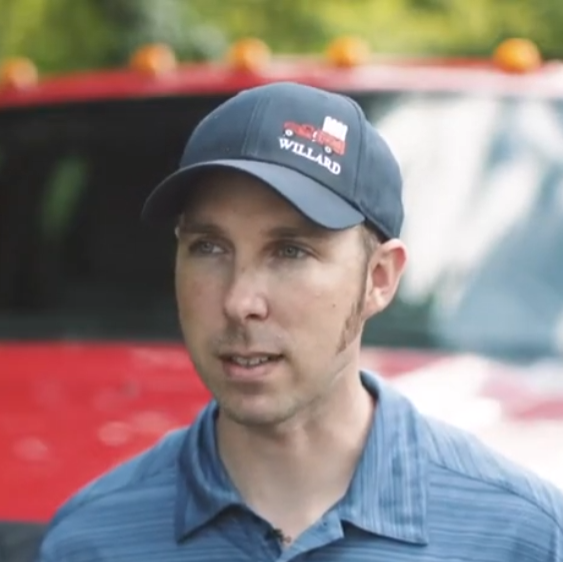
Willard Power Vac
“Lithium Marketing has been amazing for our business. They have greatly increased our web traffic and helped us land hundreds of jobs.”
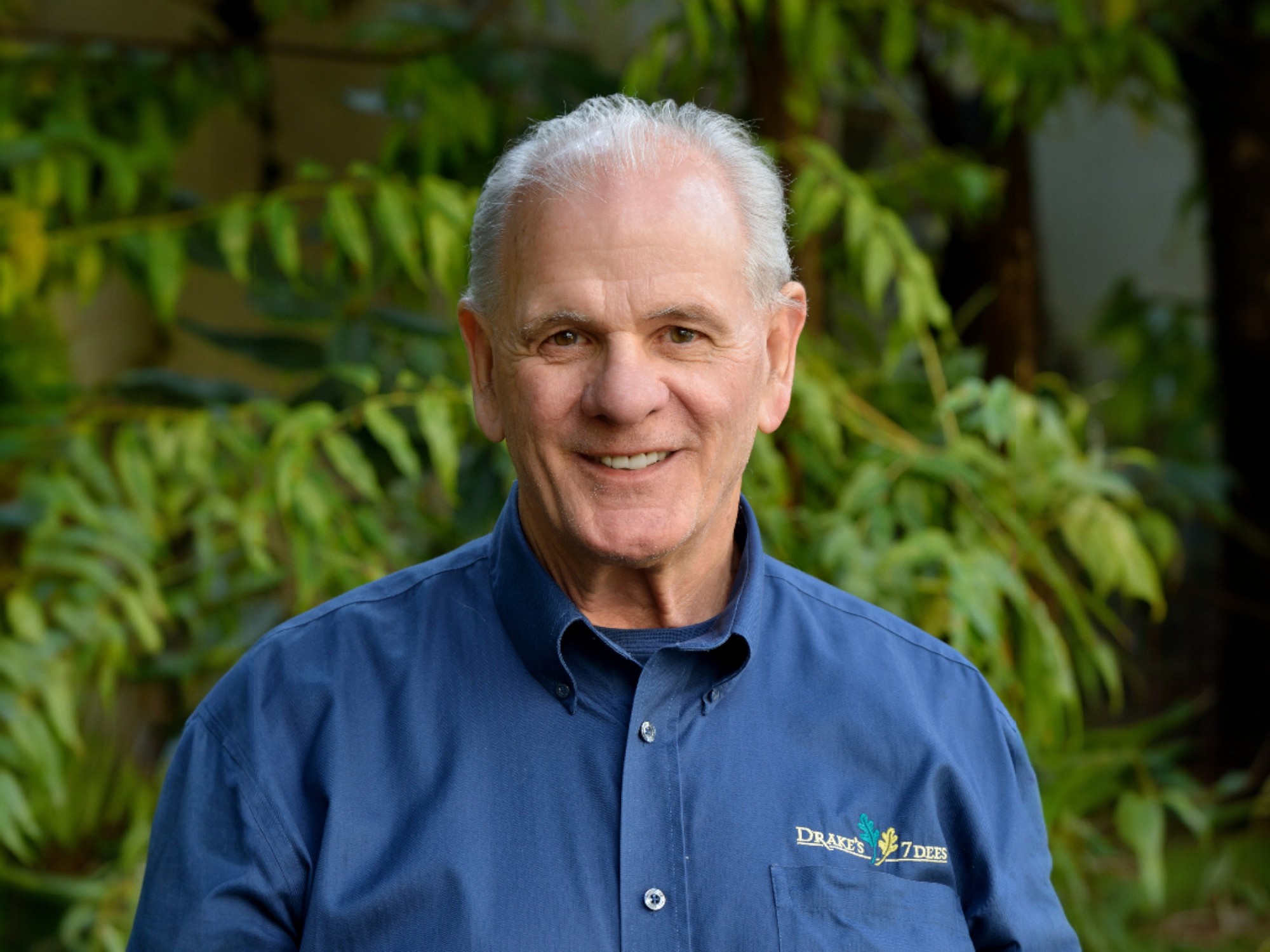
Drake’s 7 Dees
“Lithium has moved us to page 1 in Google search organically.”
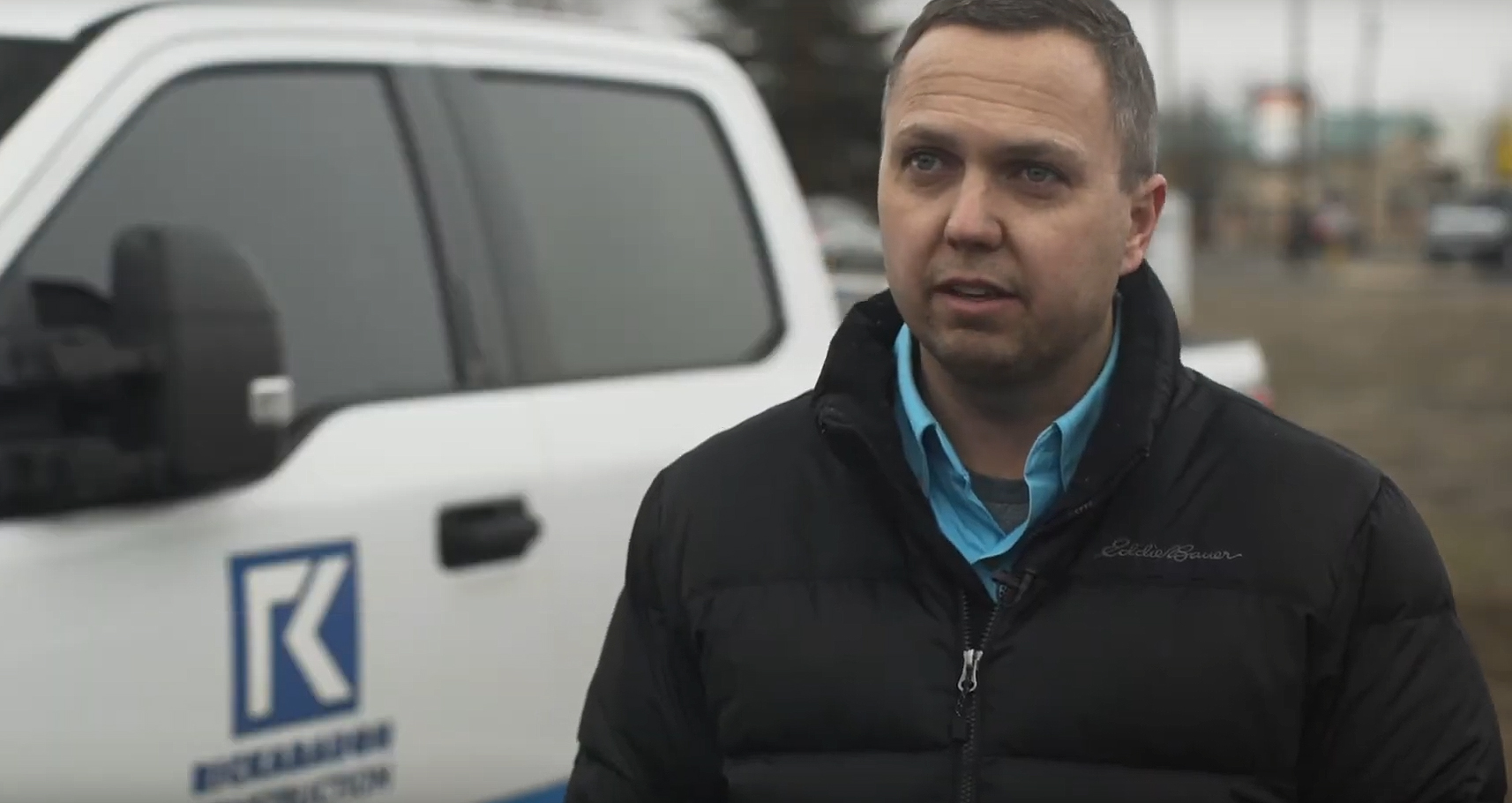
Rickabaugh Construction
“Working with Lithium Marketing has been awesome.”
Oceanside web design, straight answers.
A Lithium website for an Oceanside service business typically ranges from $5,000 to $20,000. Scope depends on page count, content needs, integrations, booking or quote features, SEO work, and PPC campaigns that need matching landing pages.
Most projects take six to nine weeks once scope, content responsibilities, and approvals are clear. Strategy comes first, then design, build, mobile testing, form checks, redirects, schema, tracking events, launch review, and final content approval before the handoff.
A new site can support rankings when the foundation is built correctly. Crawlable service pages, internal links, schema, Core Web Vitals, proof, and local SEO structure give Google cleaner material to understand and future content a better base.
Yes. Your business owns the site assets created for the project, including the WordPress build, approved page content, scoped creative assets, and custom work. Domain and hosting access should also stay under your control after launch.
Yes. We build on WordPress with Elementor so normal page edits can be handled visually after launch. We also provide a walkthrough, and Lithium can stay involved for support, search, content, paid traffic, or conversion improvements.
The right fit is about strategy, accountability, and execution quality, not the agency mailing address. Lithium runs remote projects with clear reviews, conversion tracking, service-page planning, and PPC alignment when paid traffic is part of the plan.
Most Oceanside projects run remotely because it keeps feedback, approvals, and scheduling simpler. Calls, Loom videos, shared docs, email, and project notes cover the work clearly. Travel can be discussed separately if the scope truly requires it.

Your strategy call is led by DJ Van Zanten
DJ has worked in digital marketing for more than twenty years and has consulted with over 1,000 service businesses. When you book from this page, he leads the first strategy conversation instead of handing it to a junior intake rep.
Get a free website review
The review focuses on issues that affect contact rates: mobile speed, CTA placement, service-page clarity, proof, schema, Google Business Profile alignment, analytics events, and the places serious visitors may be leaving.
- No sales pitch
- 30 minutes
- You keep the audit either way