
 Plumbing
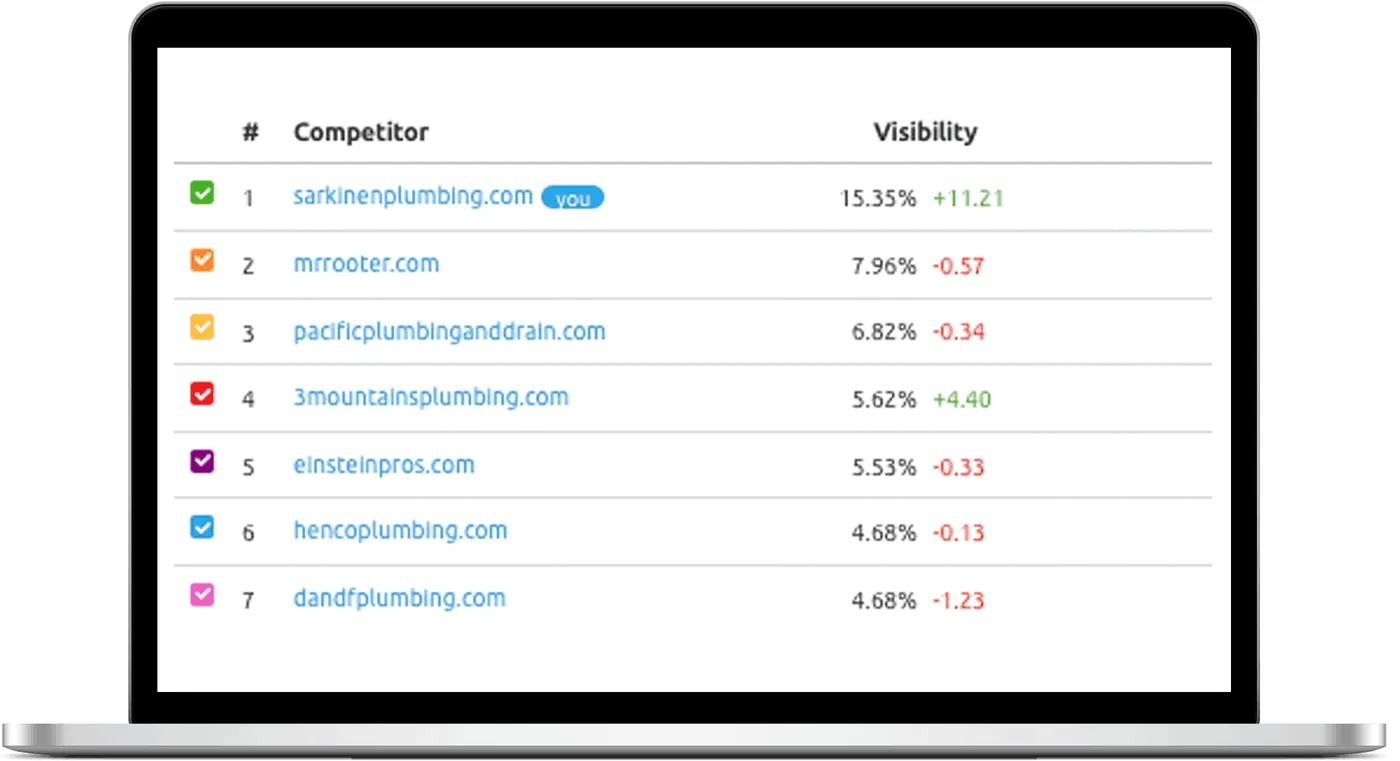
Sarkinen Plumbing
2Xleads
on the same budget
- search visibility
- 3.75X
- search visibility
- ads conversion rate
- 27.37%
- ads conversion rate
SEO in Sandy, Oregon
Sandy contractors get SEO built on what Google shows first here: the Map Pack, your reviews and pages that name each job you do.
 Google PartnerView our Partners listing
5.0on Google · read our reviews
Google PartnerView our Partners listing
5.0on Google · read our reviews
Businesses
we’ve worked with
Businesses we’ve worked with
Sandy SEO, the short version
Lithium Marketing handles SEO for Sandy contractors and home service companies, with one goal: more phone calls from local searches. When we checked Google’s Map Pack for “plumber sandy or”, the three businesses shown had 39, 233 and 73 reviews, and the one listed first had the fewest. Google says it ranks local listings on relevance, distance and prominence, so we work on the parts an owner can change: a profile that matches what people search for, and the reviews, pages and links that build prominence.
Your service area deserves the same care. Sandy High School serves Sandy as well as outlying communities, such as Boring and the Villages of Mount Hood, and if your crews take jobs in those places, each one can get its own page on your site and a spot in your Google Business Profile service area.
The Sandy results page
Below the map, the top 10 results for “plumber sandy or” included MapQuest, Nextdoor and Yelp. Each of those listings shows a Sandy customer your name, phone number and hours, and when they disagree with your website, Google has less reason to trust either one. Matching them is part of the first month’s work.
When we checked, the same search showed a People Also Ask box and no AI Overview. The questions in that box hint at what customers want settled before they pick up the phone, so your service pages answer them near the top, in plain words, with prices or ranges where you are willing to share them.
| Search | Searches a month | Cost per click |
|---|---|---|
| seo agency sandy or | under 10 | not reported |
| seo company sandy or | under 10 | not reported |
| seo services sandy or | under 10 | not reported |
| seo sandy or | under 10 | not reported |
Source: Google Ads keyword data, average monthly U.S. searches. "Under 10" = below Google’s reporting floor.
Source: one Google results page for “plumber sandy or”, as Google showed it to a searcher located in Sandy. Search ad counts exclude sponsored local listings. Results shift by searcher and day.
The Sandy market
In Sandy, 74.7% of occupied homes are owner-occupied, so most households you reach own the house they live in. If callers often ask about past work before they book, put the answer on your pages: photos of Sandy jobs, a line on what each one involved and your replies to reviews.
U.S. Route 26 runs through the middle of Sandy, forming the Pioneer and Proctor Boulevards downtown. Street names and local details like these give a Sandy service page something a page copied from another town lacks, and they tell a customer your crews know the area.
Sources: U.S. Census Bureau 2025 population estimates, ACS 2020–2024 and 2023 County Business Patterns.
Trade counts, Clackamas County
New home builders (344) and residential remodelers (310) are the two largest groups on the Clackamas County chart. A remodeler facing that many county firms needs a page for each kind of project, from kitchens to additions, with photos, so Google has something specific to match when a Sandy owner searches for that job.
Electricians form a smaller field: Clackamas County counts 122 electrical contractors. An electrician can give each job its own page, such as panel upgrades, lighting or EV chargers, and list the same services on the Google profile, so the site and the profile tell Google one consistent story.
County Business Patterns
Trade and home service businesses in Clackamas County
Establishments by industry, 2023
Source: U.S. Census Bureau, 2023 County Business Patterns (NAICS establishment counts).
The SEO work
The order runs from what Google reads on your site to what customers read about you elsewhere.
First comes a full crawl for speed problems, dead links and missing schema markup. Repairs like these typically show within 30 days.
Your Google Business Profile gets each service you sell plus photos from real jobs. For reviews, we hand you a short text to send each customer when a job wraps up.
Each service you want to grow gets a page, and Boring, the Villages of Mount Hood or any other place you work can get one of its own.
MapQuest, Nextdoor and Yelp listings are corrected so they agree with your website. After that, link building points at the service pages producing the most calls.
What every SEO retainer includes
The same eight parts go into every SEO retainer, wherever the business is.
Proof
Sarkinen Plumbing works in the Portland metro, the same metro Sandy belongs to. The results on the card came from three Lithium services working together: SEO, a rebuilt website and Google Ads. Beside it is a quote from Matt Johnson, from his time running On-Target Landscape.
Plumbing2Xleads
on the same budget
“Lithium Marketing is awesome to work with and the results you’ll get are outstanding. Once I started working with them I saw increase in my online presence and my sales increased too. I would highly recommend them to anyone looking for help with marketing!”
 Matt JohnsonOn-Target Landscape
Beyond Sandy
Area pages work best for towns that already send you jobs. If that includes Gresham, Troutdale, Happy Valley, Fairview, Oregon City or West Linn, the SEO page for each city below shows what its searchers see, and the Oregon link covers the rest.
Published price
$1,300–$3,000
per month
Typical local SEO retainer, scoped against what a lead is worth to you, with AI search optimization included.
FAQ

Still curious?
Call (503) 766-5964 or email [email protected].
Lithium’s SEO retainer runs $1,300 to $3,000 a month. The number moves with two things: the work your site and Google profile need, and what a new customer is worth to you. You see your price before any work starts.
Month one is mostly repair work: technical fixes, which usually register within 30 days, and a finished Google profile. Over months two and three, local and long-tail rankings typically start to climb, about 60 to 90 days in. Revenue tends to compound from month four, and every report from the start shows the calls.
Yes, mostly through your website. Map Pack results lean toward businesses near the searcher, so a Sandy address does best for searches made around Sandy. A page for Boring, Gresham or any other town you serve gives Google a match in the regular results below the map.
It is included in every retainer. AI tools such as ChatGPT draw on pages that state a clear answer, so your service pages open with the answer a buyer wants, carry schema markup and list the same name, address and phone as your listings. Mentions in AI answers can’t be promised by anyone; what you see from us each month is the calls and leads.
Access to your website and Google Business Profile, a list of the services you want more of and the towns where you take jobs. If you have photos of jobs in Sandy, send those too, since they go on both the profile and the pages.
Free action plan
Send your website and Google Business Profile link, plus the towns where you take jobs. Over a short video call, a co-founder lists the gaps in your profile and pages, in the order we would fix them.
What we’ll cover
2000 NE 42nd Ave Ste D Unit 2370, Portland, OR 97213
Prefer to pick a time? Book a 30-minute call with DJ