
 Restoration
Robinson Restoration
26Xorganic traffic
79 to 2,200+ visits a month, SEO only
- organic visits a month
- 79 → 2,200+
- organic visits a month
- top-3 rankings
- 120
- top-3 rankings
Local SEO for Winston-Salem
Reach Winston-Salem customers searching for your services with SEO that connects website improvements and local listings to monthly lead reporting.
 Google PartnerView our Partners listing
5.0on Google · read our reviews
Google PartnerView our Partners listing
5.0on Google · read our reviews
Businesses
we’ve worked with
Businesses we’ve worked with
Search beyond your name
Lithium Marketing builds search visibility for Winston-Salem service businesses through local SEO, service content and technical website work. The phrase “plumber winston salem” attracts about 1,900 searches a month. To compete for those customers, a business needs pages and listings that match the service being searched, even when the customer has never heard its name.
That work includes your Google Business Profile, the information on outside listings and the pages Google can read on your website. We look for missing services, weak explanations and technical problems before adding content. You get a plan for the changes that support calls from the territory you serve.
What buyers encounter
Pest services have their own demand: about 590 monthly searches name “pest control winston salem”. A treatment page should explain the problems you handle and the next step for arranging service. We research the searches within your trade so each page answers a buying question, with links that help visitors reach related services.
When we checked “plumber winston salem”, the local business listings displayed 1,000, 289 and 7 reviews. Keep requesting feedback from customers after their jobs are finished, and make your profile's services accurate. Yelp and Thumbtack also appeared among the recorded plumbing results. Correcting inconsistent contact details on outside profiles helps customers recognize the same business when they reach your site.
| Search | Searches a month | Cost per click |
|---|---|---|
| seo winston salem | 210 | not reported |
| seo company winston salem | 110 | not reported |
| seo services winston salem | 50 | not reported |
| seo agency winston salem | under 10 | not reported |
Source: Google Ads keyword data, average monthly U.S. searches. "Under 10" = below Google’s reporting floor.
Source: one Google results page for “plumber winston salem”, as Google showed it to a searcher located in Winston-Salem. Search ad counts exclude sponsored local listings. Results shift by searcher and day.
Coverage with substance
Ardmore is Winston-Salem's largest neighborhood. If you serve it, a description of your work there can answer more than the words “we cover Winston-Salem”. We use your own job examples and service details to explain what a customer can hire you to do.
West End includes a predominantly residential historic district. For contractors with experience on those properties, service content can explain how they approach the work and show completed jobs. We build location content from what your company knows and has done; a neighborhood name alone gives a buyer little reason to choose you.
Sources: U.S. Census Bureau 2025 population estimates, ACS 2020–2024 and 2023 County Business Patterns.
Competing on detail
Electrical contractors account for 82 establishments in Forsyth County. A company selling panel upgrades needs more than a general electrical heading: explain the work, the questions an estimate resolves and how a homeowner gets started. Specific pages give both the reader and search engines a clearer account of your expertise.
The roofing trade has 40 establishments in Forsyth County. For a roofer, service descriptions and photos of your jobs should make repair and replacement work easy to distinguish. Across trades, we build the content around what you do well, then track the searches and leads that follow.
County Business Patterns
Trade and home service businesses in Forsyth County
Establishments by industry, 2023
Source: U.S. Census Bureau, 2023 County Business Patterns (NAICS establishment counts).
The search work
Your SEO retainer covers the website, local presence and ongoing work needed to compete for service searches.
We inspect indexing, load performance and the searches reaching your site. The findings determine which technical repairs and service pages need attention.
We correct profile categories and listings, add service information and help you request customer reviews. Your phone number and coverage should be consistent wherever buyers check.
We write around customer questions, your experience and the areas you work. Internal links and structured business information help search engines understand those pages.
We develop links and content while monitoring visibility and recorded leads. Your feedback on the calls helps us decide which services deserve more work.
What every SEO retainer includes
The same eight parts go into every SEO retainer, wherever the business is.
Search work in use
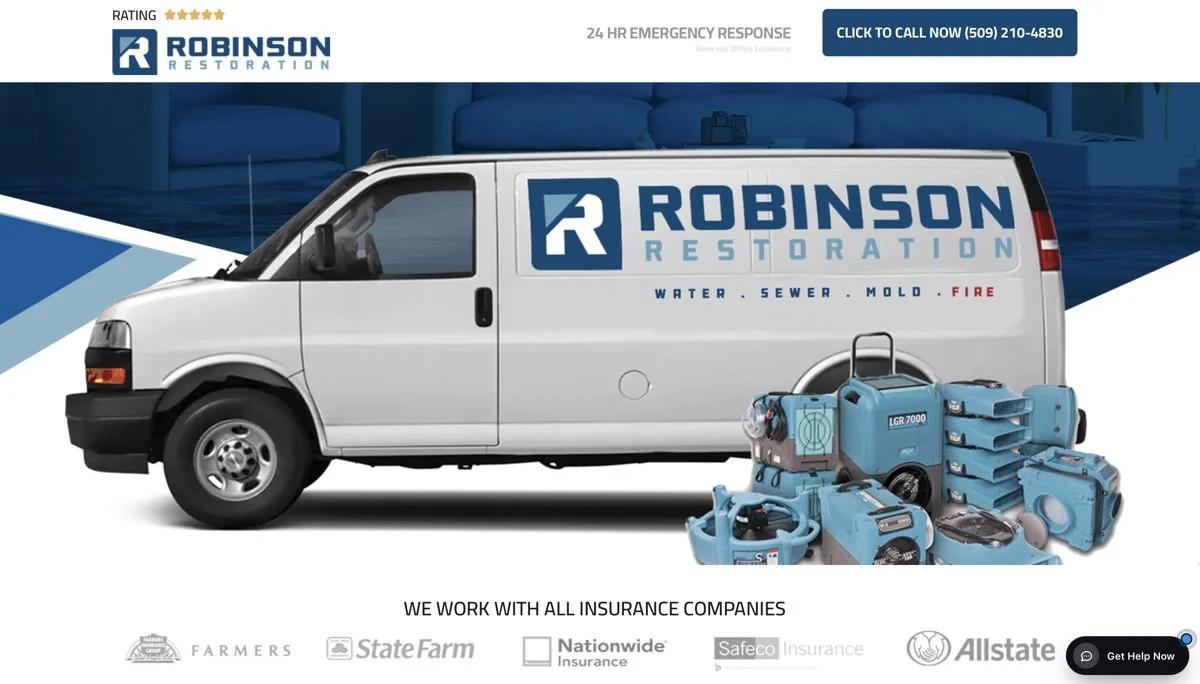
For Robinson Restoration, Lithium built a website and delivered SEO. The restoration company's case follows its organic search performance. Chris Martin of Mt. Hood Pro Painting shares a painting business owner's experience in the testimonial.
Restoration26Xorganic traffic
79 to 2,200+ visits a month, SEO only
“Ever since we've used Lithium Marketing, our phone has been ringing off the hook and we can hardly keep up with the leads we get from Google, Facebook or through our website. Most of our leads other than referrals are through Google and it's all because of Lithium Marketing.”
 Chris MartinMt. Hood Pro Painting
Search beyond the city
A business taking jobs in Greensboro or High Point may need content for those markets as well. Review their SEO pages alongside the separate markets of Concord, Charlotte, Durham and Roanoke, Virginia, or use the North Carolina link to explore the state.
Published price
$1,300–$3,000
per month
Typical local SEO retainer, scoped against what a lead is worth to you, with AI search optimization included.
FAQ

Still curious?
Call (503) 766-5964 or email [email protected].
We set the monthly retainer by the repairs, service pages and competition in your target area. Expanding across several services and cities usually takes more ongoing work than promoting a focused local offer. We also discuss what a booked job brings in before recommending how much to invest.
SEO progress usually starts with technical improvements in the first 30 days. For local rankings and more specific service searches, the typical window is 60 to 90 days. Those are working expectations, not promised results. We report on leads and search performance throughout the work, so you can see what is changing while rankings develop.
Your profile and website do different work, and both deserve attention. A profile helps people evaluate the business in local results. Service pages give you space to explain jobs, show experience and answer questions before the call. Google controls map placement; no agency can secure a position by contract.
AI search readiness is included in the SEO retainer. We structure answers so the services and business facts are easy to understand, then support them with schema and consistent information. That preparation cannot guarantee a mention in an AI answer. Calls and leads remain central to judging the investment.
The standard engagement begins with six months, then continues monthly with 30 days' notice. The proposal defines the work during that term. Ending SEO stops the ongoing improvements; it does not change ownership of a website we built for you, including the domain, hosting, WordPress installation and content.
Free action plan
Share your website, your service list and the places you take jobs. On a short video call, a co-founder will explain the priorities for a free SEO plan and how to measure progress.
What we’ll cover
2000 NE 42nd Ave Ste D Unit 2370, Portland, OR 97213
Prefer to pick a time? Book a 30-minute call with DJ