
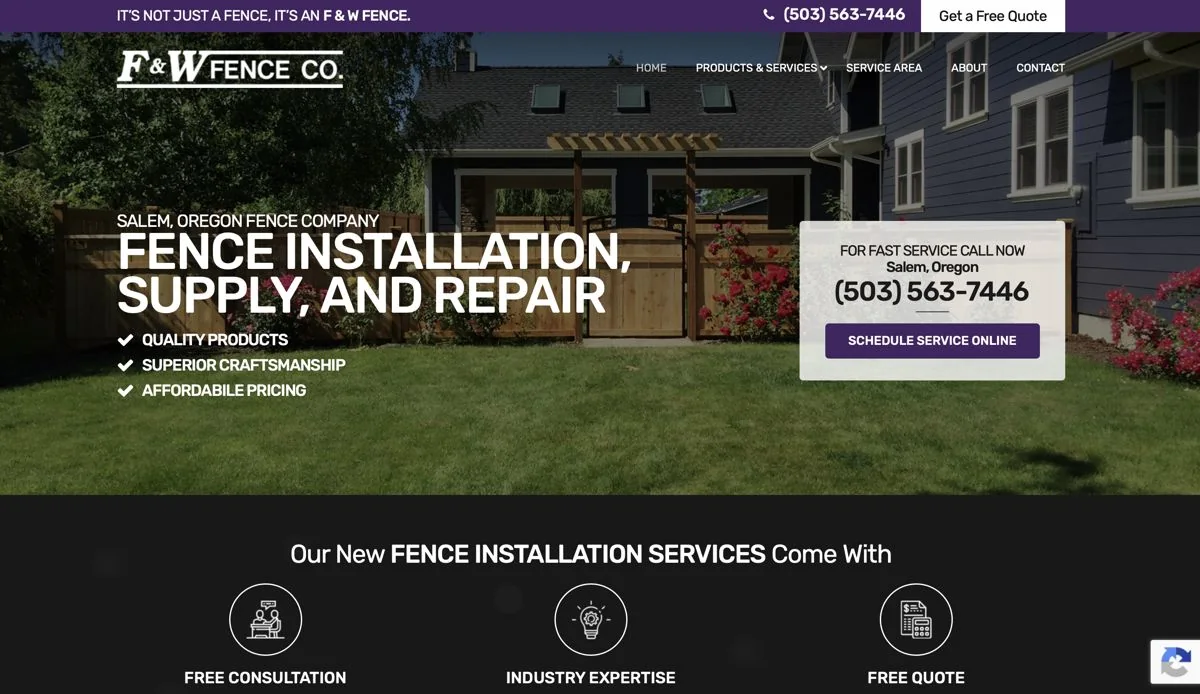
 Fence
FenceF&W Fence Co.
4Xmore ranking keywords
190 to 745 keywords
- top-3 rankings (3 to 28)
- 9X
- top-3 rankings (3 to 28)
- core search conversion rate
- 27.78%
- core search conversion rate
Tell the building customer what happens after the project form is sent
Help Broken Arrow building customers understand the offer, send useful project details and see an accurate next step after submitting the website form.
 Google PartnerView our Partners listing
5.0on Google · read our reviews
Google PartnerView our Partners listing
5.0on Google · read our reviews
Businesses
we’ve worked with
Businesses we’ve worked with
A blank success screen leaves the first conversation unclear
Lithium Marketing builds residential building websites that explain accepted work and make contact practical. A form that ends on a blank success screen can leave the customer unsure what happens next, prompting another message about the same project. We write clear service information and give the submission an accurate acknowledgment and next-step explanation.
The owner may feel that staff's eventual response makes screen feedback unnecessary. We review the mobile form and actual receiving process with the team, then make the first-contact meaning clear. Customers can describe the property and desired work and understand how the company continues the discussion without mistaking a submitted form for an agreed building project.
The building services and opening project discussion
Tulsa County records 100 home-building establishments. We describe your company's accepted residential services within that category and organize readable pages around them. A visitor can understand the hired contribution and find a practical way to introduce another project.
Using Broken Arrow's aggregate median housing year of 1994 as background, we write from genuine building jobs: supplied work, retained spaces and known starting aims. The page can ask what the visitor wants to build or change and which property details they actually have.
| Search | Searches a month | Cost per click |
|---|---|---|
| web design broken arrow | 10 | not reported |
| web designer broken arrow | under 10 | not reported |
| website design broken arrow | under 10 | not reported |
Source: Google Ads keyword data, average monthly U.S. searches. "Under 10" = below Google’s reporting floor.
Source: one Google results page for “plumber broken arrow”, as Google showed it to a searcher located in Broken Arrow. Search ad counts exclude sponsored local listings. Results shift by searcher and day.
Real building projects with useful opening questions
We develop clear descriptions of known earlier-property building work, with Tulsa County's 52.3% housing share built before 1980 as context. Explain the supplied changes and retained spaces so a customer can introduce their own aims and known details, leaving uncertain history for staff to discuss.
For genuine newer-property building jobs, we connect the actual service with useful first project questions, using Tulsa County's 12.4% housing share built in 2010 or later as background. The visitor can identify the hired work and send a practical inquiry whose acknowledgment explains the actual receiving process.
Sources: U.S. Census Bureau 2025 population estimates, ACS 2020–2024 and 2023 County Business Patterns.
Actual job properties and the people discussing the building work
Broken Arrow spans Tulsa and Wagoner counties in Oklahoma. We write building coverage answers from the properties your company actually accepts in that geography, then give visitors clear service-address and project-description fields. The actual job location stays with the request and its supplied reply information.
For the opening project message, ask who will discuss the proposed work and arrange access, with Tulsa County's 59.7% owner-occupied housing share as background. Keep the sender's relationship and desired building changes with those answers so staff can continue the conversation with the people involved.
County Business Patterns
Trade and home service businesses in Tulsa County
Establishments by industry, 2023
Source: U.S. Census Bureau, 2023 County Business Patterns (NAICS establishment counts).
A building website with a clear inquiry and accurate acknowledgment
Agree building services and the staff receiving process, then make the mobile request and its next-step feedback understandable.
Choose accepted work, territory and the details staff needs to begin the building conversation.
Describe supplied work and known retained spaces with a practical first question for another property.
Ask for useful project details and supplied reply information, then explain what the actual receiving process does next.
Use staff feedback to improve form prompts and acknowledgment wording without treating receipt as an accepted scope or schedule.
What every Lithium website includes
The same eight parts go into every website build, wherever the business is.
Fence marketing work and a separate painting recommendation
Lithium's work for F&W Fence Co. combined a new website, SEO and Google Ads for the fence business. The separate testimonial comes from Chris Martin of Mt. Hood Pro Painting, describing the marketing inquiries his painting company received.
Fence4Xmore ranking keywords
190 to 745 keywords
“Ever since we've used Lithium Marketing, our phone has been ringing off the hook and we can hardly keep up with the leads we get from Google, Facebook or through our website. Most of our leads other than referrals are through Google and it's all because of Lithium Marketing.”
 Chris MartinMt. Hood Pro Painting
Clear building project contact for accepted working places
A building visitor in Tulsa or Edmond, Oklahoma, should be able to read the accepted work and introduce the actual project property. We can prepare accurate coverage and opening contact for accepted jobs in Rogers, Fayetteville, Springdale and Fort Smith, Arkansas, keeping their state clear. The Oklahoma city directory supports further useful service-page choices.
Published price
$5,000
typical project
Larger sites get a fixed proposal after a 30-minute discovery call. Six to nine weeks from kickoff to launch. You own the domain, hosting account, WordPress install and content.
FAQ
Still curious?
Call (503) 766-5964 or email [email protected].
Yes. Explain the actual receiving process and what happens next after a successful submission. Clear feedback helps the customer understand the request without implying an accepted project, quote or work date.
Ask for the service property, desired building work and information the customer actually knows, with supplied reply details. Staff can clarify uncertain history and later project decisions during the conversation.
Pair them with clear descriptions of the contribution your company supplied and retained spaces where known. Relevant service links and opening questions help the visitor introduce another project rather than assume a finished picture defines their own scope.
A typical website project is about $5,000. Agree the service content, mobile form, staff receiving process and acknowledgment in the proposal. Judge the result through customer understanding and the usefulness of project inquiries.
Share accurate building services, genuine project information and actual customer questions with Lithium in Portland, Oregon. Your business contact approves the Broken Arrow content and receiving rules while staff feedback guides improvements.
Free action plan
Bring the current form, blank confirmation and staff receiving process to a co-founder call. We can agree useful service pages, practical project prompts and accurate acknowledgment that helps the customer understand how the discussion continues.
What we’ll cover
2000 NE 42nd Ave Ste D Unit 2370, Portland, OR 97213
Prefer to pick a time? Book a 30-minute call with DJ