
 Commercial glass
Town & Country Glass
13Xorganic traffic
145 to 1,849 visits a month
- top-3 rankings, up from 1
- 109
- top-3 rankings, up from 1
- Google Ads conversion rate
- 29.9%
- Google Ads conversion rate
Websites for Des Moines service businesses
Des Moines service businesses get a website built to turn mobile searches into calls, with job photos, tap-to-call and full ownership.
 Google PartnerView our Partners listing
5.0on Google · read our reviews
Google PartnerView our Partners listing
5.0on Google · read our reviews
Businesses
we’ve worked with
Businesses we’ve worked with
What the site has to do
Older houses are the norm in Des Moines: the median home was built in 1961. A website here should show repair, replacement and update work on houses with history, not only a portfolio of new construction. Lithium Marketing builds sites that put that work first, with job photos, service pages and a call button that works in one tap.
The site has to work for the person who owns the house as well as the one who rents it. The owner-occupied share in Des Moines is 60.5%, so rental properties belong in the plan too. Put the quote form and the phone number where both can find them, and let each service page explain what the job involves.
Search in Des Moines
“Web design des moines” draws 480 searches a month, and a click there averages $5.24. Those are business owners comparing designers, so finished work and a published price have to be easy to find. The visitors your own site has to convert come from trade searches, and they decide fast: if the page is slow or the phone number is hard to find, the next result gets the call. Every Lithium build starts with that phone-sized view.
When we checked “plumber des moines”, Angi and Yelp both ranked on the first page. If a customer finds you there first, the profile shows a name, a phone number and a few photos; your own website is where the full service list and the finished work can live. That gap is what the build closes.
| Search | Searches a month | Cost per click |
|---|---|---|
| web design des moines | 480 | $5.24 |
| website design des moines | 480 | $5.24 |
| web designer des moines | under 10 | not reported |
Source: Google Ads keyword data, average monthly U.S. searches. "Under 10" = below Google’s reporting floor.
Source: one Google results page for “plumber des moines”, as Google showed it to a searcher located in Des Moines. Search ad counts exclude sponsored local listings. Results shift by searcher and day.
The Des Moines market
The median Des Moines home is valued at $194,700, and the homeowner weighing a contractor has a large asset at stake. Finished job photos and reviews do more for that decision than a paragraph about how long you have been in business.
West Des Moines and Ankeny are the metro's other major cities, and a website that serves the whole metro needs a page for each city it works in, with that city's own jobs and photos.
Sources: U.S. Census Bureau 2025 population estimates, ACS 2020–2024 and 2023 County Business Patterns.
Trades in Polk County
Polk County counts 178 residential remodelers and 60 painting contractors. A remodeler sells projects, so the site needs galleries with real photos and a form that captures the scope before an estimate. A painter sells the finish, so the site needs a gallery of finished rooms and a quote form that asks for the room count.
For an electrician or a plumber, the first screen is different: phone number and service area up top, because the visitor who lands there may need help today. A landscaper needs a gallery of finished yards and a form that asks for the property size. All three still need the same backbone: a page for each service and the phone number where a customer in a hurry can find it.
County Business Patterns
Trade and home service businesses in Polk County
Establishments by industry, 2023
Source: U.S. Census Bureau, 2023 County Business Patterns (NAICS establishment counts).
The build
Your photos and services drive the build, and you approve each stage before anything goes live.
You send photos of finished jobs, your service list and the parts of the metro you cover. The copy gets written from those.
You review how the site looks on a phone and a desktop, with the call button and quote form where they belong.
GA4 and call tracking get connected during the build, so every call and form arrives with its source attached.
Every old address that carries traffic gets pointed at its new page, and a private Loom walkthrough covers the edits your team will make.
What every Lithium website includes
The same eight parts go into every website build, wherever the business is.
Proof
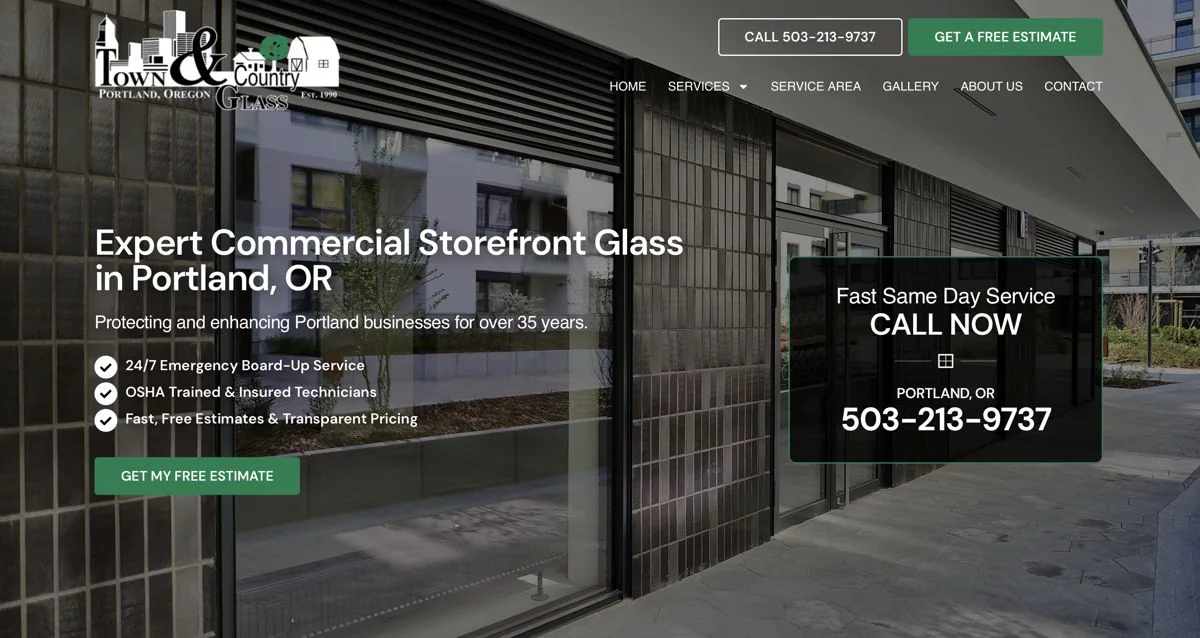
The card covers Town & Country Glass, a Portland commercial glass company. Its website, its SEO and its Google Ads all came from Lithium, and the numbers reflect the whole engagement. Dave Turin of Dozer Dave adds the recommendation beside the card, pointing to DJ Van Zanten for website and internet marketing work.
Commercial glass13Xorganic traffic
145 to 1,849 visits a month
“I highly recommend Dj Van Zanten if you need any help with your website and your internet marketing.”
 Dave TurinDozer Dave
Around Des Moines
A web design page exists for Ankeny, Iowa City and Bellevue, Nebraska, and each page carries the housing and search data for that city. Use those figures to plan a city page on your own site; the Iowa pill lists the rest of the state.
Published price
$5,000
typical project
Larger sites get a fixed proposal after a 30-minute discovery call. Six to nine weeks from kickoff to launch. You own the domain, hosting account, WordPress install and content.
FAQ

Still curious?
Call (503) 766-5964 or email [email protected].
The domain, the hosting, the WordPress install and the content are all in accounts under your name, so they belong to you from the start. If you ever leave Lithium, the site goes with you.
The page count drives the price. A typical service business site lands at $5,000, and a build that needs a page for every service and every city gets a fixed proposal before work starts.
Anything with traffic or links gets a redirect to its new home, and Search Console gets watched through the switch. Rankings can move after any launch, so the goal is a clean handoff that keeps the history attached to the new pages.
WordPress is yours to edit. A photo swap or a new finished job takes a login, not a developer. The private Loom walkthrough shows where everything lives. If you would rather not touch it, the optional $99/month plan handles hosting, daily backups, software and security updates, and basic changes.
Bring a handful of finished-job photos, the services you sell and the cities you serve, and put a kickoff call on the calendar. Lithium writes the copy, and you sign off on each page before it goes live. Most builds take six to nine weeks from kickoff.
Free action plan
Start with the site you have and the jobs you wish it showed. On a short video call, a co-founder will sketch the pages that close that gap, with a price and a timeline.
What we’ll cover
2000 NE 42nd Ave Ste D Unit 2370, Portland, OR 97213
Prefer to pick a time? Book a 30-minute call with DJ