
Fairfield Web Design for Busy Local Service Markets
Fast, credible pages for visitors comparing choices across Solano County.
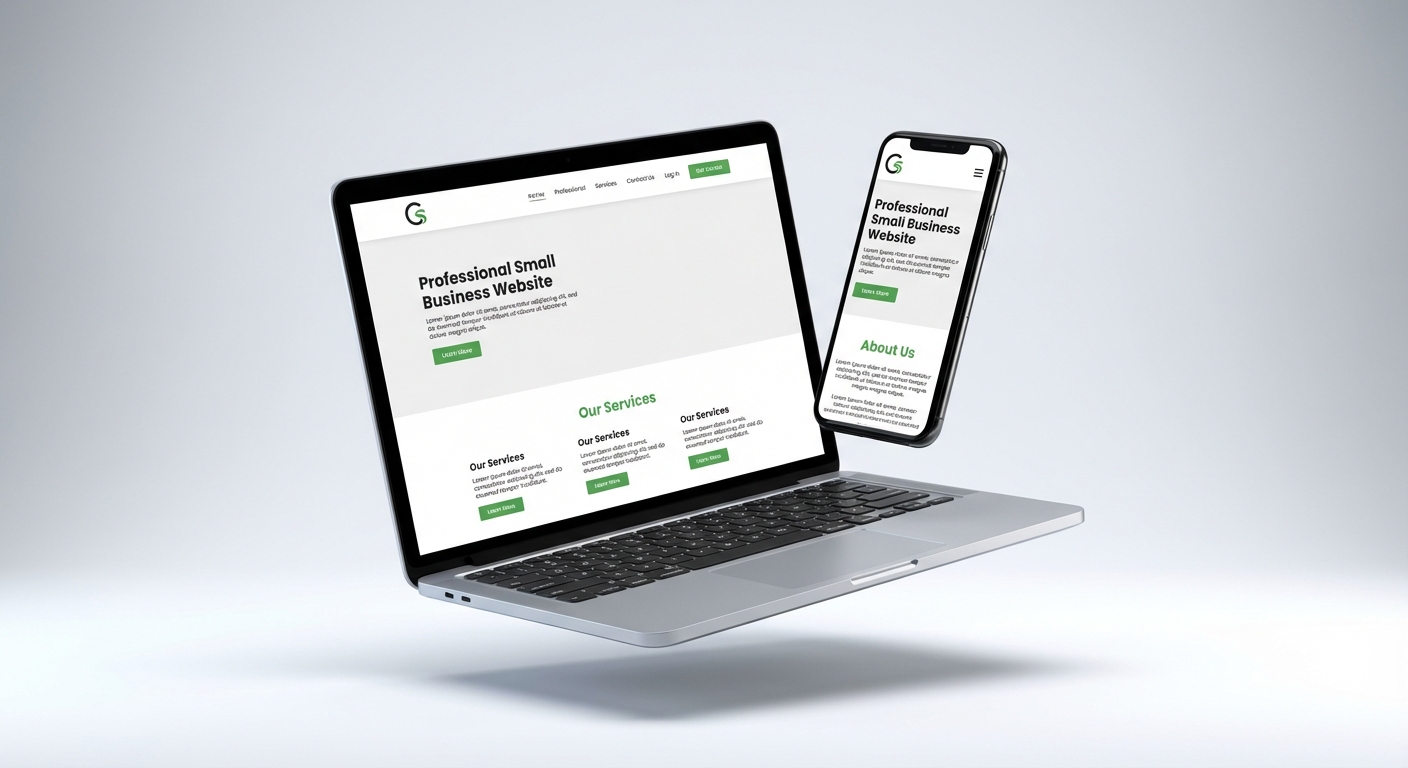
Fairfield companies often compete with providers from Vacaville, Vallejo, Napa, Sacramento, and the Bay Area. We build websites that clarify the offer, show why the business is credible, and make calls, bookings, quote requests, or forms easy to complete on mobile.
- Google Partner certified
- Meta Business Partner
- 5.0 ★ across 30+ Google reviews
- 100+ clients served nationwide
- $10M+ in Google Ads managed
- Marketing services since 2010
Partner
A nice-looking page can still lose the comparison.
Fairfield sits between the Bay Area, Sacramento, Travis Air Force Base, and Solano County communities, so visitors may compare several markets before calling. The website has to establish fit quickly instead of assuming geography alone will win attention.
“ A crowded corridor rewards the page that explains itself first.
Searchers often arrive with a practical question about service, timing, coverage, or proof. A stronger page anticipates those questions and responds before the visitor opens another result: Fairfield home service website design or Fairfield legal website redesign Those visits need clear positioning, fast mobile behavior, service-area clarity, forms that are easy to finish, and proof that matches the claim being made. Visual polish cannot carry the page alone.
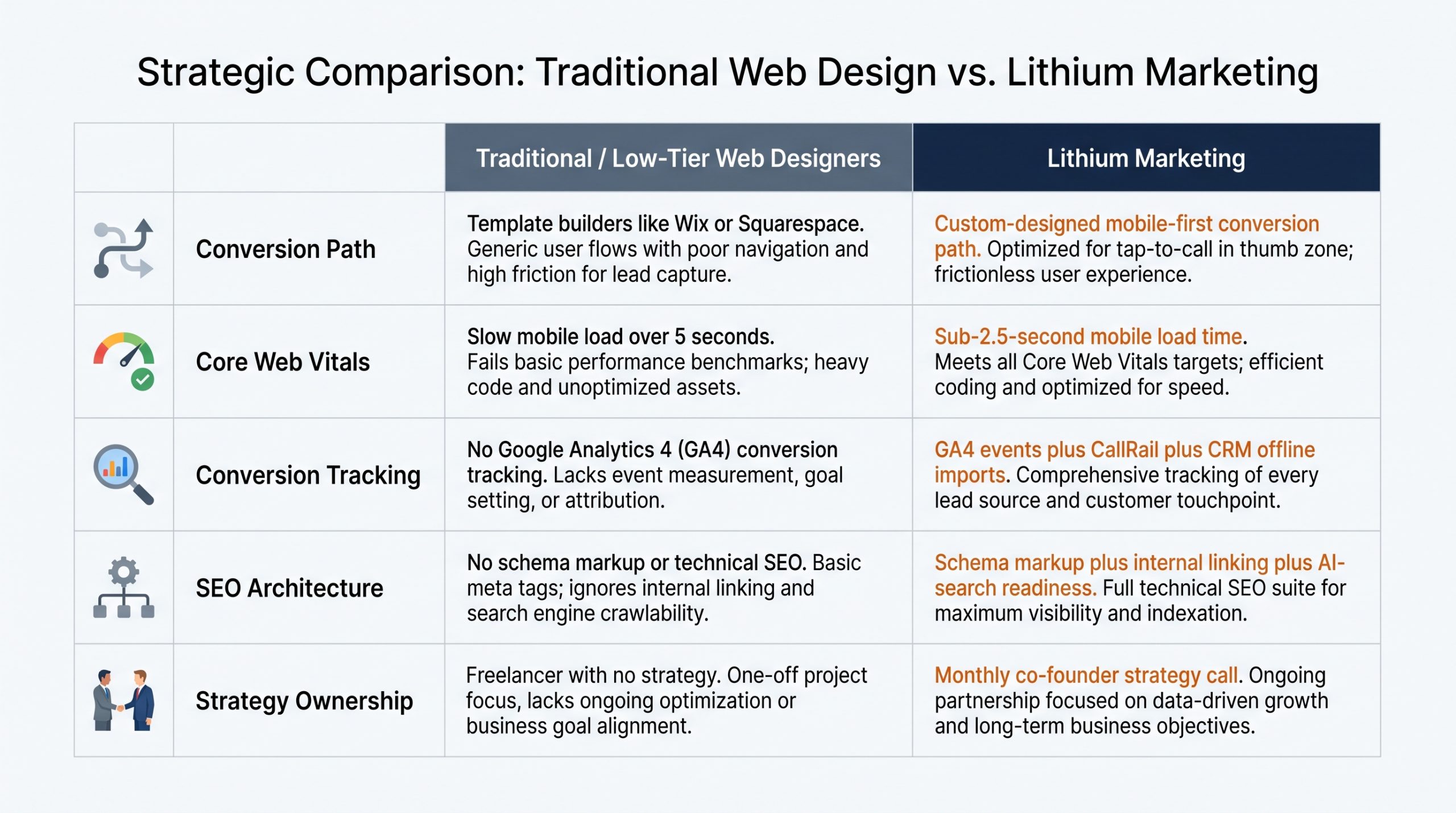
Lithium builds Fairfield sites as acquisition tools with page strategy, local search structure, copy, performance, accessibility, paid-traffic readiness, and analytics connected before launch and improvement.
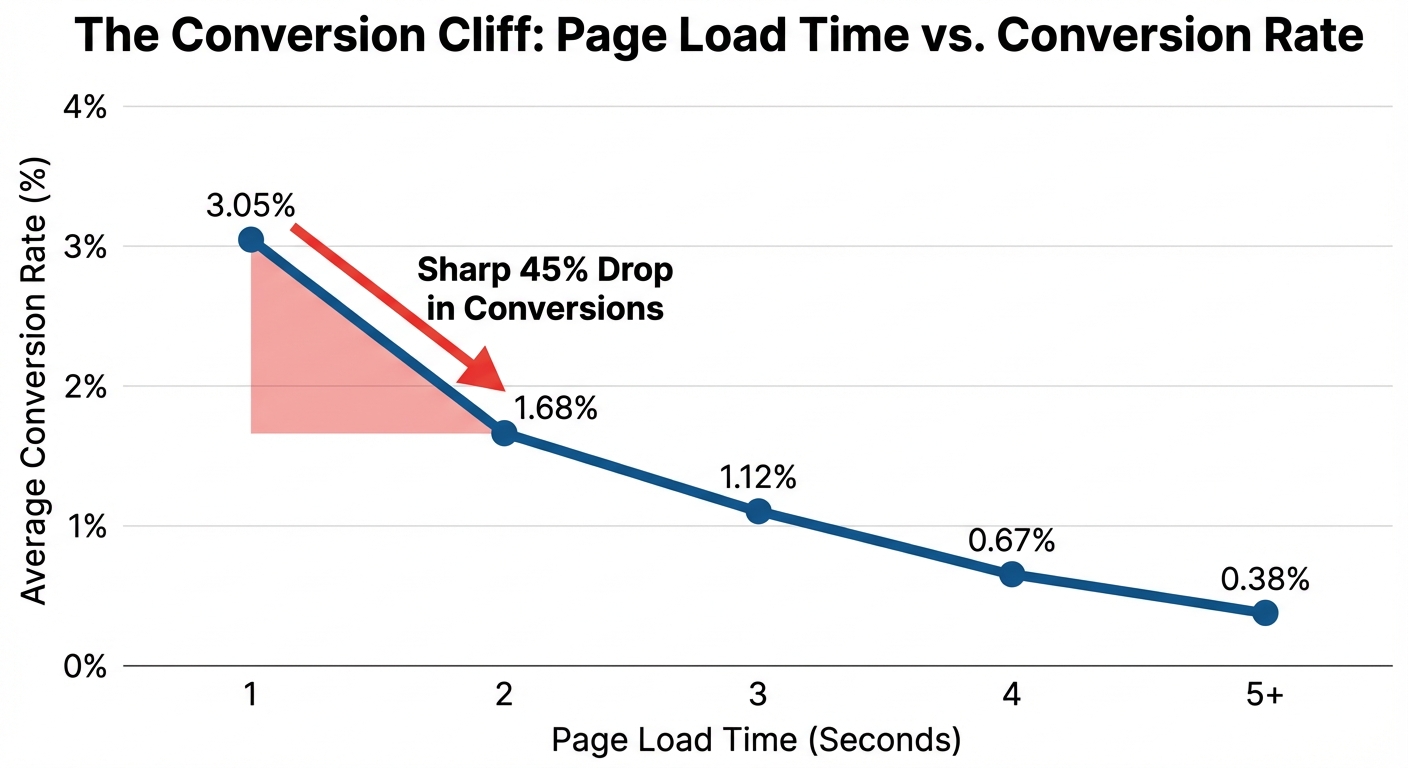
Slow mobile load = lost lead
Speed matters in a market where another option is one tap away. We review media weight, scripts, layout movement, hosting response, and mobile rendering so the visitor reaches proof and service details without delay.
No one-tap path to call you
Inquiry actions have to meet the visitor at the right moment. Calls, forms, booking links, and quote requests should follow service information and proof, especially for buyers comparing several local providers quickly.
Built for looks, not for ranking
The site needs a technical structure that supports local discovery. Service pages, schema, URL logic, profile consistency, redirects, and analytics events help search engines and paid visitors understand what the business offers.
No proof above the fold
Fairfield buyers may be comparing on price, convenience, reviews, credentials, or service area. Project examples, staff details, guarantees, and process notes help the business feel easier to evaluate than a generic competitor.
Build priorities for a service site in a competitive corridor.
The project starts by defining the strongest inquiry the website should support. From there, we align messaging, service pages, conversion points, mobile performance, proof, accessibility, and measurement around that buyer decision.
Sub-2.5-second mobile load
Performance is planned into design and development. We control image sizes, template weight, plugins, scripts, layout shifts, font loading, and hosting behavior so the page does not feel slow when attention is most valuable.
Mobile actions that stay easy to reach
Mobile calls and forms need to stay close to the service details that create confidence. We keep actions visible without letting buttons overwhelm the information a Fairfield visitor needs before contacting the business.
Above-the-fold value proposition
The hero should make the business understandable in seconds: what it does, where it fits, why it can be trusted, and what the visitor should do next. Generic headlines waste that first decision point.
SEO-ready architecture
Local SEO structure built into the site
Local search structure starts with accurate business facts. We align NAP details, service categories, location language, schema, internal links, and profile references so the site does not contradict the public footprint.
Real proof, placed where it converts
Proof works best when it answers a specific doubt. We place reviews, case notes, project photos, certifications, and process details where they support the visitor’s next decision.
Tracking that ties leads to revenue
GA4 events fire on every form submission, booking action, and click-to-call. Call tracking connects conversations back to traffic source, and conversion tags are wired to Google Ads before campaigns send paid traffic into the new site.
WCAG-aware, AI-search-ready
We design for clarity across people, crawlers, and answer engines. Semantic sections, readable contrast, keyboard support, concise answers, and consistent business facts give AI systems cleaner source material.
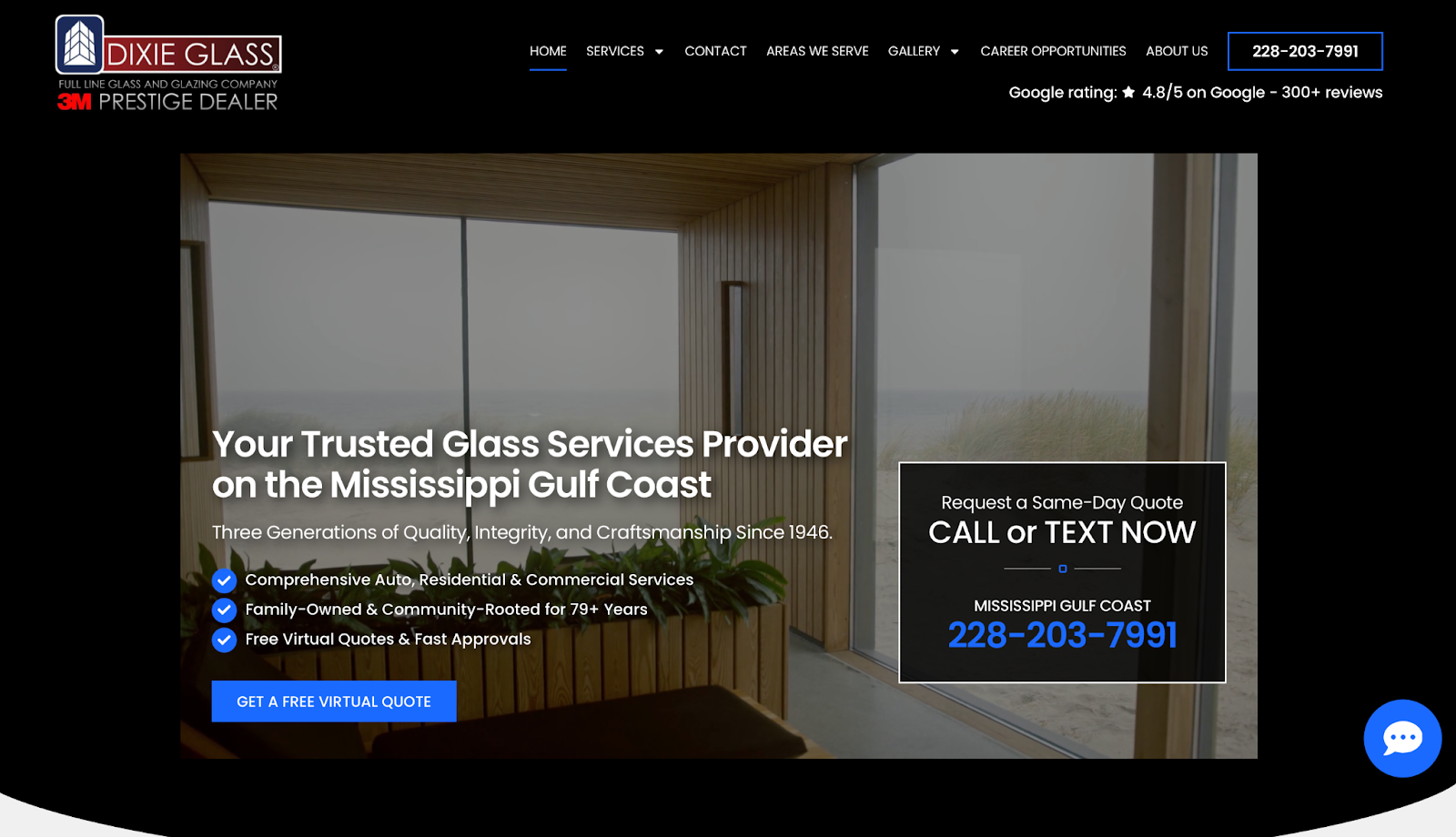
How a third-generation Gulf Coast glass company drove 76% more conversions after we rebuilt their site.
A Gulf Coast glass company needed more than a visual refresh. Lithium rebuilt the site, clarified quote requests, repaired conversion tracking for PPC, and strengthened SEO so the business could see which channels produced useful inquiries.
More conversions
Organic traffic growth
Search visibility growth
DIXIE GLASS | WEBSITE REBUILD CASE STUDY

Fairfield service categories where the site has to clarify fit.
This work fits contractors, clinics, legal and financial firms, auto services, restaurants, retailers, and B2B teams that need to compete across a busy region. Their websites have to turn comparison into confidence quickly.
Home-service websites need to work when the problem is active. We organize repairs, installs, maintenance, service areas, reviews, and SEO foundations so homeowners can confirm fit quickly.
Healthcare and wellness sites have to reduce uncertainty. We structure service pages around provider credibility, appointment options, patient questions, reviews, and directions so a visitor can decide whether the practice fits.
Contractor websites should make the best job types easier to understand and request. We organize service pages, project categories, photos, warranties, reviews, and estimate language around how homeowners compare options.
Professional-service sites need disciplined messaging. We clarify who the firm helps, what problems it solves, what proof supports the claim, and how a first consultation or inquiry works.
Hospitality websites should make the visit, reservation, or event inquiry easy to plan. We bring menus, booking details, photos, reviews, hours, and location information into a mobile-friendly structure.
Automotive visitors may need help immediately. We build pages for repair, collision, tires, towing, detailing, and fleet work with calls, estimates, reviews, location clarity, and paid traffic measurement in mind.
Retail sites should help shoppers decide whether to visit, call, or browse further. Categories, brands, product detail, photos, hours, reviews, and directions need to be easy to scan.
B2B websites often support a longer evaluation. We organize capabilities, use cases, industries, proof, team context, and inquiry forms so a qualified prospect can understand fit before reaching out.
From kickoff to launch in six to nine weeks, with weekly decisions instead of mystery delays.
A website project needs momentum and decisions. We keep strategy, copy, design, build, QA, and launch tasks visible so feedback happens while the work is still easy to refine.
Discovery & strategy
Discovery reviews the service mix, geography, inquiry value, search data, paid-traffic needs, and the competitors visible around Fairfield. Those findings guide the sitemap and page priorities before visual concepts start.
Information architecture & content plan
Planning defines page roles, URL structure, schema, content needs, forms, tracking events, launch requirements, and SEO architecture. That prevents the site from becoming a design shell that needs search and conversion repairs later.
Design direction
The visual system is shaped by the audience and the offer. We define typography, spacing, page rhythm, proof treatment, and mobile components before rolling the design across the full site.
Build, content, integrations
We build the site in Elementor on WordPress and write SEO-optimized copy in parallel. The build phase also includes forms, GA4 events, call tracking, Google Ads conversion tags, Google Business Profile alignment, schema, and any CRM or booking integrations needed to make leads trackable.
QA, launch, indexing
Before launch, we test mobile layouts, form completions, call taps, redirects, schema, analytics events, speed, and search-console setup. The site has to work for organic visitors and campaign traffic from day one.
30 / 60 / 90-day tracking
After launch, we look at the signals that show buyer behavior: calls, forms, landing pages, search queries, page speed, and inquiry quality. The next changes are based on what users actually did.
Engineered to surface in Google AI Overviews, ChatGPT, Perplexity, and Claude when buyers ask.
Search and AI tools need consistent facts. Clear service pages, business details, FAQs, proof, SEO structure, and content prepared for AI systems help the company remain understandable across classic results and newer answer surfaces.
Quotable answer blocks
We write service sections so a visitor can understand the answer before reading the nuance. The same structure gives AI tools clearer passages to summarize.
Fact density and citations
Details make the page more persuasive: service-area limits, appointment steps, credentials, project examples, pricing context, and review themes. We use those facts where they help the visitor make a better decision.
Schema for generative engines
Structured data reinforces the visible page. LocalBusiness, Service, FAQ, Breadcrumb, and review markup are used where appropriate so the site’s facts are easier to understand.
Brand consistency across the web
The website should not contradict the places where buyers and search systems already see the business. We compare public profiles, reviews, listings, and page copy for consistency.
Topical authority and entity coverage
A useful site answers the surrounding questions, not just the headline service. Related pages, FAQs, project proof, and internal links help visitors move from research to inquiry.
llms.txt + AI crawler controls
AI crawler access should be intentional. We help the site define usable source pages, robots.txt rules, and llms.txt guidance so important content is easier to discover on the owner’s terms.
How website choices change the quality of inquiries
Service businesses Lithium has built websites for.
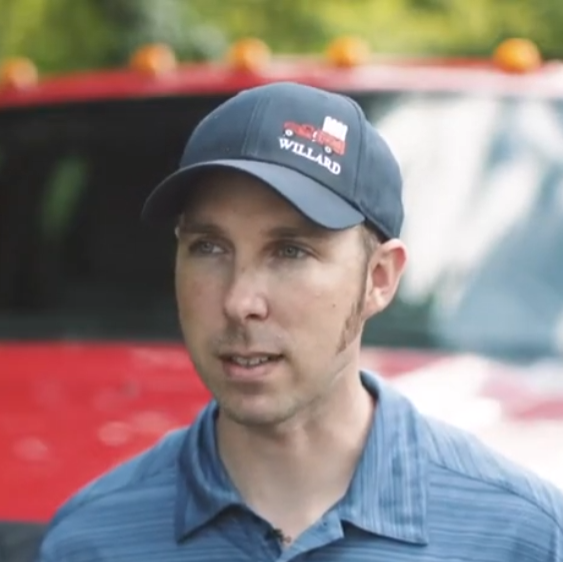
Willard Power Vac
“Lithium Marketing has been amazing for our business. They have greatly increased our web traffic and helped us land hundreds of jobs.”
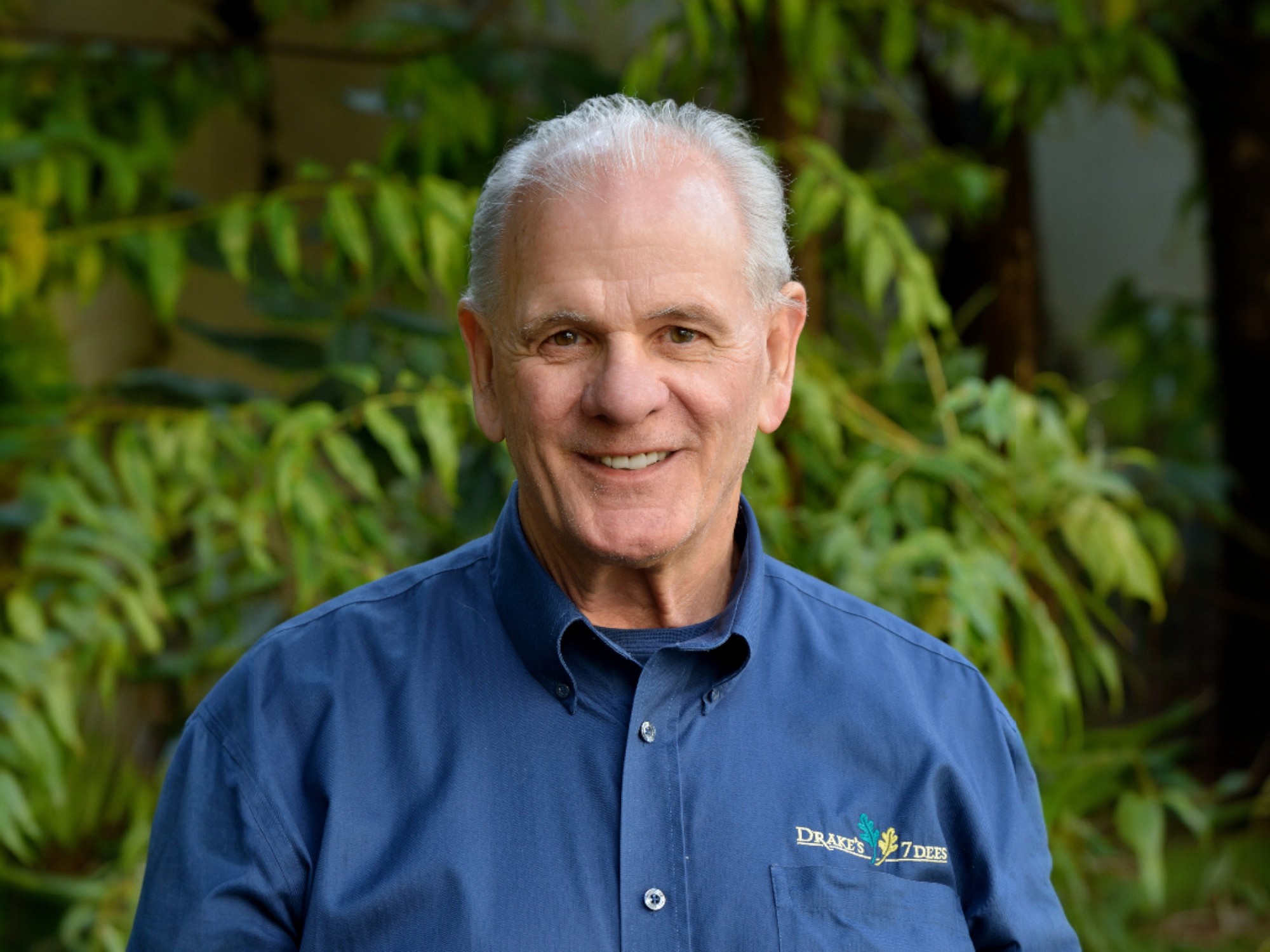
Drake’s 7 Dees
“Lithium has moved us to page 1 in Google search organically.”
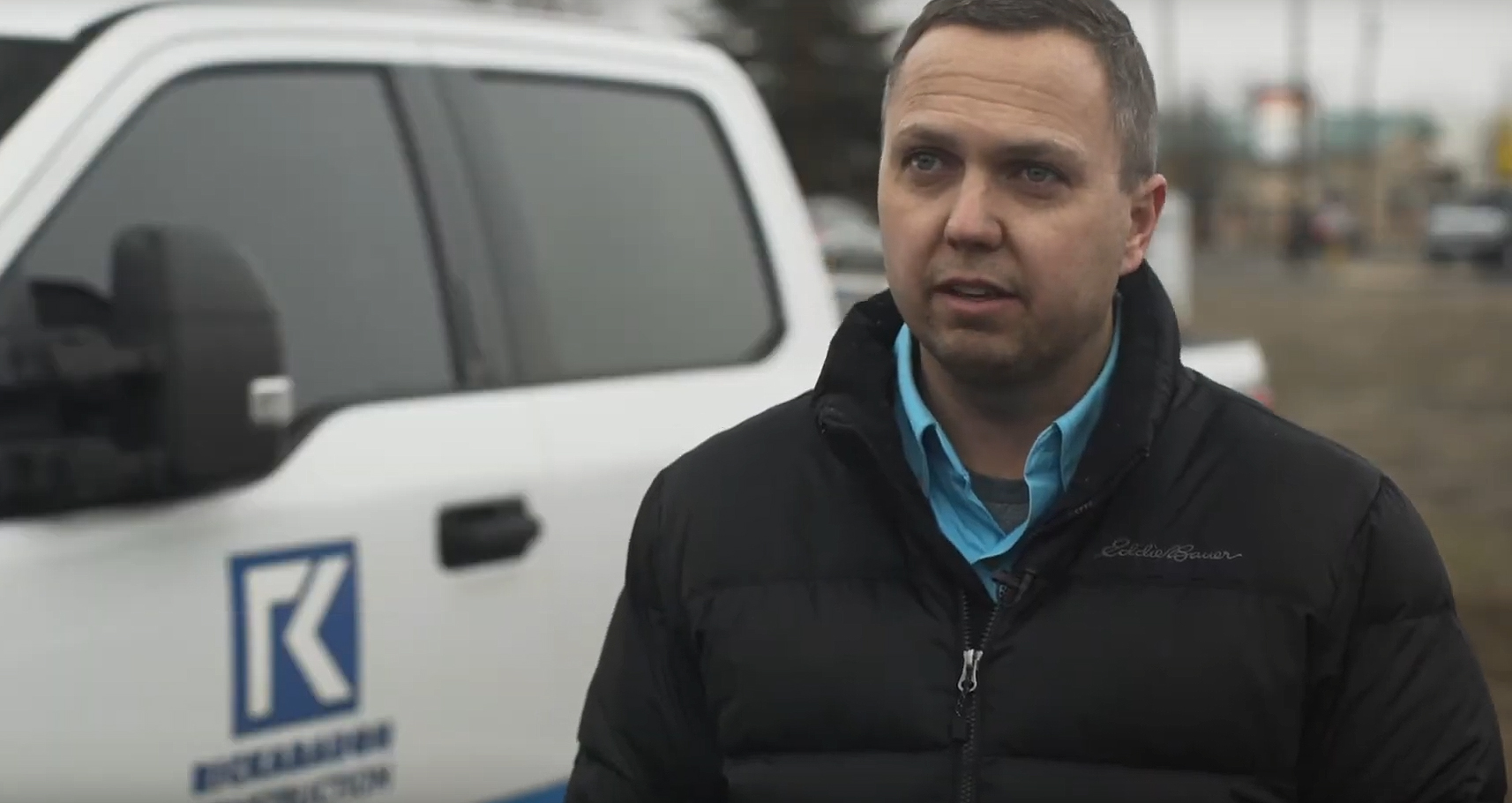
Rickabaugh Construction
“Working with Lithium Marketing has been awesome.”
Fairfield web design questions with direct answers.
Budget depends on the number of pages, content complexity, forms, integrations, design depth, local SEO structure, and whether paid traffic measurement is part of launch. We scope the work after reviewing the business goals and current site.
A focused site can move faster when content, approvals, and access are ready. Larger builds need more time for service architecture, copy, design rounds, integrations, QA, redirects, analytics, and launch planning. Approvals and content access have the largest effect on schedule.
A rebuild can remove technical and content barriers that hold back SEO. It should improve page structure, speed, internal links, schema, service depth, and local relevance, but ongoing content and authority work still matter after launch.
The finished website should belong to the business. We clarify ownership for the WordPress build, approved content, design assets, custom work, hosting, and domain access so there is no confusion after launch. Those details are documented before launch so ownership is clear.
Your team can edit normal pages, text, images, and many layout sections in WordPress after launch. We still recommend keeping complex template, tracking, and performance changes with someone who understands the build. That keeps routine updates simple while protecting the parts that affect performance.
A remote team can work well when the process is clear. We use calls, shared docs, Loom videos, analytics reviews, and project notes to understand Fairfield buyers, then build pages that support search, conversion, and paid campaigns where needed.
The workflow is remote by default. Strategy calls, content reviews, design walkthroughs, QA notes, and launch planning happen through shared tools so decisions are documented and easy to revisit. That record keeps feedback clear for both teams throughout the project.

DJ Van Zanten leads the first strategy review
The review is led by DJ Van Zanten, not passed immediately to a junior sales rep. He connects the website issues to positioning, search, tracking, and the business goals behind the project.
Get a free website review
We review the site like a visitor, a search engine, and a business owner. Speed, mobile experience, service clarity, proof, forms, tracking, local structure, and page hierarchy all get a practical look.
- No sales pitch
- 30 minutes
- You keep the audit either way