
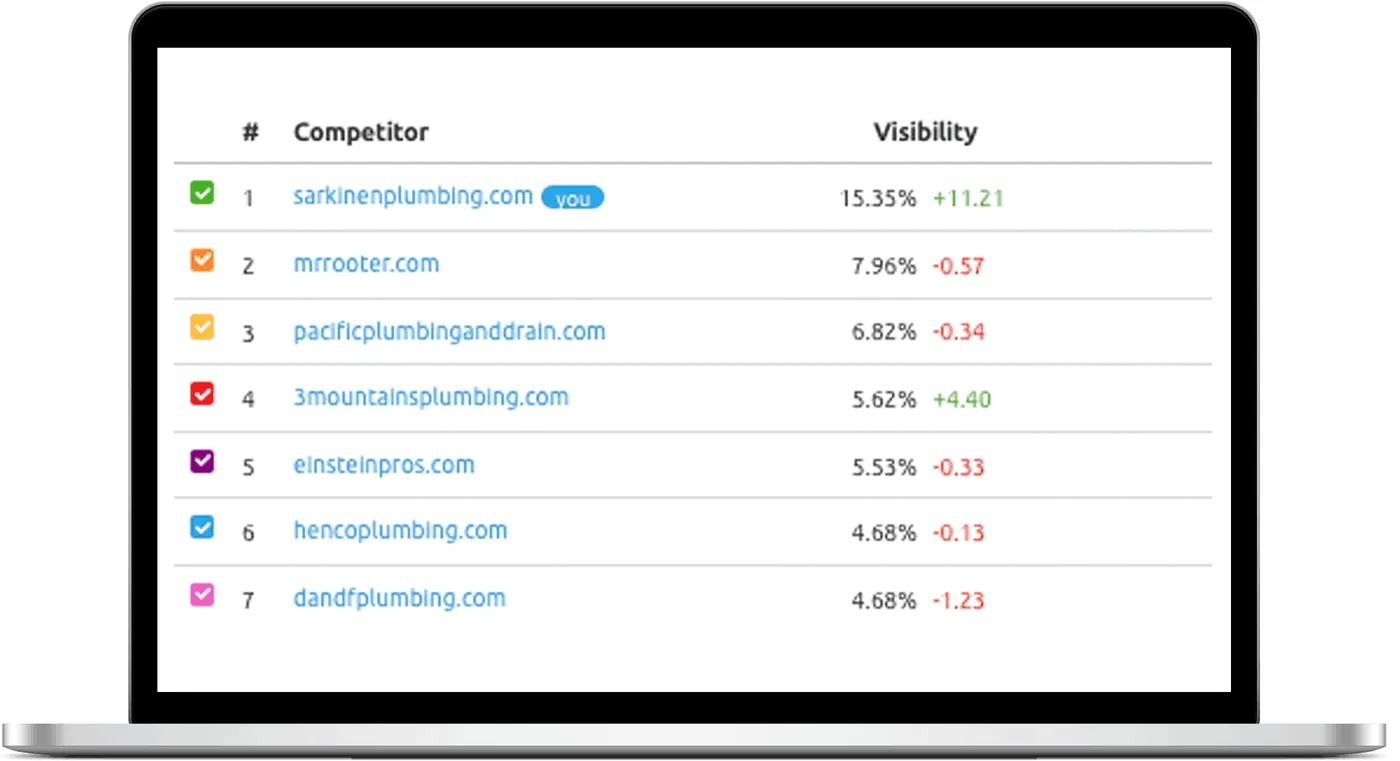
 Plumbing
Sarkinen Plumbing
2Xleads
on the same budget
- search visibility
- 3.75X
- search visibility
- ads conversion rate
- 27.37%
- ads conversion rate
Web design for Murfreesboro
Give Murfreesboro remodeling customers a clearer project conversation, with a website that explains work around an occupied home.
 Google PartnerView our Partners listing
5.0on Google · read our reviews
Google PartnerView our Partners listing
5.0on Google · read our reviews
Businesses
we’ve worked with
Businesses we’ve worked with
A usable project site
Lithium Marketing designs websites that help Murfreesboro remodeling customers understand the project before asking for a consultation. For a contractor working in occupied homes, that means explaining how you discuss access, the spaces affected and the customer’s priorities. A finished-room photograph should open a useful conversation about the work behind it.
Owner-occupied homes account for 52.4% of Murfreesboro’s occupied housing. Make the homeowner’s consultation route obvious, while letting a landlord or other property contact describe their role. The form should establish who is asking without requiring them to claim ownership.
Before the consultation
The site can present the remodeling outcome alongside the practical questions your team discusses before work. Put approved information about occupied rooms and site access near the project inquiry. Ask which spaces are involved and what the household needs to keep using; leave the construction sequence for the consultation.
Rutherford County has 99 residential remodeling establishments. A customer comparing remodelers needs to see your own scope and real examples. We would explain what the contractor changed in each project and connect that example with a relevant consultation request.
| Search | Searches a month | Cost per click |
|---|---|---|
| web design murfreesboro | 210 | $17.96 |
| website design murfreesboro | 210 | $17.96 |
| web designer murfreesboro | under 10 | not reported |
Source: Google Ads keyword data, average monthly U.S. searches. "Under 10" = below Google’s reporting floor.
Source: one Google results page for “plumber murfreesboro”, as Google showed it to a searcher located in Murfreesboro. Search ad counts exclude sponsored local listings. Results shift by searcher and day.
Examples for actual homes
In Murfreesboro, 18.4% of homes were built before 1980. If your portfolio includes older-property remodeling, label the original condition and your actual contribution so a visitor can understand the starting point of that example.
Homes built in 2010 or later account for 33.0% of the city’s housing. Include genuine examples from later-built homes when you have them, and explain the customer’s reason for changing the space. Organizing projects by the work undertaken is more useful than assuming construction age identifies a household’s needs.
Sources: U.S. Census Bureau 2025 population estimates, ACS 2020–2024 and 2023 County Business Patterns.
Remodeling coverage
Interstate 24 runs through Murfreesboro. If customers use it to describe their part of the city, the site should still request the project address and show your approved coverage. A highway reference can orient a visitor without becoming a promise to serve every address along it.
Interstate 840 also runs through the city. When you show work from a broader territory, label the actual project location and link back to the same consultation route. A customer should understand which examples illustrate your work and which places are within the offer.
County Business Patterns
Trade and home service businesses in Rutherford County
Establishments by industry, 2023
Source: U.S. Census Bureau, 2023 County Business Patterns (NAICS establishment counts).
Website scope
The project explanation and consultation request should work together.
You supply approved photos and describe the actual work, including the original room and household considerations.
We state what customers should bring to the first discussion and what the contractor will assess afterward.
We create a mobile-friendly route for project scope, property role and the rooms affected, with clear contact options.
You receive the WordPress site and a walkthrough for updating project examples and approved service information.
What every Lithium website includes
The same eight parts go into every website build, wherever the business is.
Website and marketing evidence
Sarkinen Plumbing serves the Portland area; its case study documents website design, SEO and Google Ads as a combined engagement. Daniel Busby’s adjoining account comes from Willard Power Vac, which provides air duct, dryer vent and chimney cleaning.
Plumbing2Xleads
on the same budget
“Lithium Marketing has been amazing for our business. They have greatly increased our web traffic and helped us land hundreds of jobs. Before we started using Lithium we were sitting on page 8 in google. We are now sitting in the top spots in all the areas we do work.”
 Daniel BusbyPresident, Willard Power Vac
Website pages nearby
For a remodeling business also considering Nashville or Chattanooga, the web-design pages below offer city-specific planning context. Clarksville, Bowling Green in Kentucky, Huntsville in Alabama and Owensboro in Kentucky are linked too, with the Tennessee directory for the state-wide list.
Published price
$5,000
typical project
Larger sites get a fixed proposal after a 30-minute discovery call. Six to nine weeks from kickoff to launch. You own the domain, hosting account, WordPress install and content.
FAQ

Still curious?
Call (503) 766-5964 or email [email protected].
Yes. It can explain the questions you discuss about household use and access while leaving the actual sequence to your project consultation. We use approved process information, not a generic timetable for every house.
No. Accurate photographs and clear explanations can support useful project pages. Lithium does not provide video production; bring the approved assets you already have and we can discuss what they help a visitor understand.
Yes, if that fits your consultation process. The request can capture the intended change and any known constraints without demanding a final material specification. Your staff can explain which choices belong later in the discussion.
You own the domain, hosting, WordPress installation and content. The handover includes a private walkthrough so you can keep approved project descriptions and business information current.
The number of distinct services, project templates and required functions affects the scope. Bring the content you want to show and the consultation process you use, so the fixed proposal describes the actual work rather than just a page count.
Free action plan
Share a finished-project example and the household questions you discuss before quoting. On a short video call, a co-founder will help connect that information with a practical website scope.
What we’ll cover
2000 NE 42nd Ave Ste D Unit 2370, Portland, OR 97213
Prefer to pick a time? Book a 30-minute call with DJ