Westminster, Colorado Web Design

Westminster Web Design That Helps Buyers Choose With Confidence

Fast, clear websites for people comparing local options.

Your website should help visitors understand whether your company is the right fit before they call. For Westminster contractors, clinics, local retailers, restaurants, professional firms, and B2B teams, we build pages that explain services and make action easy.

Custom web design services displayed on laptop and phone screens
5.0
Google reviews
Verified 5-star rating across 30+ reviews
Google
Partner
Certified
Vetted search agency in Google's official program
20+
Years
Digital marketing experience under one roof
500+
Service businesses
Helped to grow with SEO across the U.S.
THE WEBSITE PROBLEM

Visitors compare quickly when nearby choices are abundant.

Westminster businesses compete between Denver, Boulder, Broomfield, and the north metro suburbs, so visitors often have plenty of nearby alternatives. A website has to show fit, credibility, and next steps before the buyer moves on.

A strong website makes comparison easier for the right buyer.

The searches that matter usually come from someone checking whether the company can solve a real problem or handle a specific service before they ask for help: Westminster Colorado contractor website design or dental website design north Denver Those visitors need direct service language, mobile speed, visible contact actions, reviews or project proof, and a structure that can support local search after launch.

A design that only looks modern can still underperform. Better results come from planning copy, page architecture, analytics, local SEO, accessibility, and conversion points as one working system.

Slow mobile load = lost lead

Mobile performance affects whether the visitor stays long enough to understand the business. Large images, slow scripts, unexpected popups, and unstable layouts make a page feel less trustworthy before the offer is evaluated.

No one-tap path to call you

A good website keeps contact simple without shouting at the visitor. Calls, quote requests, booking links, and forms should appear near the service details and proof that make the action feel reasonable.

Built for looks, not for ranking

The technical foundation supports both users and search engines. Clean service pages, schema, internal links, Core Web Vitals, Google Business Profile consistency, and crawlable structure help the site perform after launch.

No proof above the fold

Proof should remove doubt while the visitor is still interested. Reviews, project examples, credentials, service guarantees, staff experience, and location clarity can all make a business easier to choose in a crowded metro market.

WHAT A LITHIUM WEBSITE INCLUDES

A site plan built around search, proof, and contact quality

We build from a clear foundation: positioning, fast mobile performance, service-page clarity, visible contact options, local search structure, proof near decisions, accessibility basics, and tracking that shows which visitors become useful inquiries.

Sub-2.5-second mobile load

Performance work is practical. We review image weight, scripts, hosting response, layout stability, and interaction timing so the page feels usable on real mobile connections, not only in a design preview.

Mobile actions designed around buyer intent

The action a visitor needs may be a call, estimate, booking, quote, or short form. We place those options near the content that supports the decision and keep the interaction simple enough for a phone.

Above-the-fold value proposition

The hero should make the company understandable in a few seconds: service, audience, proof, and next action. We avoid vague slogans that delay the answer a visitor came to find.

SEO-ready architecture

URL structure, header hierarchy, internal links, and schema markup are planned before design starts. When SEO or PPC traffic reaches the site later, the page architecture is ready instead of becoming the bottleneck.

Search-ready local structure

Service areas, categories, phone details, and business identity should match across the website, Google Business Profile, and core listings. Schema supports that clarity while service pages explain real coverage.

Real proof, placed where it converts

Credibility belongs beside the claims it proves. Reviews, project photos, certifications, awards, partner references, and before-and-after examples are placed where they help the visitor decide, not hidden at the end.

Tracking that ties leads to revenue

GA4 events fire on every form submission, booking action, and click-to-call. Call tracking connects conversations back to traffic source, and conversion tags are wired to Google Ads before campaigns send paid traffic into the new site.

WCAG-aware, AI-search-ready

Accessible structure helps people, crawlers, and AI systems use the same page. We check headings, contrast, keyboard navigation, form labels, answer sections, and source order so the site works beyond a visual pass.

SERVICE-BUSINESS CASE STUDY

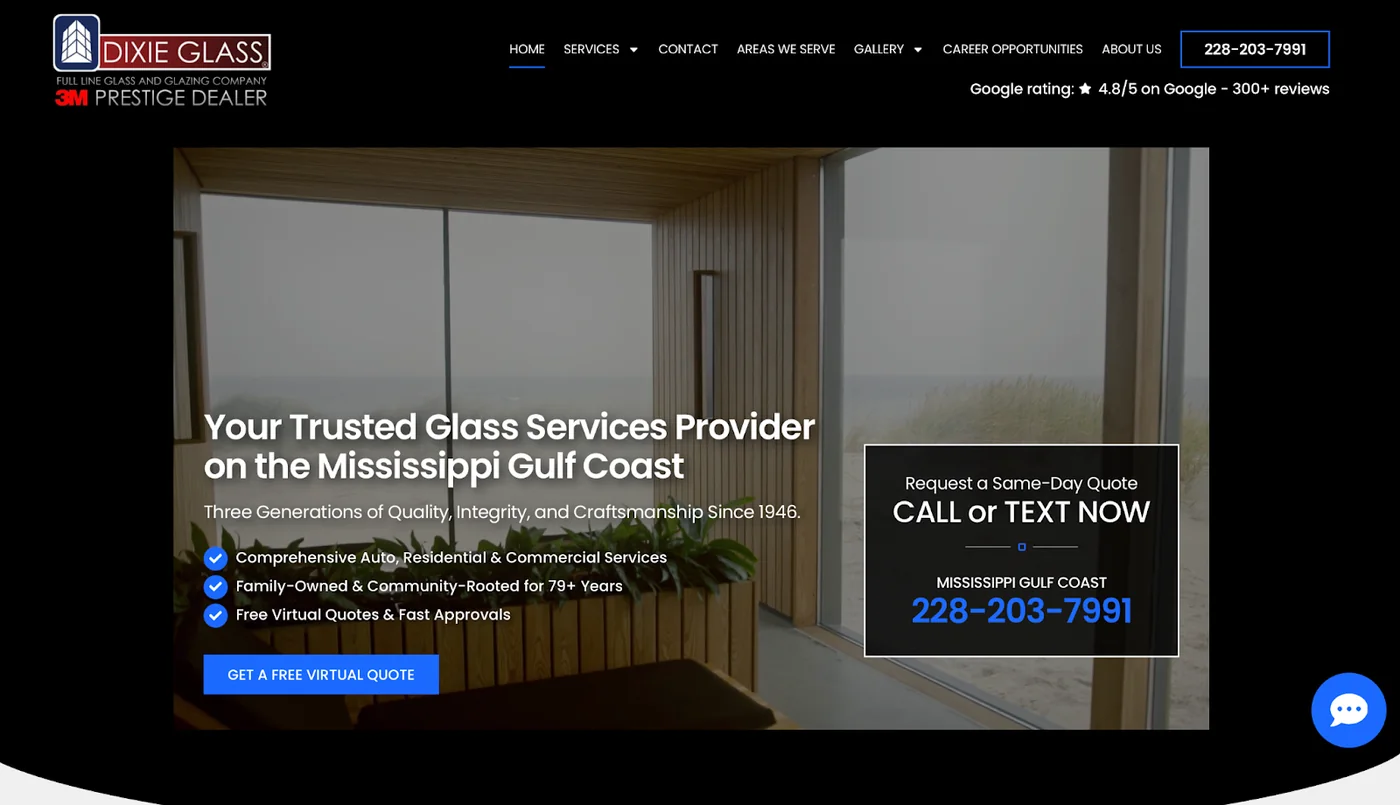
How a third-generation Gulf Coast glass company drove 76% more conversions after we rebuilt their site.

Dixie Glass needed a modern site that turned visits into qualified requests. Lithium rebuilt the experience around clearer service pages, measurable form actions, stronger PPC landing-page structure, and a cleaner SEO foundation for long-term visibility.

76%

More conversions

18.2%

Organic traffic growth

71.2%

Search visibility growth

DIXIE GLASS | WEBSITE REBUILD CASE STUDY

Mississippi Gulf Coast • Since 1946
Dixie Glass website rebuilt by Lithium Marketing. A WordPress conversion-focused redesign that replaced an outdated Wix site
Dixie Glass logo
WHO WE BUILD FOR IN WESTMINSTER

Service businesses that need the website to qualify serious buyers.

Westminster serves residents, commuters, families, homeowners, and companies moving across the north Denver corridor. A useful website should make services, service area, proof, and contact options clear without forcing visitors through a maze.

Home services

Home-service websites must support urgent and planned work. HVAC, plumbing, electrical, roofing, remodeling, cleaning, landscaping, and restoration pages should explain availability, service areas, reviews, financing, and local SEO structure.

Dental and medical practices

Dental, medical, chiropractic, therapy, and specialty-care practices need pages that make appointment decisions easier. Insurance notes, provider bios, service explanations, reviews, maps, and scheduling options should be easy to scan.

Contractors and construction

Contractors, remodelers, builders, painters, roofers, and specialty trades need sites that prove fit. Project categories, before-and-after proof, service process, estimate language, and warranty details help buyers choose the right conversation.

Legal and professional services

Professional-service firms need to make credibility understandable. Attorneys, accountants, consultants, advisors, insurance agencies, and other experts should explain services, qualifications, intake steps, and fit without generic firm language.

Hospitality and restaurants

Restaurants, cafes, event spaces, breweries, caterers, hotels, and hospitality businesses need pages that answer common decisions immediately. Hours, menus, reservations, private events, reviews, directions, and mobile ordering should be easy to reach.

Auto services

Auto repair, towing, tire, glass, detailing, body shops, dealerships, and fleet service businesses need pages built for urgent intent. Phone-first actions, reviews, service categories, warranty language, and PPC landing pages should support cleaner inquiries.

Specialty retail

Specialty retail sites should turn browsing into visits, calls, orders, or appointments. Inventory, brands, categories, location, photos, reviews, pickup options, and store story help local shops compete with chains and online marketplaces.

B2B services

B2B, industrial, technology, logistics, construction, and professional-service firms need pages that explain capability before pricing. Industries served, certifications, case proof, process, territory, and qualified forms help sales teams avoid weak inquiries.

OUR PROCESS

From kickoff to launch in six to nine weeks, with weekly decisions instead of mystery delays.

Our build process is visible from the start. Strategy, content direction, design, development, QA, and launch preparation are reviewed in clear steps, so feedback happens before decisions are locked in.

01

Discovery & strategy

Week 1

We study the service mix, best customers, revenue per lead, current analytics, and nearby competitors. When available, Search Console, GA4, and SEMrush data help us decide which pages and conversion points matter most.

02

Information architecture & content plan

Week 2

The architecture includes sitemap, URL plan, schema approach, content outline, and page briefs. SEO planning and conversion goals shape the structure before the visual system is finalized.

03

Design direction

Week 2–3

Design is developed from the strategy, then tested across important page types. We refine desktop and mobile views first, then extend the approved system into service pages, proof sections, and contact moments.

04

Build, content, integrations

Week 3–6

We build the site in Elementor on WordPress and write SEO-optimized copy in parallel. The build phase also includes forms, GA4 events, call tracking, Google Ads conversion tags, Google Business Profile alignment, schema, and any CRM or booking integrations needed to make leads trackable.

05

QA, launch, indexing

Week 6–7

Before launch, we check mobile layouts, forms, phone links, redirects, schema, tracking events, conversion tags, Search Console, speed basics, and final copy. The goal is fewer surprises once real visitors arrive.

06

30 / 60 / 90-day tracking

Post-launch

Launch creates the first useful behavior data. We watch traffic, conversions, search visibility, page speed, lead quality, and drop-off points so the Westminster site can keep improving after the first version goes live.

AI SEARCH READINESS: AEO + GEO

Engineered to surface in Google AI Overviews, ChatGPT, Perplexity, and Claude when buyers ask.

AI search tools need clear entity data, structured answers, reviews, citations, SEO content, and AI systems signals. A strong website gives those tools specific facts instead of vague summaries.

Quotable answer blocks

Question sections should answer plainly before adding detail. That helps visitors scan and gives AI systems a clean source passage instead of forcing them to interpret disconnected claims.

Fact density and citations

A Westminster page should include the details buyers actually compare: services, proof, location context, pricing or estimate expectations, credentials, response process, and examples that make the company feel real.

Schema for generative engines

Schema makes key facts easier for search systems to parse. We plan local business identity, services, FAQs, breadcrumbs, articles, and action details so the page has a validated structured layer.

Brand consistency across the web

Public details should not contradict each other. We align website copy with profiles, reviews, listings, and other mentions so search crawlers and answer engines see a consistent business entity.

Topical authority and entity coverage

A strong site builds depth through relationships between pages. Service content, FAQs, proof sections, support guides, internal links, and local context should help people and search systems understand the business more fully.

llms.txt + AI crawler controls

AI crawler guidance can support visibility when the content strategy calls for it. We pair structured pages with llms.txt and robots.txt recommendations for major AI crawlers and search systems.

LITHIUM VS. DIY VS. TYPICAL WEB DESIGNER

What service businesses get from each web design approach

Strategic comparison of traditional web designers vs Lithium Marketing across conversion path, Core Web Vitals, conversion tracking, SEO architecture, and strategy ownership
Capability
DIY Builder (Wix / Squarespace)
Typical Web Designer
Lithium Marketing
Mobile load time
DIY Builder (Wix / Squarespace):
5+ seconds, untuned
Typical Web Designer:
3-5 seconds, theme-defaults
Lithium Marketing:
Sub-2.5 seconds, Core Web Vitals targets met
Primary action visible early
DIY Builder (Wix / Squarespace):
Home page used as landing
Typical Web Designer:
Stock template hero
Lithium Marketing:
Mobile-first hero with tap-to-call + sticky CTA
Conversion tracking
DIY Builder (Wix / Squarespace):
Default Google Analytics only
Typical Web Designer:
GA4 at launch, never audited
Lithium Marketing:
GA4 + CallRail + offline conversion imports from CRM
Schema markup + technical SEO
DIY Builder (Wix / Squarespace):
None
Typical Web Designer:
Plugin-installed, unvalidated
Lithium Marketing:
LocalBusiness + Service + FAQ + Article schema, validated in Rich Results Test
Site-speed monitoring (post-launch)
DIY Builder (Wix / Squarespace):
Never
Typical Web Designer:
Project-based, then handoff
Lithium Marketing:
Ongoing Core Web Vitals monitoring + alerts
Real proof above the fold
DIY Builder (Wix / Squarespace):
Generic stock language
Typical Web Designer:
Logos only, no outcomes
Lithium Marketing:
Outcome stats + client photo, CRO-tested placement
Site ownership
DIY Builder (Wix / Squarespace):
Locked into template platform
Typical Web Designer:
Sometimes you own it
Lithium Marketing:
You own the site, the domain, the CMS, all assets
AI-search readiness
DIY Builder (Wix / Squarespace):
Nothing built in
Typical Web Designer:
Nothing built in
Lithium Marketing:
llms.txt + structured data + quotable answer blocks
Internal linking + SEO architecture
DIY Builder (Wix / Squarespace):
Flat structure, no hierarchy
Typical Web Designer:
Whatever the template gives you
Lithium Marketing:
Topical hub-and-spoke + breadcrumb schema
Strategy ownership across web, SEO, CRO
DIY Builder (Wix / Squarespace):
N/A
Typical Web Designer:
Handed off to a junior at launch
Lithium Marketing:
Monthly co-founder strategy call
REAL CLIENTS, REAL OUTCOMES

Service businesses Lithium has built websites for.

Daniel Busby

Willard Power Vac

“Lithium Marketing has been amazing for our business. They have greatly increased our web traffic and helped us land hundreds of jobs.”

Drake Snodgrass

Drake’s 7 Dees

“Lithium has moved us to page 1 in Google search organically.”

Marc Rickabaugh

Rickabaugh Construction

“Working with Lithium Marketing has been awesome.”

FREQUENTLY ASKED QUESTIONS

Westminster web design, straight answers.

A Lithium website for a Westminster service business typically ranges from $5,000 to $20,000, depending on page count, content, integrations, booking or quote paths, SEO requirements, and PPC landing-page needs. Discovery defines the exact scope.

Most service-business projects take six to nine weeks. Strategy and content direction come first, followed by design, development, mobile QA, forms, redirects, schema, tracking events, page-speed checks, final launch review, handoff support, and post-launch cleanup notes.

A new site can support ranking when it gives SEO a stronger foundation. Crawlable service pages, internal links, schema, local proof, Core Web Vitals targets, consistent business data, and room for expansion make ongoing optimization easier.

Yes. Your business owns the WordPress build, page content, approved creative assets, and custom work included in the project scope. Domain and hosting access should remain under your control after launch as part of the business asset.

Yes. We build on WordPress with Elementor so normal page edits can be made visually after launch. We also provide a walkthrough and can continue with support, content, search, paid traffic, conversion work, or future page additions.

The right agency fit is about process, strategy, and accountability. Lithium works remotely with service businesses around the country, and PPC planning, conversion tracking, local research, content review, and launch coordination can be handled clearly online.

We connect the site to the traffic strategy early, before build decisions are expensive to change. SEO structure, PPC needs, analytics events, conversion goals, and service-page content are planned together before the site is built.

Most Westminster projects run remotely because it keeps scheduling and feedback simpler. Calls, Loom videos, shared documents, email, and project notes keep the work clear. Travel can be discussed separately if a project scope truly requires it.

MEET THE CO-FOUNDER

Your strategy call is led by DJ Van Zanten

DJ has worked in digital marketing for more than twenty years and has consulted with over 1,000 service businesses. When you book a Lithium strategy call, DJ leads the conversation himself so the review is tied to actual strategy.

Get a free website review

The review focuses on practical issues that affect contact rates: speed, mobile layout, CTA placement, proof, service-page clarity, schema, Google Business Profile alignment, analytics events, and the points where serious visitors may be leaving before contact.

Scroll to Top