
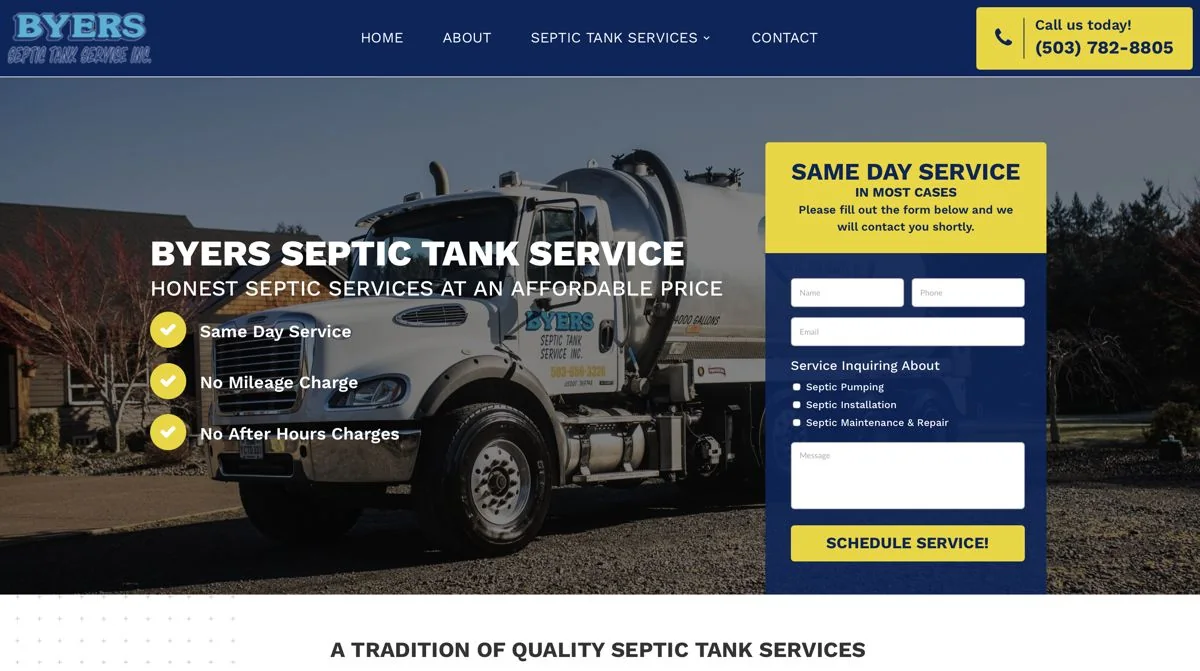
 Septic
Byers Septic Service
9Xorganic traffic
91 to 799 visits a month
- more ranking keywords (36 to 395)
- 11X
- more ranking keywords (36 to 395)
- conversion rate
- 23.1%
- conversion rate
Web design for Albany, NY roofing businesses
Turn your Albany, NY roofing website into a clearer customer route with useful service navigation, genuine project evidence and a quote request people can complete.
 Google PartnerView our Partners listing
5.0on Google · read our reviews
Google PartnerView our Partners listing
5.0on Google · read our reviews
Businesses
we’ve worked with
Businesses we’ve worked with
A premium website should help the right customer contact you
Lithium Marketing builds websites that connect your service offer with an understandable customer action. If your Albany, NY roofing site showcases replacements while hiding repair work your company also takes, we can improve the page structure, imagery and request route together. A strong design should help visitors find the relevant service, trust the evidence and reach your team.
‘Roofing company albany’ records 70 monthly searches. The first page visitors encounter should explain the roofing work they can ask about without making them diagnose their roof. We choose navigation, headings and calls to action around your genuine offers, with repair and replacement given clear roles.
Make the destination work for the visitor’s service question
The roofing phrase averages $87.01 per click. That research context makes destination quality part of a sensible acquisition discussion, without promising a conversion rate. We make the mobile service route readable and the contact controls usable so the website supports the traffic your business earns or buys.
Albany County records 18 roofing establishments. Your own website should explain the company’s specific services within that category, supported by genuine work. A repair explanation and relevant project caption can give customers a reason to contact you that a large unlabelled roof image cannot supply alone.
| Search | Searches a month | Cost per click |
|---|---|---|
| web design albany | 170 | $2.84 |
| website design albany | 170 | $2.84 |
| web designer albany | 10 | not reported |
Source: Google Ads keyword data, average monthly U.S. searches. "Under 10" = below Google’s reporting floor.
Source: one Google results page for “plumber albany”, as Google showed it to a searcher located in Albany. Search ad counts exclude sponsored local listings. Results shift by searcher and day.
Turn real project material into useful design content
When selecting roofing evidence for Albany housing with a median year built of 1949, describe the genuine job and whether it involved a repair or replacement. We can build that context into the portfolio and link it to the relevant service page. Another property still needs its own assessment rather than an assumed solution based on house age.
For a verified example from Albany’s 78.8% housing share built before 1980, identify the repair area or replacement scope accurately. The design can make that information easy to scan alongside a useful quote-request button, helping the customer understand the offer without implying that every older roof needs replacement.
Sources: U.S. Census Bureau 2025 population estimates, ACS 2020–2024 and 2023 County Business Patterns.
Keep the inquiry simple enough to begin
If a roofing inquiry concerns Albany housing built in 2010 or later, a 6.9% share, the customer should still have a route for describing the requested help. We avoid treating a construction-period choice as a diagnosis. Plain fields for the property, observations and contact can support the estimator’s next conversation.
The build should also make the business information, service navigation and primary contact action consistent across pages. We scope useful functions, write honest confirmation wording and review the mobile path. The result is a website your company owns, with the design and content working toward the same practical customer step.
County Business Patterns
Trade and home service businesses in Albany County
Establishments by industry, 2023
Source: U.S. Census Bureau, 2023 County Business Patterns (NAICS establishment counts).
Build the website from service priorities to a usable request
Agree the offer, shape the pages and verify the route from service discovery to contact.
Confirm repair and replacement priorities, coverage and the information staff needs first.
Write clear service pages and pair genuine projects with helpful scope captions.
Create readable mobile layouts, consistent navigation and the agreed inquiry functions.
Check content, contact actions and confirmations with the business before the completed website is delivered.
What every Lithium website includes
The same eight parts go into every website build, wherever the business is.
Documented website work within a full acquisition engagement
The case card for Byers Septic Service reflects a complete engagement: website design, SEO and Google Ads. Its location is not documented here. Marc Rickabaugh’s separate Rickabaugh Construction testimonial describes website and SEO work. Their evidence supports the discussion of a new website without becoming an Albany roofing result or a website-only outcome.
Septic9Xorganic traffic
91 to 799 visits a month
“We used the team at Lithium Marketing to update our website and increase our SEO. We couldn't have been happier with the results! We receive compliments about our updated website on a regular basis!”
 Marc RickabaughRickabaugh Construction
Keep the site’s service coverage understandable
The roofing site should tell a customer whether the company takes work at their property before they complete a request. Troy, Schenectady and Poughkeepsie are linked New York web design markets below; Bennington and Rutland are in Vermont, and Springfield is in Massachusetts. New York’s city collection supplies the wider state view while your website uses the coverage your team can support.
Published price
$5,000
typical project
Larger sites get a fixed proposal after a 30-minute discovery call. Six to nine weeks from kickoff to launch. You own the domain, hosting account, WordPress install and content.
FAQ

Still curious?
Call (503) 766-5964 or email [email protected].
We can organize the service pages, navigation and genuine project evidence so customers can find both offers. The repair route should explain how to contact the company without requiring a diagnosis. Staff can then assess the property and appropriate work.
Bring your service priorities, working area, current business information and genuine project material you can publish. We help shape that content into useful pages and a clear request path. The scope should state any additional functions and approval responsibilities.
The agreed build generally takes six to nine weeks. Content readiness, review and approval affect the schedule, and responsibilities are set at the start. You own the completed website rather than depend on an ongoing rental arrangement for it.
Give the customer a way to explain what they know and the help they want. A repair inquiry should not be forced into a replacement choice merely to submit the message. The website can preserve that purpose while staff determines the suitable work.
A clearer website supports service discovery and contact, but it cannot promise an inquiry total. We design around your offer and the customer path. Organic promotion, advertising and reception have separate roles that can be discussed when the business needs them.
Free action plan
Show a co-founder your current site and the roofing services customers struggle to find. A short video call can define the pages, genuine examples and contact functions that make a practical website scope.
What we’ll cover
2000 NE 42nd Ave Ste D Unit 2370, Portland, OR 97213
Prefer to pick a time? Book a 30-minute call with DJ