
 Restoration
Robinson Restoration
26Xorganic traffic
79 to 2,200+ visits a month, SEO only
- organic visits a month
- 79 → 2,200+
- organic visits a month
- top-3 rankings
- 120
- top-3 rankings
WordPress web design for Madison
Give Madison customers a clear reason to hire you, with a WordPress website your business owns and can update.
 Google PartnerView our Partners listing
5.0on Google · read our reviews
Google PartnerView our Partners listing
5.0on Google · read our reviews
Businesses
we’ve worked with
Businesses we’ve worked with
A website that explains the job
Lithium Marketing builds service business websites that help Madison customers understand your work before requesting an estimate. In Madison city, 50.6% of homes were built before 1980. If you repair or improve older properties, show completed work and explain what the customer hired you to change.
A strong website lets a visitor recognize the service they need, see why your company can handle it and contact you without hunting through menus. We write the pages and design the phone and desktop experience around those decisions. You review the content and design before launch.
The page after the search
Someone searching 'landscaping madison' should land on more than a photo collection; the phrase has about 590 searches a month. Distinguish maintenance from installation if you offer both, and place an estimate request beside the explanation. The visitor needs to know which work the photos represent.
A plumbing customer looking for a repair should find your coverage and phone number immediately. Keep the contact options easy to reach, then give customers who need more detail room to read about the work.
| Search | Searches a month | Cost per click |
|---|---|---|
| web design madison | 390 | $53.32 |
| website design madison | 390 | $53.32 |
| web designer madison | 70 | $8.11 |
Source: Google Ads keyword data, average monthly U.S. searches. "Under 10" = below Google’s reporting floor.
Source: one Google results page for “plumber madison”, as Google showed it to a searcher located in Madison. Search ad counts exclude sponsored local listings. Results shift by searcher and day.
Show the properties you work on
Homes built in 2010 or later make up 14.3% of Madison city's housing. If you work on newer properties as well as older ones, use projects from both in the site plan. A remodeler can explain the original room and the changes made; a repair company can describe the problem it solved.
Dane County's owner-occupied share is 57.1% of occupied homes. For a business serving owners and rental properties across the county, write separate guidance where the hiring process differs. A landlord arranging work remotely may need different contact instructions from an owner living at the property.
Sources: U.S. Census Bureau 2025 population estimates, ACS 2020–2024 and 2023 County Business Patterns.
Make the work easy to compare
Residential remodeling accounts for 233 establishments in Dane County. Help a buyer understand your specialty by grouping projects by the kind of work you do. Short descriptions should say what you changed, which services were involved and how someone can discuss a similar project.
There are 79 painting contractors in Dane County, and the county records 44 roofing contractors. Those sites benefit from photos that explain preparation or repairs as well as the finish. We place that detail where a visitor is deciding to call, with concise captions that remain readable on a phone.
County Business Patterns
Trade and home service businesses in Dane County
Establishments by industry, 2023
Source: U.S. Census Bureau, 2023 County Business Patterns (NAICS establishment counts).
From material to finished site
We turn your services and completed jobs into pages you can review, use and maintain.
You supply project photos and explain your services. We organize the pages around the jobs a prospective customer can hire you for.
We prepare mobile and desktop designs so you can check the service explanations, project presentation and estimate forms before the build moves ahead.
The build includes testing phone links, form delivery and tracking, plus checking that photographs load correctly and navigation makes sense.
We plan redirects for existing URLs and provide a private Loom walkthrough so your team can change text, replace photos and add work.
What every Lithium website includes
The same eight parts go into every website build, wherever the business is.
Website design with ongoing SEO
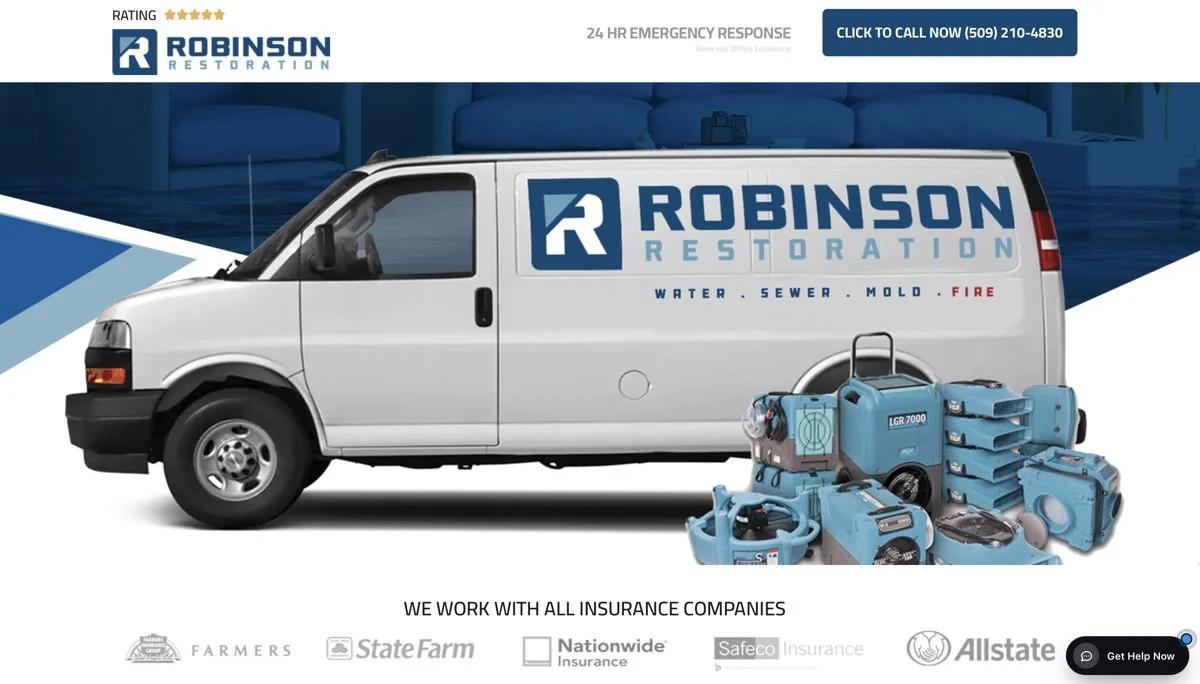
Robinson Restoration's case shows the organic search results from its SEO work. Its Lithium engagement also included a new website. Beside that case, Dozer Dave's Dave Turin recommends DJ Van Zanten for website and internet marketing help.
Restoration26Xorganic traffic
79 to 2,200+ visits a month, SEO only
“I highly recommend Dj Van Zanten if you need any help with your website and your internet marketing.”
 Dave TurinDozer Dave
Website planning elsewhere
Different locations call for different project examples and coverage details. Browse the linked web design guides for Wisconsin markets including Racine and Milwaukee, or for Rockford and Elgin in Illinois; the Wisconsin link brings together the state's other city guides.
Published price
$5,000
typical project
Larger sites get a fixed proposal after a 30-minute discovery call. Six to nine weeks from kickoff to launch. You own the domain, hosting account, WordPress install and content.
FAQ

Still curious?
Call (503) 766-5964 or email [email protected].
A typical service business website costs $5,000. A larger collection of services, locations or project pages can require a larger build, which we price before you commit. We use the discovery call to decide what belongs in the site, so you can compare a defined proposal with your budget.
We start by reviewing what you have and identifying what is missing. A typical build takes six to nine weeks from kickoff to launch, with your content and review time affecting the schedule. Send real job photos and a service list early so we can plan pages around material you can supply.
You retain ownership of the domain, hosting, WordPress installation and content. That lets you keep the website if you change providers. We also give you an editing walkthrough, so ordinary content changes do not depend on staying with Lithium for ongoing marketing.
You can manage those yourself or choose our optional $99/month hosting and maintenance plan. It includes secure private hosting on a dedicated high-speed server, daily backups, software and security updates, and basic website changes. We explain the ongoing care separately from the build so you can decide who should handle it.
We review the current content and URLs before deciding what to keep, combine or rewrite. Pages that receive traffic or have links need a planned home in the new site, with redirects where an address changes. We check those connections at launch; search positions can still change during a rebuild.
Free action plan
Show us a few completed jobs and tell us what your current site fails to explain. Your free plan begins with a short video call: a co-founder will help sort the content, design needs and build budget.
What we’ll cover
2000 NE 42nd Ave Ste D Unit 2370, Portland, OR 97213
Prefer to pick a time? Book a 30-minute call with DJ