
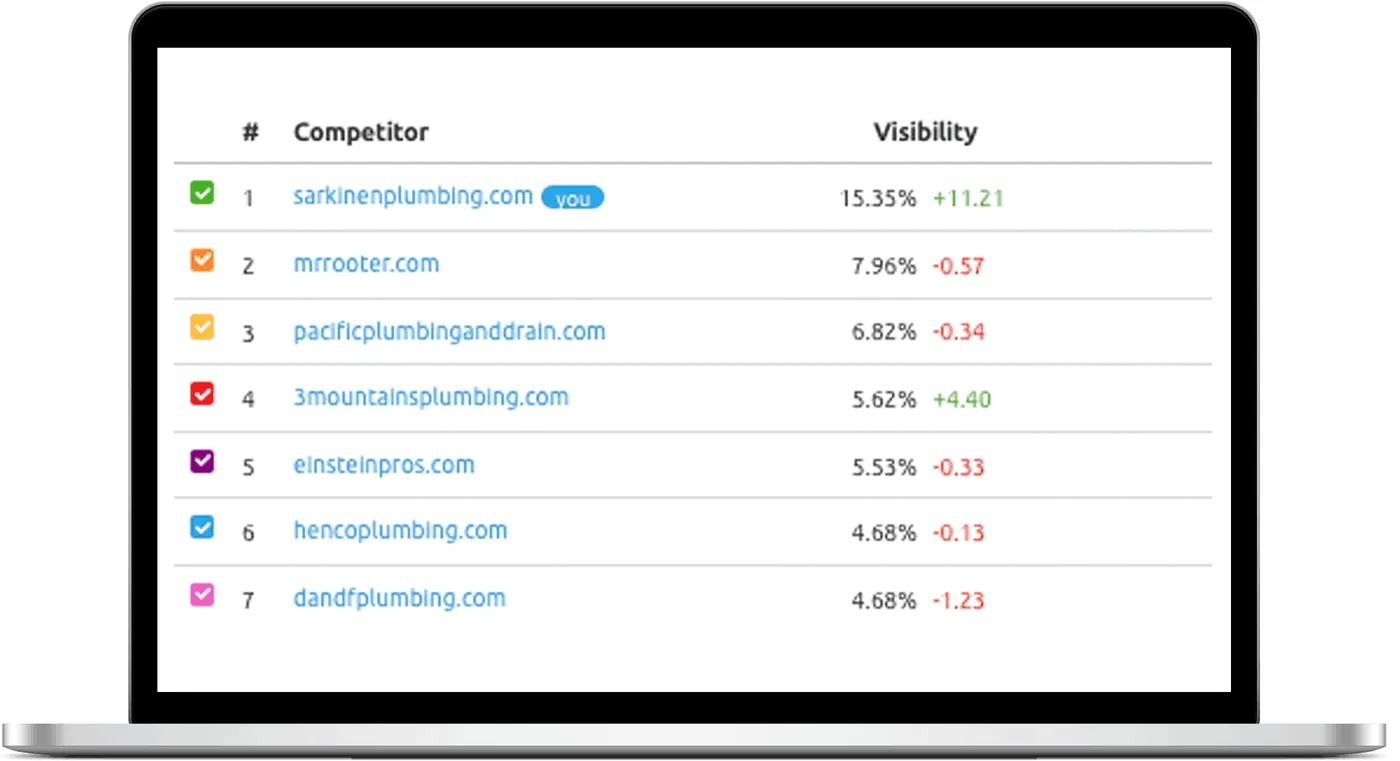
 Plumbing
Sarkinen Plumbing
2Xleads
on the same budget
- search visibility
- 3.75X
- search visibility
- ads conversion rate
- 27.37%
- ads conversion rate
Web design for Richland, Washington builders
Richland home builders get web design that distinguishes available properties from project examples, with an owned site staff can keep accurate.
 Google PartnerView our Partners listing
5.0on Google · read our reviews
Google PartnerView our Partners listing
5.0on Google · read our reviews
Businesses
we’ve worked with
Businesses we’ve worked with
Explain the home’s role
Lithium Marketing builds websites that help Richland home builders explain which houses are available and which illustrate completed work. A buyer should not have to infer availability from a gallery photograph. We give each kind of page an accurate purpose and a useful route for the inquiry it should receive.
Benton County has 101 new-home-building establishments. Your own website should distinguish the company’s actual property offers from construction examples within that field. A photograph can prove a completed contribution without making the pictured house a current sale offer.
The buyer’s question
Homes completed from 2010 onward make up 21.9% of Richland housing. A builder’s examples can show work on that part of the market, but the image alone does not establish availability. Label the property’s role in the website and provide the right starting point for a purchase or construction question.
The company should identify who keeps public availability information accurate. An owned WordPress site gives staff a way to maintain the content, but we still need the business’s approved facts and the person responsible for reviewing each property offer.
| Search | Searches a month | Cost per click |
|---|---|---|
| web design richland wa | 10 | not reported |
| web designer richland wa | under 10 | not reported |
| website design richland wa | under 10 | not reported |
Source: Google Ads keyword data, average monthly U.S. searches. "Under 10" = below Google’s reporting floor.
Source: one Google results page for “plumber richland wa”, as Google showed it to a searcher located in Richland. Search ad counts exclude sponsored local listings. Results shift by searcher and day.
Place and property context
Richland is a city in Benton County. A builder working across the county should identify a property’s real location rather than put every example under the city name. The customer needs to recognize both the home’s status and the place it belongs.
Richland Wye is within Richland’s eastern city limits. If a real property example there is used, retain that location alongside its actual role. A neighborhood label should help someone identify the example, while the availability information comes from the builder’s current approved record.
Sources: U.S. Census Bureau 2025 population estimates, ACS 2020–2024 and 2023 County Business Patterns.
Different reasons to ask
Richland’s pre-1980 housing share is 47.2%. If older-property work appears in your builder portfolio, label the actual contribution so it is not confused with a house being offered for sale. A visitor should know whether they are reviewing capability or a purchase opportunity.
Kennewick and Pasco join Richland in the Tri-Cities. A builder’s regional gallery can span those places, with each property accurately named. Keep a construction-service request distinct from an inquiry about one advertised home so staff knows what the customer is considering.
County Business Patterns
Trade and home service businesses in Benton County
Establishments by industry, 2023
Source: U.S. Census Bureau, 2023 County Business Patterns (NAICS establishment counts).
A site staff can maintain
We agree which information is a current offer and which is evidence of completed work.
You separate available homes from completed examples and confirm what customers can request through each page.
We use approved status, location and contribution information rather than infer facts from photographs.
The page keeps the home or construction question recognizable through the route your staff receives.
Your responsible staff member reviews the WordPress editing process and the fields they need to keep accurate.
What every Lithium website includes
The same eight parts go into every website build, wherever the business is.
Owned websites and marketing
Portland-area Sarkinen Plumbing used Lithium for website design, SEO and Google Ads. Marc Rickabaugh of Rickabaugh Construction supplies the neighboring quote about his company’s website update and SEO experience.
Plumbing2Xleads
on the same budget
“We used the team at Lithium Marketing to update our website and increase our SEO. We couldn't have been happier with the results! We receive compliments about our updated website on a regular basis!”
 Marc RickabaughRickabaugh Construction
Other website plans
Use Kennewick, Pasco and Walla Walla’s website guides when discussing a regional property portfolio. Yakima and Wenatchee are also linked, with The Dalles in Oregon and more Washington options on the state page.
Published price
$5,000
typical project
Larger sites get a fixed proposal after a 30-minute discovery call. Six to nine weeks from kickoff to launch. You own the domain, hosting account, WordPress install and content.
FAQ

Still curious?
Call (503) 766-5964 or email [email protected].
Yes, the pages can give those different purposes clear labels and inquiry routes. Your business supplies the approved availability information. A completed photograph can remain useful evidence without implying that the pictured property is currently offered for purchase.
Your business should name the person responsible for approving and maintaining that information. You own the site and content, and the handoff includes a private Loom walkthrough. We show the agreed editing process so public offers can remain accurate.
Yes, the inquiry route should retain that property context. We discuss how your staff receives and uses it before building the page. A specific-home question should remain distinguishable from someone asking about commissioned construction or the builder’s general capability.
It can, depending on the content and customer routes needed. Bring the actual property offers and project examples you want to present. Larger sites receive a fixed proposal after discovery, with the purpose of each page agreed before the build.
The typical build runs six to nine weeks from kickoff to launch. Timely approved property information and staff feedback support that schedule. We identify the material and review responsibilities early so the site does not depend on uncertain availability facts.
Free action plan
Send a current property page and a completed project example, with their different customer purposes. A co-founder will discuss the page structure and staff editing role on a short video call.
What we’ll cover
2000 NE 42nd Ave Ste D Unit 2370, Portland, OR 97213
Prefer to pick a time? Book a 30-minute call with DJ