The Dalles, Oregon Website Design

The Dalles Web Design for Regional Service Businesses

Clearer pages for visitors who need to understand, trust, and act.

A The Dalles website has to serve people who may be comparing from town, from the highway, or from another community in the Columbia River Gorge. We design service pages, proof sections, and action points that explain the business quickly and make the next step easy.

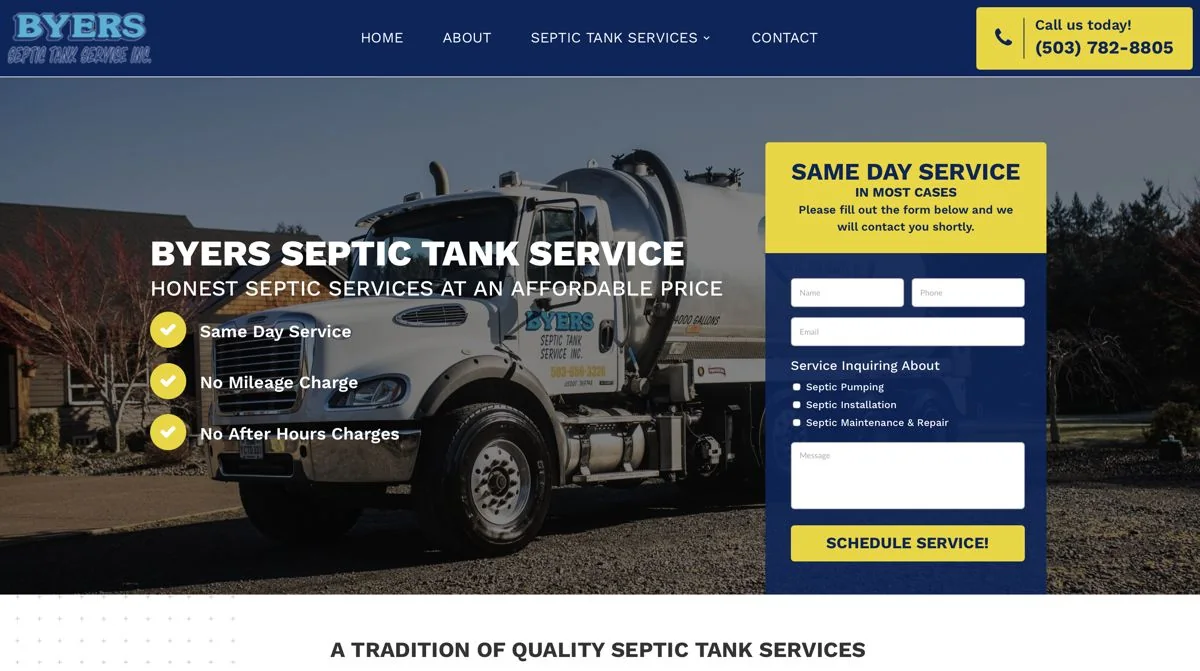
Custom web design services displayed on laptop and phone screens
5.0
Google reviews
Verified 5-star rating across 30+ reviews
Google
Partner
Certified
Vetted search agency in Google's official program
20+
Years
Digital marketing experience under one roof
500+
Service businesses
Helped to grow with SEO across the U.S.
THE WEBSITE PROBLEM

A good-looking site can still leave buyers unsure.

The Dalles companies often serve a regional audience, so the website has to work for local residents, Gorge visitors, and customers comparing providers from nearby communities. The site has to do more than look current. It has to help a skeptical visitor understand the service, believe the claim, and know exactly how to start a conversation.

Design should remove hesitation from the next click.

Useful website searches often reveal a buyer who already has a goal in mind. They may be comparing options with direct phrases like these before asking for pricing or availability: The Dalles HVAC website design or Gorge contractor website design The page behind those searches should load cleanly, answer in ordinary language, show relevant proof, and keep calls or forms close to the content that creates interest. Otherwise good traffic can disappear without a clear signal.

A better website aligns the buyer experience with the search foundation. Page structure, mobile performance, schema, calls to action, content, and analytics need to work together before the site can be judged as a business asset.

Slow mobile load = lost lead

Speed problems are especially costly when someone is checking options on mobile. Heavy images, delayed scripts, shifting sections, and slow forms make the company feel harder to work with before the visitor has judged the offer.

No one-tap path to call you

The visitor should see how to call, request a quote, book, or ask a question without searching through the whole site. We keep important actions close to service content and proof so the page supports the decision as it builds.

Built for looks, not for ranking

Search structure matters for a regional business. Clean URLs, schema, service pages, internal links, Core Web Vitals, and consistent profile details help Google understand what you offer and where you work across Wasco County and Gorge communities.

No proof above the fold

Trust is built in small moments: a headline that names the service, examples that match the claim, reviews that feel current, and a form that does not ask for too much too soon. We design for those moments instead of decoration alone.

WHAT A LITHIUM WEBSITE INCLUDES

A service website needs strategy, speed, proof, and tracking before launch.

The foundation includes positioning, page architecture, mobile performance, direct service copy, accessible structure, local search support, proof placement, and measurement. Those pieces are planned together because visitors experience the site as one decision, not a checklist.

Sub-2.5-second mobile load

Performance is planned from the start through lean media, clean templates, stable sections, sensible scripts, and mobile-first testing. The target is a page that feels responsive for real visitors instead of a desktop mockup that slows down later.

Calls, forms, and bookings built for mobile

Mobile actions are designed around thumb reach, readable sections, and the content that creates interest. Calls, forms, booking links, and quote requests stay available without covering the page or turning the experience into a sales interruption.

Above-the-fold value proposition

The first screen should make the business legible: service, audience, proof, geography, and action. We avoid vague welcome statements and broad claims that force visitors to work out whether the company handles their problem.

SEO-ready architecture

URL structure, header hierarchy, internal links, and schema markup are planned before design starts. When SEO or PPC traffic reaches the site later, the page architecture is ready instead of becoming the bottleneck.

Local search details planned before design

Business identity has to be consistent across the site, Google Business Profile, citations, and service pages. We use LocalBusiness and Service schema where appropriate and avoid fake location pages that create confusion later.

Real proof, placed where it converts

Proof should live near the claim it supports. Reviews, project examples, certifications, process details, warranties, awards, and team context are placed where they help a skeptical visitor continue instead of backing out.

Tracking that ties leads to revenue

GA4 events fire on every form submission, booking action, and click-to-call. Call tracking connects conversations back to traffic source, and conversion tags are wired to Google Ads before campaigns send paid traffic into the new site.

WCAG-aware, AI-search-ready

Accessibility and answer clarity help more than compliance. Semantic headings, contrast, keyboard usability, readable copy, and direct answer sections make the site easier for people, search engines, and AI systems to interpret.

SERVICE-BUSINESS CASE STUDY

How a third-generation Gulf Coast glass company drove 76% more conversions after we rebuilt their site.

Dixie Glass came to Lithium with an outdated Wix site and campaigns that needed better measurement. We rebuilt the site on WordPress around quote requests and clearer service actions, rebuilt paid search with proper conversion tracking, and layered SEO into the structure. Conversions climbed 76 percent within twelve months while search visibility and organic traffic also improved.

76%

More conversions

18.2%

Organic traffic growth

71.2%

Search visibility growth

DIXIE GLASS | WEBSITE REBUILD CASE STUDY

Mississippi Gulf Coast • Since 1946
Dixie Glass website rebuilt by Lithium Marketing. A WordPress conversion-focused redesign that replaced an outdated Wix site
Dixie Glass logo
WHO WE BUILD FOR IN THE DALLES

Local and regional companies need websites that make decisions easier.

The Dalles businesses in trades, clinics, hospitality, orchard and farm services, specialty retail, and regional professional firms often serve people who need practical answers before they reach out. The site should make services, coverage, credibility, and next steps clear enough for both local customers and regional buyers.

Home services

Home-service and trade websites need clear categories, emergency language where appropriate, reviews, service-area pages, quote forms, and SEO structure that supports organic discovery. A visitor should be able to confirm fit without calling just to ask what you do.

Dental and medical practices

Dental, medical, chiropractic, therapy, and specialty practices need websites that answer patient concerns plainly. Provider details, insurance notes, appointment options, reviews, and directions should support confidence before the first phone call.

Contractors and construction

Contractors and builders need to show work quality quickly. Project galleries, scope descriptions, materials, trade credentials, reviews, and estimate language help homeowners or property managers judge whether the company fits the job.

Legal and professional services

Professional-service firms need pages that turn expertise into clarity. Attorneys, advisors, accountants, consultants, and insurance teams should explain practice areas, process, consultation options, credentials, and proof without burying the point.

Hospitality and restaurants

Hospitality websites have to answer operational questions fast. Menus, rooms, events, hours, reservations, catering, parking, reviews, and mobile directions should be easy to use for visitors who may be making a same-day decision.

Auto services

Auto-service, glass, towing, detailing, tire, and fleet sites need urgent-service clarity. Service pages, warranty notes, reviews, phone actions, and PPC-ready pages help the business support both organic visitors and paid search traffic.

Specialty retail

Specialty retail websites should make the local trip feel worthwhile. Product categories, inventory cues, brand story, store photos, reviews, hours, and location details help visitors compare the shop with chains and online marketplaces.

B2B services

B2B, industrial, agriculture, technology, and professional firms need credibility before pricing. We clarify capabilities, industries served, service territory, certifications, proof, and response process so qualified inquiries have better context.

OUR PROCESS

From kickoff to launch in six to nine weeks, with weekly decisions instead of mystery delays.

Our process is collaborative without turning every decision into a meeting. Strategy, copy direction, design, build, and QA move through weekly review points so your team knows what is ready, what is blocked, and what needs approval.

01

Discovery & strategy

Week 1

Discovery maps the service mix, best customers, competitive context, and value of a better inquiry. For The Dalles companies, we also look at how far the business realistically serves and which pages need to carry regional proof.

02

Information architecture & content plan

Week 2

The architecture phase defines the sitemap, URL plan, content outline, schema needs, and conversion goals. SEO planning happens before design so the finished site can support search visibility instead of needing structural repairs after launch.

03

Design direction

Week 2–3

Design direction starts with the approved strategy. We show how the homepage, service pages, proof sections, and mobile actions will work, then refine the system before carrying it across the full build.

04

Build, content, integrations

Week 3–6

We build the site in Elementor on WordPress and write SEO-optimized copy in parallel. The build phase also includes forms, GA4 events, call tracking, Google Ads conversion tags, Google Business Profile alignment, schema, and any CRM or booking integrations needed to make leads trackable.

05

QA, launch, indexing

Week 6–7

Launch QA covers mobile layouts, forms, click-to-call, redirects, schema, analytics events, conversion tags, Search Console, page speed, and content checks. We test the site as both buyers and crawlers will encounter it.

06

30 / 60 / 90-day tracking

Post-launch

Post-launch data shows what the design is really doing. We monitor traffic, inquiries, lead quality, local search movement, Core Web Vitals, and page behavior, then use that information to decide what should improve next.

AI SEARCH READINESS: AEO + GEO

Engineered to surface in Google AI Overviews, ChatGPT, Perplexity, and Claude when buyers ask.

SEO gives the site a stronger search foundation, while AI systems need clean facts and direct answers to understand the business. We write and structure pages so both classic search and answer surfaces can read the same message.

Quotable answer blocks

Answer-first sections help visitors and AI systems at the same time. The page should state the answer, then add details, proof, and conditions, instead of forcing readers to sort through a long promotional paragraph.

Fact density and citations

Local pages should include details a real operator would recognize: services, project types, service territory, credentials, turnaround expectations, pricing context where useful, and proof that supports the promise.

Schema for generative engines

Schema makes the business easier to parse when it matches the visible content. We plan business identity, services, FAQs, breadcrumbs, and review-related markup where appropriate, then validate the markup before launch.

Brand consistency across the web

A confused public presence can create confused summaries. We align the The Dalles website with profile details, reviews, directories, citations, and social profiles so services, locations, and proof stay consistent.

Topical authority and entity coverage

Topical depth comes from useful connected pages. Service pages, FAQs, proof, supporting resources, and internal links help buyers and search engines understand the company beyond a single generic services page.

llms.txt + AI crawler controls

AI crawler guidance is part of a modern technical plan. We pair clear site content with llms.txt and robots.txt considerations for GPTBot, ClaudeBot, PerplexityBot, and Google-Extended when AI discovery is a priority.

LITHIUM VS. DIY VS. TYPICAL WEB DESIGNER

How different website options serve a local business.

Strategic comparison of traditional web designers vs Lithium Marketing across conversion path, Core Web Vitals, conversion tracking, SEO architecture, and strategy ownership
Capability
DIY Builder (Wix / Squarespace)
Typical Web Designer
Lithium Marketing
Mobile load time
DIY Builder (Wix / Squarespace):
5+ seconds, untuned
Typical Web Designer:
3-5 seconds, theme-defaults
Lithium Marketing:
Sub-2.5 seconds, Core Web Vitals targets met
A clear next step above the first scroll
DIY Builder (Wix / Squarespace):
Home page used as landing
Typical Web Designer:
Stock template hero
Lithium Marketing:
Mobile-first hero with tap-to-call + sticky CTA
Conversion tracking
DIY Builder (Wix / Squarespace):
Default Google Analytics only
Typical Web Designer:
GA4 at launch, never audited
Lithium Marketing:
GA4 + CallRail + offline conversion imports from CRM
Schema markup + technical SEO
DIY Builder (Wix / Squarespace):
None
Typical Web Designer:
Plugin-installed, unvalidated
Lithium Marketing:
LocalBusiness + Service + FAQ + Article schema, validated in Rich Results Test
Site-speed monitoring (post-launch)
DIY Builder (Wix / Squarespace):
Never
Typical Web Designer:
Project-based, then handoff
Lithium Marketing:
Ongoing Core Web Vitals monitoring + alerts
Real proof above the fold
DIY Builder (Wix / Squarespace):
Generic stock language
Typical Web Designer:
Logos only, no outcomes
Lithium Marketing:
Outcome stats + client photo, CRO-tested placement
Site ownership
DIY Builder (Wix / Squarespace):
Locked into template platform
Typical Web Designer:
Sometimes you own it
Lithium Marketing:
You own the site, the domain, the CMS, all assets
AI-search readiness
DIY Builder (Wix / Squarespace):
Nothing built in
Typical Web Designer:
Nothing built in
Lithium Marketing:
llms.txt + structured data + quotable answer blocks
Internal linking + SEO architecture
DIY Builder (Wix / Squarespace):
Flat structure, no hierarchy
Typical Web Designer:
Whatever the template gives you
Lithium Marketing:
Topical hub-and-spoke + breadcrumb schema
Strategy ownership across web, SEO, CRO
DIY Builder (Wix / Squarespace):
N/A
Typical Web Designer:
Handed off to a junior at launch
Lithium Marketing:
Monthly co-founder strategy call
REAL CLIENTS, REAL OUTCOMES

Service businesses Lithium has built websites for.

Daniel Busby

Willard Power Vac

“Lithium Marketing has been amazing for our business. They have greatly increased our web traffic and helped us land hundreds of jobs.”

Drake Snodgrass

Drake’s 7 Dees

“Lithium has moved us to page 1 in Google search organically.”

Marc Rickabaugh

Rickabaugh Construction

“Working with Lithium Marketing has been awesome.”

FREQUENTLY ASKED QUESTIONS

The Dalles website questions, answered clearly.

Most Lithium website projects fall between $5,000 and $20,000. The final scope depends on page count, content needs, forms or booking tools, integrations, SEO, and paid search landing-page requirements. We define the work before design starts so the price can be evaluated against the value of better inquiries.

Most service-business sites take six to nine weeks, depending on content, approvals, integrations, and page count. The schedule covers strategy, page planning, design, build, mobile review, form testing, speed checks, redirects, schema, analytics, and final launch QA.

A redesign can improve the foundation for SEO, but it is not a ranking guarantee. The new site should make pages crawlable, improve speed, organize services, add schema, preserve redirects, clarify local proof, and support future content growth.

Yes. The website, approved page content, WordPress build, and custom work covered by the scope belong to your business. Domain and hosting access should remain under your control, so the site is not trapped inside an agency account.

Yes. We build on WordPress with Elementor for normal page editing after launch. Your team receives a walkthrough of the real site, and Lithium can continue supporting technical updates, content, SEO, paid traffic, and conversion improvements as needed.

The work depends more on strategy, process, and accountability than a shared office table. Lithium serves clients remotely with documented decisions, clear reviews, and marketing systems that support paid traffic as well as organic discovery.

Lithium brings strategy, design, development, analytics, SEO, and PPC planning into the same project. That matters because a service website has to explain the offer, support search, track inquiries, and keep improving after launch from the first planning session.

Most The Dalles projects run remotely through calls, Loom videos, shared documents, email, and project notes. That keeps decisions documented and scheduling simple. If travel or an in-person session is genuinely needed, we can discuss it during scoping.

MEET THE CO-FOUNDER

DJ Van Zanten leads your strategy review

DJ has worked in digital marketing for more than twenty years and has consulted with over 1,000 service businesses. When you book a Lithium strategy call, he leads the first review and connects the website conversation to business priorities.

Get a free website review

The review covers speed, mobile layout, proof placement, service-page clarity, schema, Google Business Profile alignment, analytics events, and the points where serious visitors may be leaving before they call or submit a form.

Scroll to Top