
 Septic
Byers Septic Service
9Xorganic traffic
91 to 799 visits a month
- more ranking keywords (36 to 395)
- 11X
- more ranking keywords (36 to 395)
- conversion rate
- 23.1%
- conversion rate
SEO for Atlanta service companies
Make your Atlanta services easier to find through local SEO, with monthly reporting that shows the calls behind the traffic.
 Google PartnerView our Partners listing
5.0on Google · read our reviews
Google PartnerView our Partners listing
5.0on Google · read our reviews
Businesses
we’ve worked with
Businesses we’ve worked with
Compete for service searches
Lithium Marketing connects Atlanta service businesses with customers through local SEO, service content and technical website improvements. With about 4,400 monthly searches for “pest control atlanta”, a pest company needs to explain the treatments it offers and make requesting service straightforward. A broad company introduction leaves too much for the customer to figure out.
That same planning applies across the trades. We identify the jobs you want, improve the pages that sell them and work on your Google Business Profile. Calls and form submissions belong in the monthly report alongside search visibility, so you can judge the work by the contacts reaching your business.
Search results and trust
About 1,600 searches a month name “roofing company atlanta”. A roofer who handles both repairs and replacements should explain each service, supported by finished jobs and a clear estimate request. Customers should be able to recognize their problem before they call.
When we checked “plumber atlanta”, local business listings showed review totals ranging from 956 to 2,800. Make requesting feedback part of finishing a job, and keep your profile’s services and contact details current. Reviews help a prospective customer judge the business; Google determines which businesses appear in the map results.
| Search | Searches a month | Cost per click |
|---|---|---|
| seo company atlanta | 1,000 | $7.03 |
| seo atlanta | 880 | $29.99 |
| seo agency atlanta | 210 | $3.14 |
| seo services atlanta | 210 | not reported |
Source: Google Ads keyword data, average monthly U.S. searches. "Under 10" = below Google’s reporting floor.
Source: one Google results page for “plumber atlanta”, as Google showed it to a searcher located in Atlanta. Search ad counts exclude sponsored local listings. Results shift by searcher and day.
Pages for your coverage
Atlanta has 242 officially defined neighborhoods. Publishing a thin page for every name would give buyers little to read. Start with areas where you have work to show, then explain the service, include photographs you can identify and answer questions customers there have asked.
The city of Atlanta covers about 135 square miles of land. Tell us where you want additional work and where you already get calls. We use that coverage to prioritize area pages and to review how your site describes the business, without claiming an address you do not have.
Sources: U.S. Census Bureau 2025 population estimates, ACS 2020–2024 and 2023 County Business Patterns.
Stand out within your trade
Electrical contractors number 120 in Fulton County. A list saying “residential electrical” offers little help to someone comparing providers. Pages about the electrical work you perform can explain what the visit covers, show completed work and invite a call about the customer’s own property.
The Fulton County count for roofing is 71 establishments. A roofer can make the service easier to judge by explaining how an estimate begins and showing completed repairs or replacements. We put those details on the pages customers reach from search, close to the estimate form.
County Business Patterns
Trade and home service businesses in Fulton County
Establishments by industry, 2023
Source: U.S. Census Bureau, 2023 County Business Patterns (NAICS establishment counts).
Work inside the retainer
We build from your existing site and business details, then expand the areas where customers can find you.
We inspect indexing, site structure and broken links, and identify pages that already attract service searches. Fixes preserve the work worth keeping.
We write and improve pages around the jobs you perform, using your photographs and answers to customer questions. Each page gives the visitor a way to act.
Profile improvements, directory corrections and review-funnel support help customers encounter consistent details. Link building supports the pages selected in the plan.
Monthly reporting connects organic visits with calls and forms. We review which services attract contacts and where the next content or technical improvements belong.
What every SEO retainer includes
The same eight parts go into every SEO retainer, wherever the business is.
A service business example
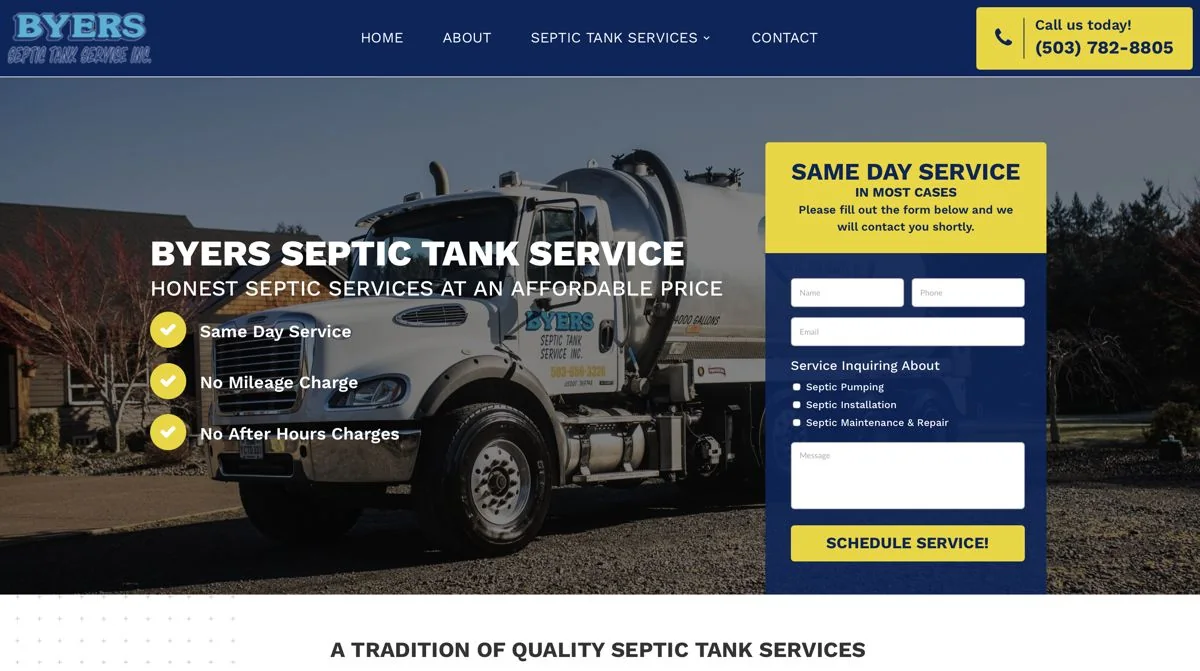
Byers Septic Service hired Lithium for website development, SEO and Google Ads; the case covers that full scope. Daniel Busby, president of Willard Power Vac, describes his experience with Lithium in the adjoining testimonial. Willard handles air duct, dryer vent and chimney cleaning.
Septic9Xorganic traffic
91 to 799 visits a month
“Lithium Marketing has been amazing for our business. They have greatly increased our web traffic and helped us land hundreds of jobs. Before we started using Lithium we were sitting on page 8 in google. We are now sitting in the top spots in all the areas we do work.”
 Daniel BusbyPresident, Willard Power Vac
Expand the search plan
Explore the SEO pages for Sandy Springs and South Fulton, or follow the links to Athens, Macon and Columbus. Chattanooga’s page covers Tennessee; the Georgia link gathers the rest of our city pages in the state.
Published price
$1,300–$3,000
per month
Typical local SEO retainer, scoped against what a lead is worth to you, with AI search optimization included.
FAQ

Still curious?
Call (503) 766-5964 or email [email protected].
A larger service area, more services to promote and a website needing substantial repairs increase the monthly workload. We also consider the revenue a lead can bring your business. The published range is $1,300–$3,000 a month, and the proposal names the pages, technical work and local search priorities behind your price.
The early milestones differ: technical changes often register within 30 days, while local and long-tail rankings typically develop over 60 to 90 days. Those are working expectations, not a deadline for a particular position. We track calls and forms while the work develops and explain which changes have been completed in your monthly report.
A service-area business can use accurate coverage information and strong service pages without claiming a storefront. We work with your real business details and the locations where you take jobs. Area content should show work you can discuss and answer hiring questions, while your Google Business Profile reflects the business as it operates.
AI search readiness is included in the SEO retainer. We organize direct answers, add schema and keep business facts consistent so search systems can read your services. An AI mention or citation cannot be promised; the reporting stays grounded in website activity, calls and leads.
The initial term is six months, then the agreement continues monthly with 30 days’ notice. That gives the technical, content and local search work time to develop. The proposal explains the scope, and monthly reports let you assess completed work and the leads your business receives.
Free action plan
Share your domain, the work you want more of and the areas you serve. On a short video call, a co-founder will explain the search opportunities and outline a free SEO plan.
What we’ll cover
2000 NE 42nd Ave Ste D Unit 2370, Portland, OR 97213
Prefer to pick a time? Book a 30-minute call with DJ