

The short answer
Google Ads works for plumbers who run it like dispatch.
Google Ads works for plumbers when each campaign targets one kind of job, every ad leads to a page about that job, and someone picks up the phone when it rings. Plumbing is one of the best trades for search ads because the customer has a problem right now. Somebody typing “water heater leaking” at 7 a.m. isn’t browsing. They want a plumber in the driveway today.
The plumbers who waste money on Google Ads usually make the same three mistakes. They put every service in one campaign, they let Google show their ads for searches like “how to unclog a drain”, and they send paid clicks to a homepage with a phone number buried in the footer. Fix those three before you touch anything else.
Before you build anything, write down the jobs you want more of and the jobs you turn away. If you don’t do sewer line replacement, no ad should mention it. If you only cover one county, the campaign shouldn’t reach the next one. The plumbing leads guide covers your website, SEO and phones. This article sticks to the paid search account.
Campaign structure
Build one campaign per type of job.
A plumbing account works best when the budget follows the work. Emergency calls, routine repairs and big installs behave differently. They have different search terms, different costs per click and different value per job. Lump them together and Google spends most of the money wherever clicks are cheapest, which is rarely where your profit is.
Emergency plumbing
Burst pipes, no water, sewage backups, leaks through the ceiling. These clicks cost the most and convert the fastest. Run this campaign only during hours you can send a truck, and push calls over forms.
Drain and sewer
Clogged drains, main line backups, camera inspections and hydro jetting. Strong repeat demand and a good entry point for bigger sewer work.
Water heaters
Repair and replacement, tank and tankless. High ticket, high intent. Give replacement its own ad group so you can bid harder on it.
Repairs and installs
Leak repair, fixtures, garbage disposals, repipes and remodel plumbing. Lower urgency, so the landing page has to do more of the selling.
Inside each campaign, group keywords into tight ad groups by service. “Water heater repair” and “tankless water heater installation” deserve separate ad groups with separate ads, because the person searching each one wants to read a different promise.
If you serve two very different areas, such as a dense city and a rural county, split them into separate campaigns too. Click costs and close rates can differ a lot between the two, and one shared budget hides that.
Keywords, negatives and location
Pay for people who need a plumber, not people who want to be one.
Use phrase and exact match for your core terms, like “emergency plumber”, “plumber near me” and “water heater replacement”. Broad match can find good searches you never thought of, but on a new plumbing account it also finds a lot of junk. Add it later, once conversion tracking is feeding Google real data.
Negative keywords matter as much as the keywords themselves. Within a week of launch, open Google’s search terms report and read every search that triggered an ad. Block the ones that will never become a paying job. Then check it again every week for the first few months.
Searches worth paying for
- Emergency plumber, 24 hour plumber
- Water heater repair or replacement
- Drain cleaning, sewer line repair
- Plumber near me, plumber in your town
- Leak repair, slab leak, repipe
Common negatives to block
- Jobs, salary, apprentice, school, license test
- How to, DIY, video, tutorial
- Parts, supplies, wholesale, store names
- Free, cheap plumbing tools, rental
- Towns and services you do not cover
Location settings are the other big leak. Target the towns or ZIP codes your trucks cover, and choose the setting that shows ads to people in or regularly in your area, not people who are only interested in it. Otherwise someone three states away researching a move can click your emergency ad. Google’s location targeting guidance explains the options. Location signals aren’t perfect, so check where your calls come from and tighten the map if out-of-area calls keep showing up.
Ads and landing pages
Match the ad to the search and the page to the ad.
Your ad should repeat the problem the customer typed, name your area and give them a reason to call you. “Water heater out? Same-day replacement in Beaverton” beats “Quality plumbing since 1998” every time. Only promise same-day service or 24-hour coverage if you deliver it.
Add a call asset so mobile searchers can tap to call from the ad itself. Link your Google Business Profile so your address can appear with the ad. Add sitelinks for your main services and callouts for the things a homeowner cares about, like upfront pricing, licensed technicians or financing, if you offer them.
Then send each ad group to a page about that exact job. A homeowner who searched for a slab leak should land on a slab leak page with a phone number at the top, a short explanation of how you find and fix it, photos of your own trucks and crew, your service area and a short form. The homepage is almost never the right landing page for a paid click.
On a phone, where a homeowner with a leak is most likely searching, the tap-to-call button should be visible without scrolling. Test it yourself before launch. A broken call link on a paid page is the most expensive typo in plumbing.
The phone
An unanswered call is a click you paid for twice.
You pay for the click whether or not anyone answers. If a homeowner with water on the floor hits voicemail, they hang up and call the next plumber on the page. Then you’ve paid for a lead and handed it to a competitor.
Set your ad schedule to match the hours someone answers. If you want after-hours calls, have a plan for them. In one Lithium plumbing project, 60% of after-hours emergency calls had been going to voicemail. We built a custom AI phone system that sorts emergencies from routine work, texts the on-call tech and books the non-urgent jobs. That client saw three times more leads.
You don’t need a custom build to fix the basics. Lithium’s AI receptionist answers every call 24/7 for $179 a month, with no contract and no setup fee. It handles unlimited concurrent calls, books appointments and can transfer a caller to a real person when the job needs one.
Budget
What drives the cost of plumbing clicks.
Plumbing is one of the more expensive home service categories on Google, and emergency terms sit at the top of it. Your cost per click depends on how many plumbers bid in your market, how urgent the search is, how big your service area is and how well your ads and landing pages match the search. A plumber in a large metro with a dozen competitors bidding will pay far more per click than one in a small town.
A typical Lithium Google Ads client spends $2,000 to $5,000 a month on ads, and our management runs from $500 a month plus ad spend. The two are separate bills: ad spend goes to Google, management pays for the work on the account. Our Google Ads cost guide breaks down how to set the number.
Start with enough budget to keep your emergency and core repair campaigns running all day without hitting their daily cap. If the budget runs out by noon, you’re invisible for the afternoon rush. Add water heater, sewer and remodel campaigns once the core campaigns book jobs at a cost you like.
Measure booked jobs
Track calls to jobs, then let the numbers steer.
Set up conversion tracking before you spend a dollar. Track calls from the ads, calls from the website and form submissions. Google lets you set a minimum call length for a call to count, which keeps wrong numbers and hang-ups out of your results. If your office uses a CRM or field service software, import booked jobs back into Google Ads so the bidding learns which clicks turn into revenue.
Each month, look at four numbers: what you spent, how many calls and forms came in, how many of those became booked jobs, and what those jobs were worth. Cost per lead is a start. Cost per booked job is the number that tells you whether to spend more.
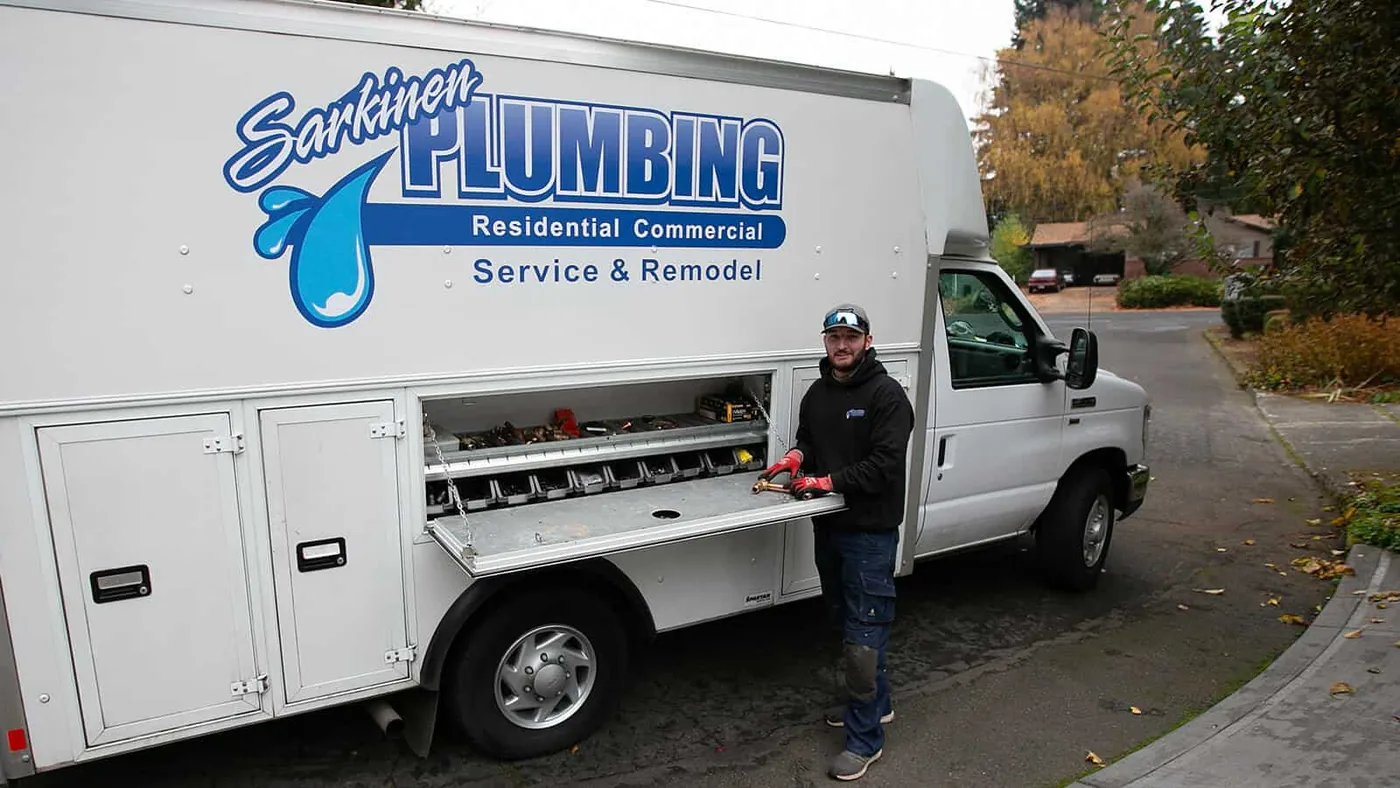
For Sarkinen Plumbing, Lithium doubled leads on the same budget after rebuilding the website, SEO and Google Ads together. The ads converted at 27.37%, against an average of about 5%. Read the Sarkinen case study for the full story, or see Lithium’s Google Ads service for what we manage. Management is from $500 a month plus ad spend.