
 Commercial glass
Town & Country Glass
13Xorganic traffic
145 to 1,849 visits a month
- top-3 rankings, up from 1
- 109
- top-3 rankings, up from 1
- Google Ads conversion rate
- 29.9%
- Google Ads conversion rate
SEO for Chicago contractors
We build the pages, profile and links that put a Chicago contractor in front of searchers, then report results in calls and booked jobs.

 Google PartnerView our Partners listing
5.0on Google · read our reviews
Google PartnerView our Partners listing
5.0on Google · read our reviews
Businesses
we’ve worked with
Businesses we’ve worked with
How Chicago SEO works
Lithium Marketing runs SEO for Chicago contractors and home service companies, building the website pages, Google Business Profile and links that bring in calls from people searching for your work. On the results page we pulled for “plumber chicago”, the Map Pack sat at the top, above every website. That makes your Google profile, its categories and the reviews customers leave there the first job in any Chicago SEO plan.
Chicago is a big place to rank across. It has 77 community areas, split further into over 200 informally defined neighborhoods, and Map Pack results lean on how near a business sits to the person searching. A listing that does well around your shop can disappear a few miles away, so pages written for the areas you serve are what carry you into the regular search results everywhere else.
Chicago trade searches
Electricians and pest control companies have plenty of demand to chase: about 1,900 monthly searches for “electrician chicago” and about 2,400 for “pest control chicago”. That is why each of those businesses needs one page per service it wants more of, naming the work and the parts of the city it covers, plus a matching category on its Google profile.
Look at the plumbers Google put in the Map Pack for “plumber chicago”: when we checked, their review counts were 1,600, 290 and 2,700. The shop with 290 held its place beside two with thousands, so reviews matter, but categories, distance from the searcher and a solid service page decide plenty as well. Two directories also made the top 10 results, Yelp and the Better Business Bureau, which means your listings on both should carry the same name, phone number and services as your website.
| Search | Searches a month | Cost per click |
|---|---|---|
| seo chicago | 1,300 | $26.54 |
| seo agency chicago | 880 | $27.44 |
| seo company chicago | 880 | $62.13 |
| seo services chicago | 590 | $17.76 |
Source: Google Ads keyword data, average monthly U.S. searches. "Under 10" = below Google’s reporting floor.
Source: one Google results page for “plumber chicago”, as Google showed it to a searcher located in Chicago. Search ad counts exclude sponsored local listings. Results shift by searcher and day.
Chicago’s sides and sections
Chicago divides into the Loop, its central business district, and the North, South and West Sides. Those names give you ready-made headings for area pages: one page per side you serve, each listing the community areas inside it where you take jobs.
The sides are far from equal. The South Side is the city’s largest section, covering roughly 60% of its land area, while the North Side is the most densely populated residential section. A South Side page may need to name more community areas to cover that ground, and a North Side page can stay tighter because more households sit in less space.
Sources: U.S. Census Bureau 2025 population estimates, ACS 2020–2024 and 2023 County Business Patterns.
Trades in Cook County
Plumbing, heating and air-conditioning is the second-largest group on the county chart, with 1,377 contractors, and electrical contractors number 1,007. For a plumber, HVAC company or electrician, SEO starts with the details that set one listing apart from the next: reviews that mention the job, photos from real work and a page that answers the exact service someone searched.
Roofing is a smaller field: the county has 354 roofing contractors, and “roofing company chicago” is searched about 1,900 times a month. Separate pages for repair and replacement, each with photos from Chicago jobs, give a roofer a way to compete for that demand beyond the Map Pack.
County Business Patterns
Trade and home service businesses in Cook County
Establishments by industry, 2023
Source: U.S. Census Bureau, 2023 County Business Patterns (NAICS establishment counts).
The SEO work
The order follows where calls are being lost: site problems first, then your profile, then pages and links.
A technical audit turns up pages Google can’t index, slow mobile load times and broken links, and those fixes are usually the first thing to move, often within 30 days.
We pick the primary and secondary categories that match your work, add your Chicago service areas and job photos, and give your crew a short link for asking customers to review.
Each service you want more of gets its own page, and each side of the city you work gets an area page naming its community areas.
Directory listings get the same business details as your site, and multi-tiered link building points authority at the service pages that produce calls.
What every SEO retainer includes
The same eight parts go into every SEO retainer, wherever the business is.
From a Lithium client
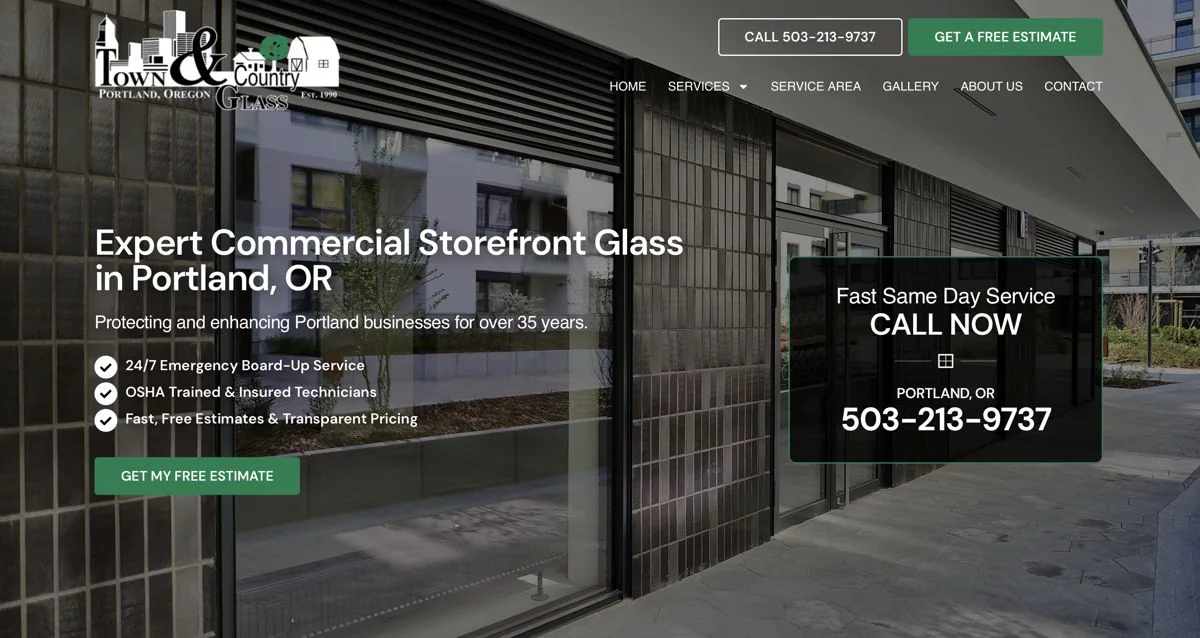
The SEO example here comes from Portland, not Chicago: Town & Country Glass, a commercial glass company, where SEO ran as one program with a new Lithium website and Google Ads. Excavation contractor Dave Turin, of Dozer Dave, points anyone who needs help with a website and internet marketing to DJ Van Zanten.
Commercial glass13Xorganic traffic
145 to 1,849 visits a month
“I highly recommend Dj Van Zanten if you need any help with your website and your internet marketing.”
 Dave TurinDozer Dave
SEO near Chicago
Before you add suburb pages to your site, check the SEO pages for Naperville, Aurora, Joliet and Elgin, plus Kenosha and Racine across the Wisconsin line, to see how often each one gets searched. The state page links the rest of Illinois.
Published price
$1,300–$3,000
per month
Typical local SEO retainer, scoped against what a lead is worth to you, with AI search optimization included.
FAQ

Still curious?
Call (503) 766-5964 or email [email protected].
The range above is set by two things: how much of Chicago and its suburbs you want to cover, and the revenue a typical job brings you. Ranking for one trade on the North Side takes fewer pages and links each month than ranking for five services citywide plus the suburbs. We size it on the first call and put the number in writing.
You should typically see site fixes land in month one and the first local ranking gains by month three. Technical repairs usually register within 30 days, while rankings for local and long-tail searches tend to climb between day 60 and day 90 as your area pages and Google profile take hold. Revenue usually builds from the fourth month on, and call tracking runs from week one, so each report shows the trend.
Rarely, and no one can promise it will. Proximity weighs heavily in the Map Pack, so a single address won’t show for every search across a city this size. We guarantee the work, not a ranking: area pages for the parts of Chicago you serve, a complete profile and listings that agree with your site, all aimed at showing up in more of the places you take jobs.
Yes. Answer-first copy, schema markup and business facts that match across the web make your company easier for ChatGPT and Google’s AI Overviews to understand, and all of it is part of the retainer. No AI Overview showed for “plumber chicago” when we checked, though that can change any day, and nobody can promise an AI mention.
Not much after the start. We need access to your website and Google Business Profile, your service list, the parts of Chicago you want work from and photos from real jobs. After kickoff, your main job is asking finished customers for reviews and telling us which leads turned into work.
Free action plan
Share your site, your Google Business Profile link and the trades and community areas that matter most to you. On a short video call, a co-founder will check how you show up in Chicago searches today and map out the first three months of work.
What we’ll cover
2000 NE 42nd Ave Ste D Unit 2370, Portland, OR 97213
Prefer to pick a time? Book a 30-minute call with DJ