
 Septic
Byers Septic Service
9Xorganic traffic
91 to 799 visits a month
- more ranking keywords (36 to 395)
- 11X
- more ranking keywords (36 to 395)
- conversion rate
- 23.1%
- conversion rate
Local SEO for League City service businesses
Help League City customers find your accepted services, understand the next step and reach your team with a useful request.

 Google PartnerView our Partners listing
5.0on Google · read our reviews
Google PartnerView our Partners listing
5.0on Google · read our reviews
Businesses
we’ve worked with
Businesses we’ve worked with
Search should describe the business customers can hire
A website and public business listing can leave customers with different explanations of the same company. Consider an electrician whose accepted services and first-contact route differ between those destinations. The owner expects the website alone to determine what search customers understand. Lithium Marketing reviews the actual discovery path, approved business information and useful service answers before recommending the first SEO task.
The goal is to help the company get found for the jobs and places it accepts, then turn relevant visits into useful calls or quote requests. We review technical and local-information issues, improve relevant content and page connections and report the available inquiry evidence. Your team supplies the accepted offer and feedback about the conversations it can use.
Relevant searches and consistent destinations
To research electrical discovery, 'electrician league city' records 210 monthly searches. Inspect current destinations and your existing visibility against the service information your business approves. A visitor should be able to recognize the company, understand the accepted work and find the actual next step.
Compare the organic priorities with paid reach using the electrical phrase's $23.30 reported cost per click and your own account and inquiry data. That benchmark informs the discussion without forecasting organic lead cost. Review useful local details, service answers and technical issues together; an isolated page or listing does not describe the whole discovery route.
| Search | Searches a month | Cost per click |
|---|---|---|
| seo agency league city | 10 | not reported |
| seo league city | 10 | not reported |
| seo company league city | under 10 | not reported |
| seo services league city | under 10 | not reported |
Source: Google Ads keyword data, average monthly U.S. searches. "Under 10" = below Google’s reporting floor.
Source: one Google results page for “plumber league city”, as Google showed it to a searcher located in League City. Search ad counts exclude sponsored local listings. Results shift by searcher and day.
Genuine work and truthful coverage
Explain a completed electrical job through the service a customer can hire, using your own project details and images. League City's 27.4% housing share built in 2010 or later gives context for including genuine newer-property examples. Describe the work performed so a finished-room image helps visitors recognize the service they need.
Set area content from the accepted electrical addresses across League City's 51.36 square miles of land. A city label alone does not establish your whole working area. Useful service and place connections should explain coverage consistently, with staff able to review the actual property in the inquiry.
Sources: U.S. Census Bureau 2025 population estimates, ACS 2020–2024 and 2023 County Business Patterns.
Your company's role within the trade
Galveston County lists 63 electrical establishments. Your search content should explain your own accepted services within that category and the practical first discussion a customer can request. The count does not determine ranking difficulty; current searches, useful business details and genuine examples help choose the work.
With League City's owner-occupied housing share at 74.7%, review the caller roles your business encounters and the access questions useful to staff. The contact route can help an owner, occupant or coordinating contact describe the property and intended work. Agree on those questions rather than assume every visitor follows the same arrangement.
County Business Patterns
Trade and home service businesses in Galveston County
Establishments by industry, 2023
Source: U.S. Census Bureau, 2023 County Business Patterns (NAICS establishment counts).
A practical local SEO engagement
Agree on the offer and investigate the customer route before choosing content or visibility work.
Discuss accepted electrical work, actual coverage and useful inquiries. Agree on the business information and staff feedback needed.
Review relevant queries, the website, public business information and technical issues. Identify where the useful explanation or contact route loses clarity.
Develop relevant service and area content and useful links. Include AI-search readiness through helpful answers, schema and clear business information.
Report available visibility and contact actions. Use staff-confirmed suitability and outcomes to choose the next SEO priority.
What every SEO retainer includes
The same eight parts go into every SEO retainer, wherever the business is.
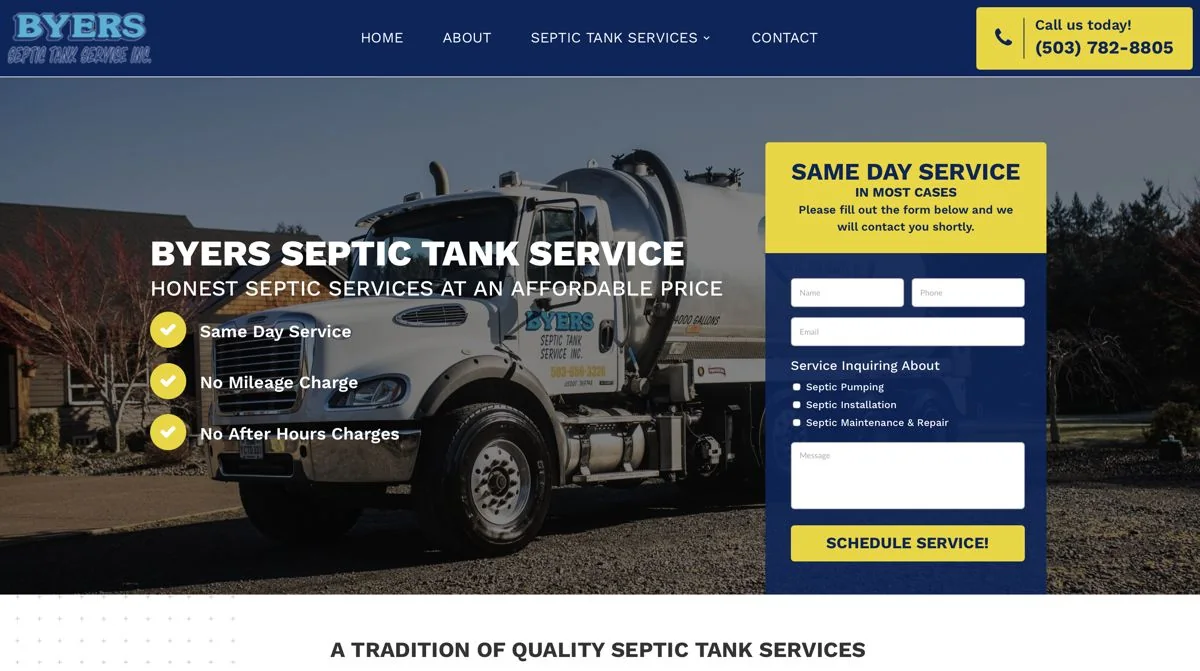
Combined septic-business website and search case
Byers Septic Service is the septic business in Lithium's combined new-website, SEO and Google Ads case. The accompanying construction-business recommendation is from Marc Rickabaugh of Rickabaugh Construction and concerns a separate website update and SEO relationship.
Septic9Xorganic traffic
91 to 799 visits a month
“We used the team at Lithium Marketing to update our website and increase our SEO. We couldn't have been happier with the results! We receive compliments about our updated website on a regular basis!”
 Marc RickabaughRickabaugh Construction
Useful destinations within accepted coverage
An electrical service page for Pasadena, Pearland or Houston should answer the questions your company receives from those Texas addresses. The same coverage review can identify useful pages for Sugar Land, The Woodlands and Conroe in Texas. Consult the Texas city directory for additional places, then connect each selected destination with the services and contact route your business approves.
Published price
$1,300–$3,000
per month
Typical local SEO retainer, scoped against what a lead is worth to you, with AI search optimization included.
FAQ

Still curious?
Call (503) 766-5964 or email [email protected].
Review the actual destinations and approved business information together. Public listings and useful service pages should describe the accepted offer and next step consistently. We inspect that route before choosing the first local-information, technical or content task.
Published SEO retainers typically run $1,300–$3,000 per month. Compare the scope with typical job value, useful inquiry-to-booking performance and any verified cost per booked job. A baseline and staff feedback help evaluate the work.
Typical planning expectations include technical fixes within 30 days, local and long-tail progress over 60–90 days, and revenue compounding from month four. Those milestones are not a promise for your business. We review starting issues, completed work and useful inquiries alongside visibility.
Useful area pages explain accepted coverage and connect customers with service content. They do not override proximity in local map results. Choose truthful destinations and review their contribution before adding more places.
Yes. The SEO retainer includes AI-search readiness through useful answers, schema and clear business information, without a guaranteed AI mention or ranking. Managed phone reception and wider automation have different agreed scopes.
Free action plan
Bring your website, approved business information and working area to a co-founder call. We can identify the first useful SEO task and the request evidence for judging it.
What we’ll cover
2000 NE 42nd Ave Ste D Unit 2370, Portland, OR 97213
Prefer to pick a time? Book a 30-minute call with DJ