
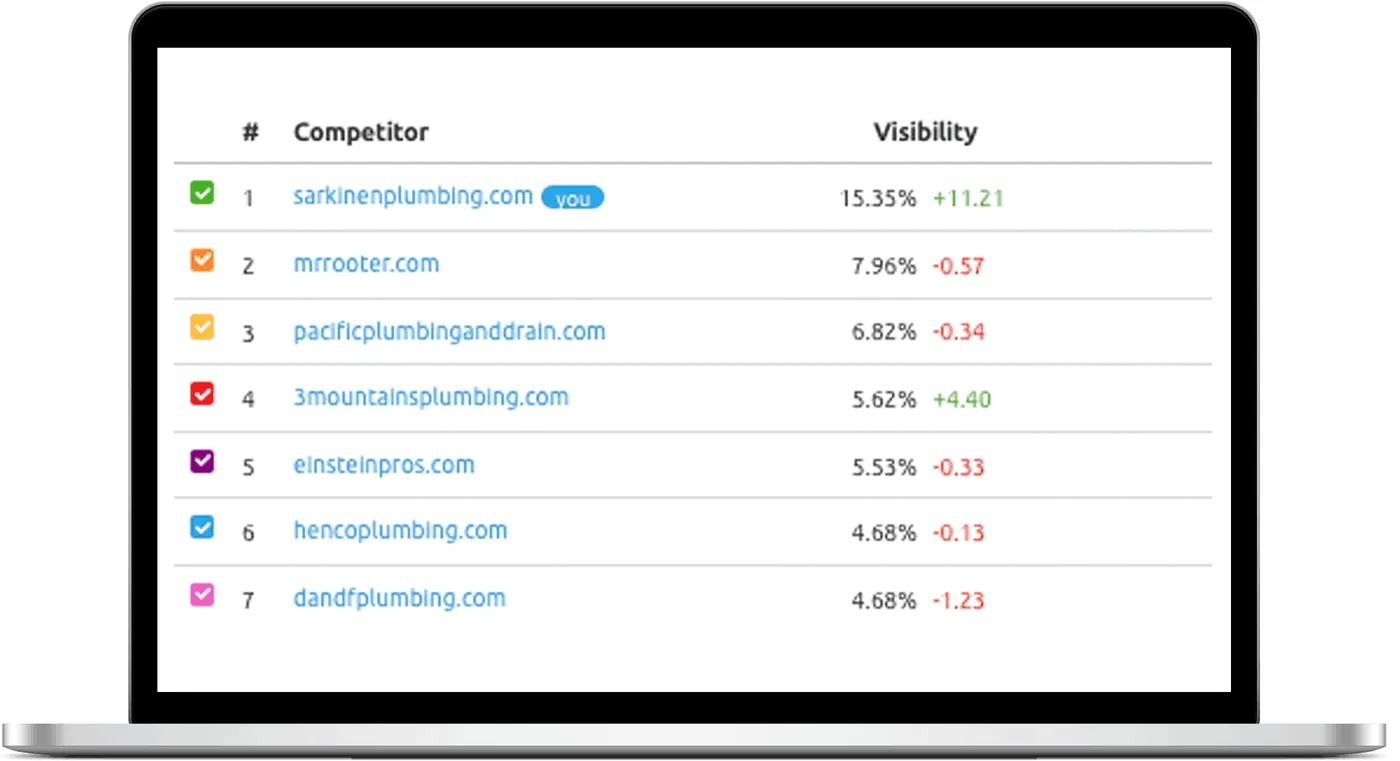
 Plumbing
Sarkinen Plumbing
2Xleads
on the same budget
- search visibility
- 3.75X
- search visibility
- ads conversion rate
- 27.37%
- ads conversion rate
Local search for Jersey City businesses
Reach customers searching for your services in Jersey City with SEO that connects page improvements to monthly call and lead reports.

 Google PartnerView our Partners listing
5.0on Google · read our reviews
Google PartnerView our Partners listing
5.0on Google · read our reviews
Businesses
we’ve worked with
Businesses we’ve worked with
Turn a search into a shortlist
Lithium Marketing helps Jersey City service businesses compete for customers through local SEO, with pages and business listings that explain the jobs they do. “Pest control jersey city” averages 390 searches a month. That demand deserves treatment-specific content and a clear booking invitation, not a passing mention on a general services page.
The same approach works across repair and project trades: answer the question behind the search, show your experience and make contact easy. We review your site and Google Business Profile together so a customer can recognize the same business and offer in both places.
Search intent and trust
The query “plumber jersey city” brings about 1,300 searches per month. Build a page around the service that matters to that searcher, then cover the related repair questions your staff hears. A roof repair or electrical page should have its own explanation, with photos and service details specific to that work.
When we checked “plumber jersey city”, the local listings displayed 90, 80 and 211 reviews. Give customers a way to review completed work and keep your replies current. Google decides which businesses appear in the Map Pack; our job is to improve the profile and website that support your business.
| Search | Searches a month | Cost per click |
|---|---|---|
| seo jersey city | 70 | not reported |
| seo company jersey city | 40 | not reported |
| seo agency jersey city | 10 | not reported |
| seo services jersey city | 10 | not reported |
Source: Google Ads keyword data, average monthly U.S. searches. "Under 10" = below Google’s reporting floor.
Source: one Google results page for “plumber jersey city”, as Google showed it to a searcher located in Jersey City. Search ad counts exclude sponsored local listings. Results shift by searcher and day.
Write from the work you do
The Heights contains mostly houses with two or three families and low-rise apartment buildings. If you work in those properties, describe the repairs or maintenance you provide and show completed jobs there. An area page earns its place by helping the customer understand your experience.
The West Side borders Greenville and the Hackensack River. Tell us which neighborhoods you serve and bring examples of the work you do there, such as plumbing repairs or garden maintenance. We use those details to explain your coverage without giving every area the same generic description.
Sources: U.S. Census Bureau 2025 population estimates, ACS 2020–2024 and 2023 County Business Patterns.
Choose a specific offer
For plumbing, heating and air-conditioning, Hudson County records 90 contractor establishments. Split out the services you perform so a buyer can find the right detail quickly. Repair, replacement and maintenance should not all have to compete for a sentence on your homepage.
Roofing has 10 contractor establishments in Hudson County. A roof business can explain its materials and repair options, while a remodeler can show the stages of a completed project. We prioritize pages by the services you sell and the searches behind them, then review which ones generate leads.
County Business Patterns
Trade and home service businesses in Hudson County
Establishments by industry, 2023
Source: U.S. Census Bureau, 2023 County Business Patterns (NAICS establishment counts).
The monthly SEO work
Your priority services set the order, and the reporting shows how customers respond.
Review your rankings, existing pages and the technical faults that prevent search engines from reading them. Prioritize problems affecting the jobs you want.
Correct Google Business Profile categories, hours and coverage details. Help your staff request customer reviews and respond to them.
Write pages with answers, project examples and contact options for the services you offer in Jersey City. Add area pages where your work supports a distinct local explanation.
Build links, correct inconsistent listings and report on search leads. Your feedback about booked work helps determine which services get more attention.
What every SEO retainer includes
The same eight parts go into every SEO retainer, wherever the business is.
Search work within a full program
For Sarkinen Plumbing in the Portland area, Lithium supplied SEO, Google Ads and a website. The case tracks search visibility and ad conversions across that work. Matt Johnson also shares a recommendation from his time running On-Target Landscape.
Plumbing2Xleads
on the same budget
“Lithium Marketing is awesome to work with and the results you’ll get are outstanding. Once I started working with them I saw increase in my online presence and my sales increased too. I would highly recommend them to anyone looking for help with marketing!”
 Matt JohnsonOn-Target Landscape
Expand search coverage deliberately
Use the SEO links to examine Newark and the other New Jersey markets, then the North Jersey overview. New York, New York, and Mount Vernon, New York, are separate cross-state markets; include them only if your company serves them. The state collection covers the remaining New Jersey cities.
Published price
$1,300–$3,000
per month
Typical local SEO retainer, scoped against what a lead is worth to you, with AI search optimization included.
FAQ

Still curious?
Call (503) 766-5964 or email [email protected].
The retainer is $1,300–$3,000 a month, with the scope set around your site’s needs and the services you want to grow. We also discuss what booked work earns your business. A price only makes sense when you understand which pages, technical fixes and local search work it pays for.
Look for progress in stages. Technical corrections usually show movement within 30 days; rankings for local and longer search phrases typically take 60 to 90 days to improve. Calls and leads belong in the monthly review alongside rankings. A page moving upward matters more when it attracts customers asking for work you can deliver.
A map listing is a starting point for the review. We check the services and areas where your business appears, then inspect the pages customers reach from it. You may need stronger service content or better conversion tracking even when your profile is visible. Rankings remain Google’s decision.
AI search preparation is included in the SEO retainer. We organize business facts, write direct answers and add structured data so search systems can interpret your services. Those changes can support visibility, but an AI citation cannot be promised. The business goal remains calls and customers.
Six months is the usual initial service term. After that, the agreement continues month to month and requires 30 days’ notice to end it. We explain the scope before work starts and use the reporting to review progress throughout that period, so you can evaluate the work as it develops.
Free action plan
Send your website and the services customers struggle to find. During a short video call, a co-founder will review the gaps with you and outline a free SEO action plan.
What we’ll cover
2000 NE 42nd Ave Ste D Unit 2370, Portland, OR 97213
Prefer to pick a time? Book a 30-minute call with DJ