
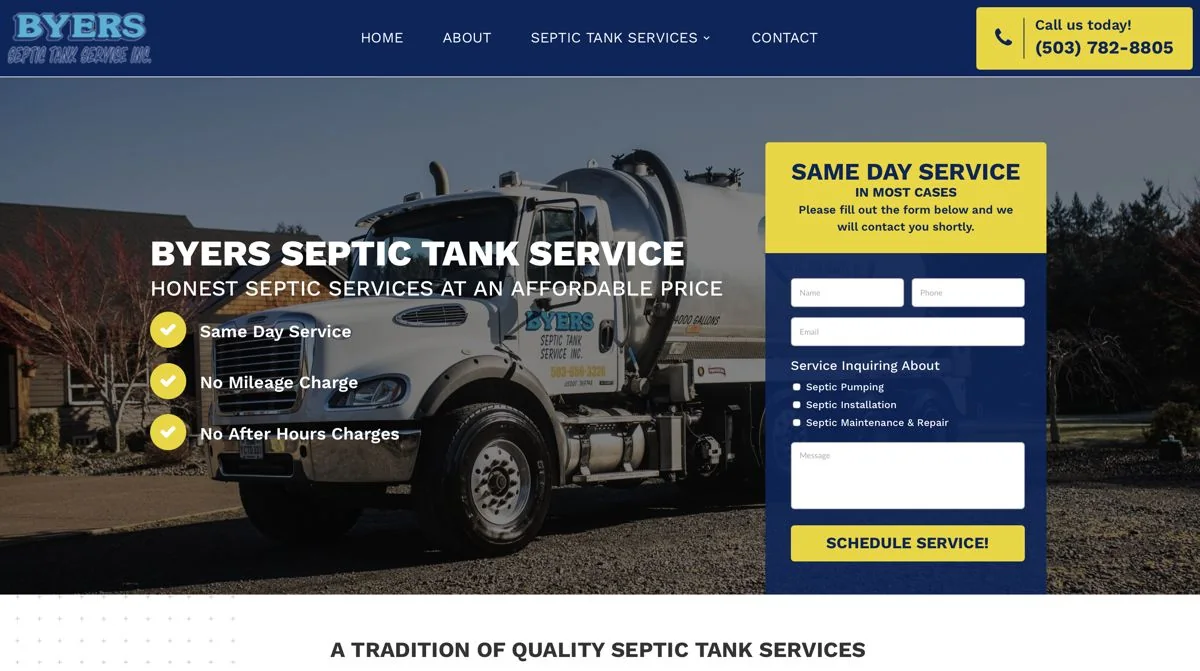
 Septic
Byers Septic Service
9Xorganic traffic
91 to 799 visits a month
- more ranking keywords (36 to 395)
- 11X
- more ranking keywords (36 to 395)
- conversion rate
- 23.1%
- conversion rate
Search engine optimization for Tampa
Reach customers searching for your Tampa services with SEO that includes AI search preparation and monthly reporting on calls and leads.
 Google PartnerView our Partners listing
5.0on Google · read our reviews
Google PartnerView our Partners listing
5.0on Google · read our reviews
Businesses
we’ve worked with
Businesses we’ve worked with
Make more of the searches already happening
Lithium Marketing helps Tampa service companies compete in local search by improving their websites, business profiles and content. For example, “pest control tampa” draws about 2,400 searches a month. A business offering several treatments needs pages that explain those treatments clearly, with a way to request help from each.
That work extends beyond a broad city keyword. We examine the searches for your services, check what your existing pages cover and prioritize the gaps that matter to your business. A roofing estimate, an electrical repair and a recurring service plan require different explanations even when the customers live on the same street.
Your listing and your website
The Map Pack appeared first when we checked “plumber tampa”. Your Google Business Profile deserves attention alongside your website: correct categories, services, photos and a service area that matches where you work. Google controls which businesses appear, so the plan also develops pages customers can find in the organic results.
During that check, the local listings displayed 1,300, 528 and 1,700 reviews. Build a repeatable way to invite customer feedback after completed jobs and respond to it. A service page should then give buyers the detail they need to choose: the problem you handle, examples of your work and what happens when they call.
| Search | Searches a month | Cost per click |
|---|---|---|
| seo tampa | 880 | $16.01 |
| seo company tampa | 590 | not reported |
| seo services tampa | 390 | not reported |
| seo agency tampa | 320 | $15.09 |
Source: Google Ads keyword data, average monthly U.S. searches. "Under 10" = below Google’s reporting floor.
Source: one Google results page for “plumber tampa”, as Google showed it to a searcher located in Tampa. Search ad counts exclude sponsored local listings. Results shift by searcher and day.
Give local pages substance
Seminole Heights, Hyde Park and Tampa Palms are Tampa neighborhoods. If you work in those areas, use completed projects and the questions customers asked to write area pages. A page about a neighborhood should help someone hire you there, with details that go beyond changing the heading on a general service page.
In Tampa city, 44.5% of housing was built before 1980. If repair or remodeling of older properties is part of your work, explain how you evaluate those projects and show examples. Keep installation and maintenance information available too, so a visitor can find the service that fits the property they have.
Sources: U.S. Census Bureau 2025 population estimates, ACS 2020–2024 and 2023 County Business Patterns.
Search work by specialty
Electrical contractors make up 388 establishments in Hillsborough County. An electrician's pages can distinguish troubleshooting, installations and other services the business sells. We organize those topics so a customer who knows the problem but not its technical name can still reach the right explanation.
The Hillsborough County count for pest control is 125 establishments. Treatment pages can answer questions about the initial visit and ongoing service, while roofers can explain inspections and replacement estimates. We select content from your offers and customer questions, with search demand helping set the order.
County Business Patterns
Trade and home service businesses in Hillsborough County
Establishments by industry, 2023
Source: U.S. Census Bureau, 2023 County Business Patterns (NAICS establishment counts).
The monthly work
Your SEO plan connects the pages Google reads with the services you want customers to request.
We compare your existing pages with the services you sell and the searches naming Tampa. The first content priorities come from gaps that could stop a customer choosing you.
We address indexing problems, broken links and slow pages, then make the page structure easier to follow. Tracking is checked so calls and forms can be included in reporting.
Your profile and directory listings need consistent contact details and a truthful service area. We also help you ask customers for reviews and respond to their feedback.
We write the service and area content, add supporting links and prepare the business information for AI search. Monthly reports guide the next work using search performance and leads.
What every SEO retainer includes
The same eight parts go into every SEO retainer, wherever the business is.
See the work in context
Byers Septic Service hired Lithium for SEO, website development and Google Ads. Its case includes the results from that broader engagement. Alongside it, Hillsview Building's Nathan Boos describes the team's service and follow-through in his own review.
Septic9Xorganic traffic
91 to 799 visits a month
“A lot of options out there for websites and SEO. I’ve worked with this team for years now and would highly recommend them. They know their stuff and deliver results. More importantly to me- they care about service and follow through on what they say they will do. Easy to work with and communicate with. Thank you!”
 Nathan BoosHillsview Building
Expand the search plan
Use the SEO guides for Brandon or Lakeland when those areas are part of your work. Links for St. Petersburg, Clearwater, Spring Hill and Orlando provide further comparisons, while the Florida page lets you explore the rest of the state.
Published price
$1,300–$3,000
per month
Typical local SEO retainer, scoped against what a lead is worth to you, with AI search optimization included.
FAQ

Still curious?
Call (503) 766-5964 or email [email protected].
The quote reflects the scope of search work and the revenue a lead can support. The typical retainer is $1,300–$3,000 a month. We review your site's condition, your service list and the areas you want to reach, then explain which work belongs in the monthly plan.
Technical improvements usually show movement within 30 days. Local and long-tail rankings typically take 60 to 90 days, with timing affected by the starting condition of your site and listings. We track calls and leads during that work so you can compare search changes with business activity.
Google chooses the businesses in its map results; a retainer cannot reserve a position. Lithium handles the work that supports your presence, including your profile, service content and listings. We agree on that work and report progress without promising a ranking or a fixed number of calls.
AI search preparation is included in our SEO service. We write direct answers, structure business information and make pages easier for search systems to read. Your company still has to be selected by those systems, so AI mentions are never promised and lead reporting remains part of the plan.
You start with the usual six-month service agreement, then continue month to month with 30 days' notice. That initial period gives the work time to develop. We review the scope and reporting with you before signing, including the services and locations the campaign will cover.
Free action plan
Send your website and the services customers struggle to find on Google. On a short video call, a co-founder will examine those gaps with you and outline a free SEO plan.
What we’ll cover
2000 NE 42nd Ave Ste D Unit 2370, Portland, OR 97213
Prefer to pick a time? Book a 30-minute call with DJ