
Clinton SEO for Businesses Built on Reputation
Make referrals and search results support the same decision.
Clinton companies often win through familiarity, but the search result still has to confirm the right fit. Lithium strengthens technical structure, service pages, profile details, reviews, and tracking so local reputation is easier to verify online.
- Classic SEO: technical foundation, on-page, content, schema
- AI Search: AEO and GEO for AI Overviews, ChatGPT, Perplexity, Claude
- Local SEO: Google Business Profile and Map Pack visibility
- Reporting tied to leads and revenue. Google Partner. 5.0 across 30+ Google reviews

Partner
A known local name can still lose a careful searcher.
Clinton businesses often rely on reputation, referrals, and practical local searches at the same time. A buyer may already know one provider by name, but the website still has to explain service fit, credibility, and the next step clearly.
“ Small-market trust still needs a page that answers plainly.
The strongest queries usually come from someone validating a choice. They may want a nearby provider, a specific service, or enough evidence to decide whether a call is worth making. Clinton MI HVAC repair or Clinton Michigan tax accountant Those visits need straightforward pages, visible contact options, accurate business information, and proof that feels connected to the service. Generic copy can make a familiar company look less capable than it really is.
A better SEO program turns local reputation into clearer digital evidence. Technical health, service copy, reviews, Google profile details, citations, and reporting all need to reinforce the same story.
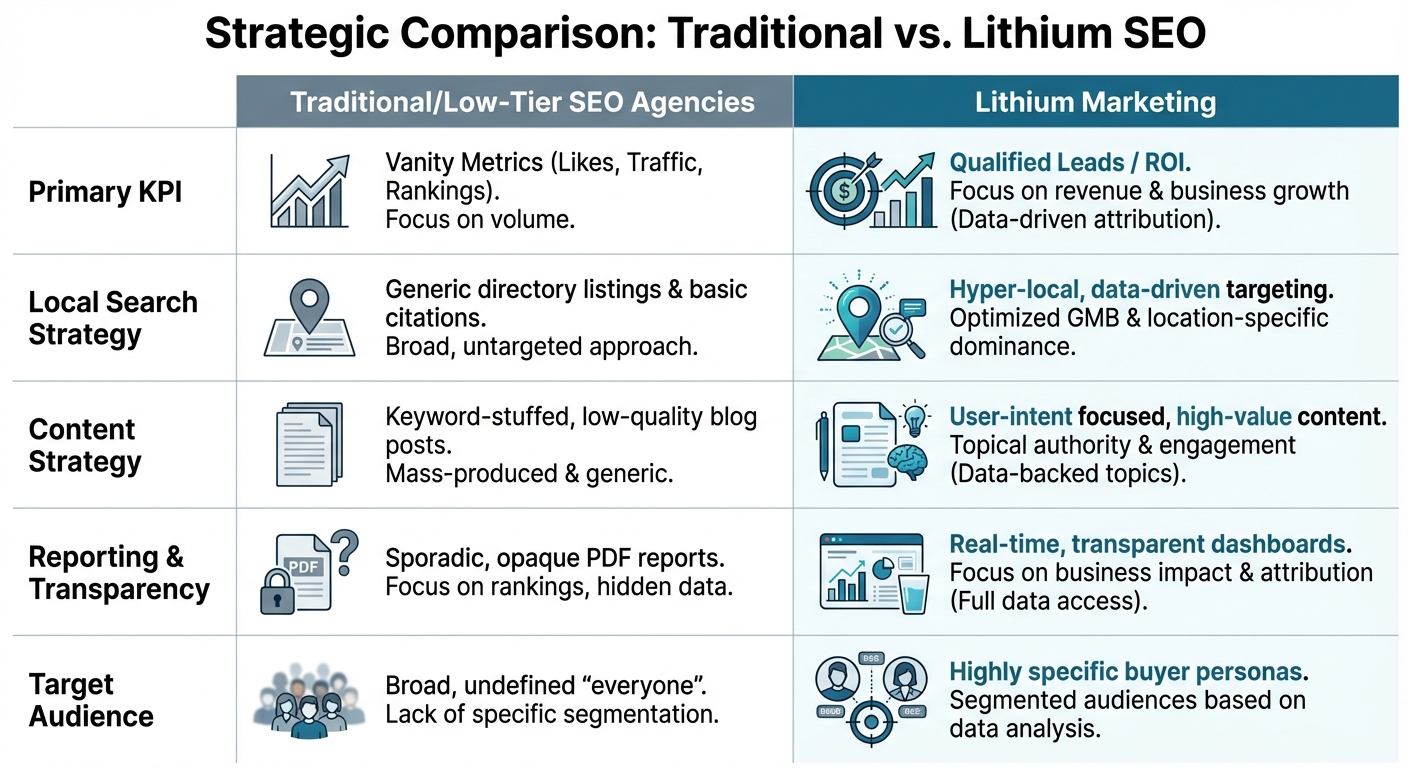
Ranking for queries that do not convert
A visitor who already has a referral may leave if the site feels slow or unclear. We check Core Web Vitals, template weight, images, scripts, and crawl access so the website supports the reputation the business has earned offline.
Technical debt blocking growth
The next step should feel simple and low-friction. Phone taps, appointment requests, short forms, and estimate prompts need to appear naturally near service information, reviews, and proof instead of only at the bottom.
Generic content that says nothing local
Local accuracy matters in a community where people compare details. Google profile categories, hours, services, citations, schema, and website language should agree so a buyer does not find conflicting information.
No measurement tied to revenue
Proof can be modest and still powerful. Reviews, owner or team context, project examples, credentials, policies, and plain explanations often do more for trust than oversized claims or thin service lists.
A clearer digital version of the reputation customers already expect.
We begin by looking for disconnects between reputation and presentation. The business may have strong word of mouth but weak service pages, confusing profile details, missing tracking, or technical issues that make the site harder to trust.
Technical SEO foundation
Technical cleanup covers the basics that quietly affect trust: broken redirects, indexation gaps, duplicate titles, missing schema, slow templates, heavy images, weak internal links, and sitemap issues that keep useful pages buried.
Mobile-first indexing readiness
Mobile review focuses on simple behavior. A person checking a referral from a phone should be able to read the service, see proof, tap to call, and submit a form without fighting menus or cramped layouts.
Keyword strategy tied to revenue per lead
Keyword research is tied to how local customers describe the work. We separate service-specific terms, referral validation searches, nearby-area phrases, and comparison queries so the site answers what people actually check.
On-page SEO depth on every page
On-page updates make each important page easier to read and easier to parse. Titles, headings, FAQs, internal links, schema, meta descriptions, and proof sections are adjusted around the customer question.
Local SEO and GBP optimization
Local profile work keeps Clinton business details dependable. Services, categories, hours, photos, reviews, and citations should match the website and describe real coverage without overextending the business.
Community-Relevant Local Authority
Authority should feel connected to the business. Local references, partner pages, professional groups, vendor listings, sponsorships, and industry mentions are more useful than broad placements that no customer would recognize.
Tracking that ties traffic to revenue
Tracking shows whether search is helping the phone ring. We configure calls, forms, GA4 events, Search Console, and dashboards so the business can see which pages and searches produce meaningful conversations.
AI search and generative engine optimization
AI search readiness is mostly clarity. Services, location, proof, credentials, hours, and process details should be written consistently so automated summaries have accurate source material to draw from.
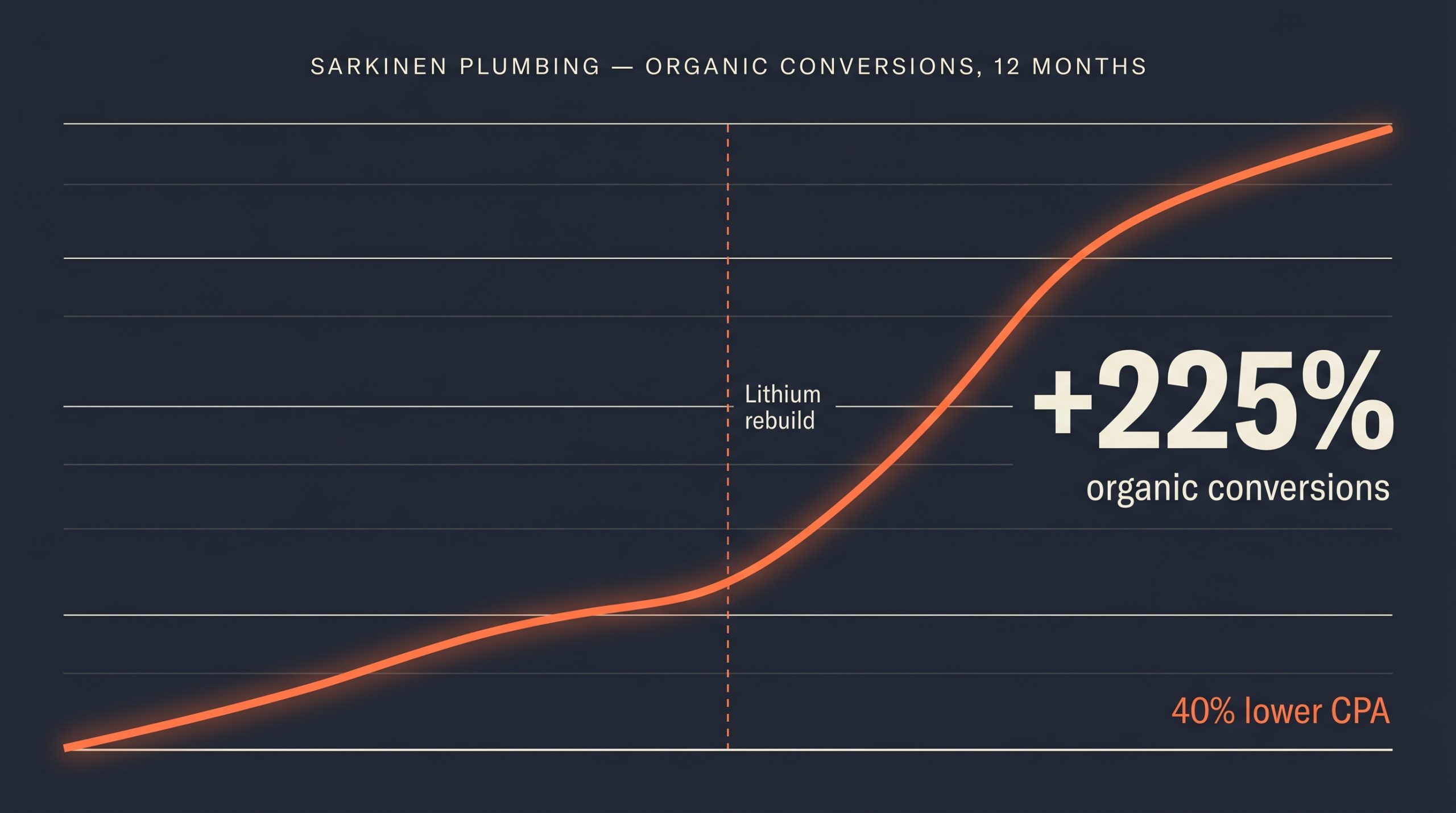
How a service business put 225% more conversions on the board with technical SEO and a content rebuild.
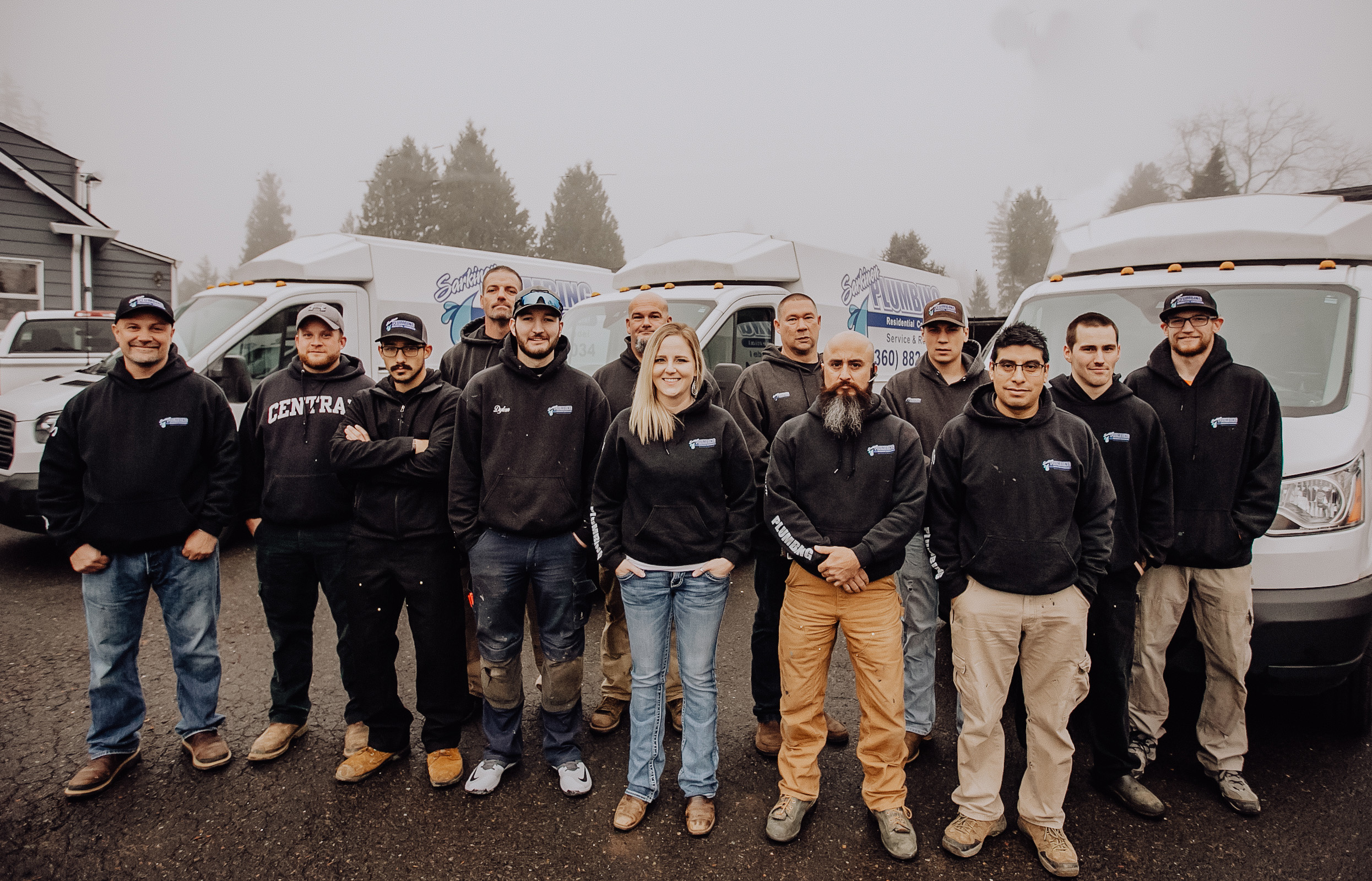
Sarkinen Plumbing is a good example of connected execution. Lithium improved service pages, resolved technical issues, strengthened the Google profile, and measured calls and forms. The work produced a 225 percent conversion increase and a 40 percent lower acquisition cost.

Local operators who need search to confirm credibility.
Clinton SEO is useful for businesses where people research before calling: trades, clinics, auto service, restaurants, retailers, advisors, and small B2B firms. The goal is to make the online proof match the real service experience.
Home-service companies need pages that respect practical urgency. HVAC, plumbing, electrical, roofing, restoration, and remodeling content should show services, service area, reviews, estimate language, and contact options without clutter.
Healthcare providers need pages that answer the questions patients check quietly. Insurance, procedures, appointment flow, provider bios, reviews, location details, and accessibility information all help reduce uncertainty.
Contractors need proof that fits the buyer’s property. Photos, materials, job types, credentials, warranties, and estimate steps help a visitor decide whether the company should be invited to quote.
Professional-service firms need pages that make expertise plain. Attorneys, accountants, consultants, agents, and advisors should explain process, fit, credentials, and next steps before a visitor schedules time.
Restaurants and hospitality businesses need accurate discovery details. Menus, hours, events, reservations, photos, parking notes, and profile updates should not send customers hunting through multiple sources.
Auto-service companies need pages that work for both urgent and planned needs. Repair, detailing, towing, glass, body work, and fleet service content should pair service detail with reviews and easy appointment actions.
Retail pages help shoppers decide whether to visit. Product categories, photos, brand notes, inventory cues, location details, reviews, and return or service policies can make a small shop easier to choose.
B2B providers need confidence-building content. Suppliers, consultants, staffing companies, and technical firms should explain capabilities, industries served, process, and follow-up without forcing prospects to decode jargon.
From audit to compounding organic traffic in ninety days, with monthly reporting tied to leads and revenue.
SEO is a compounding system, not a one-time project. The Lithium process starts with a technical audit and a keyword strategy locked to revenue per lead, then ships fixes and content on a weekly cadence with monthly reporting that ties impressions to booked work.
Discovery and full SEO audit
Discovery combines site data with business reality. We review crawl results, Search Console, GA4, profile health, ranking movement, calls, forms, and competitor pages, then compare those findings with the services that matter most.
Keyword strategy and content roadmap
The roadmap is practical and ordered. Fixes, page priorities, internal links, profile updates, content briefs, review work, and authority ideas are sequenced so the business can make progress without chasing every tactic at once.
Technical fixes and on-page work
Core Web Vitals optimization on the pages buyers actually land on, render-blocking JavaScript removal, image compression with lazy loading, schema deployment (LocalBusiness, Service, FAQPage, BreadcrumbList, Article), internal linking restructure, sitemap cleanup, and indexation pruning. Every schema change validated in Google’s Rich Results Test before it ships.
Content production and on-page SEO
Content begins with the pages customers expect: core services, locations or coverage notes, FAQs, proof pages, and conversion pages. Supporting articles are added only when they answer real questions or support important services.
Local SEO and link earning
Local work keeps the public record tidy. Google profile details, reviews, citations, categories, photos, and service descriptions are aligned so customers see the same facts wherever they check.
Measurement and monthly iteration
Reporting is written for decisions, not decoration. We review visibility, clicks, profile actions, calls, forms, landing-page behavior, technical changes, and completed work so the next month has a clear reason.
Engineered to surface in Google AI Overviews, ChatGPT, Perplexity, and Claude.
Search, answer, and generative systems all need dependable information. Clear services, consistent names, direct answers, and structured data make it easier for both people and machines to understand the business.
Quotable answer blocks
Helpful answer copy starts with the answer a customer needs, then adds detail. This keeps the page readable for busy visitors and gives search systems a clean passage to evaluate.
Fact density and citations
Specificity makes a small-market page stronger. Service boundaries, appointment details, credentials, photos, review themes, and plain pricing context can give a buyer enough confidence to call.
Schema for generative engines
Schema supports the facts already on the page. LocalBusiness, Service, FAQ, breadcrumb, article, and review markup are selected where they fit, then checked for clean output.
Brand consistency across the web
A consistent public footprint matters. Website pages, Google profile content, reviews, directory listings, social profiles, and community references should not describe different versions of the same Clinton business.
Topical authority and entity coverage
Topical depth should feel useful, not padded. Service pages, FAQs, examples, internal links, and supporting guides are connected around the questions customers ask before they trust a provider.
llms.txt + AI crawler controls
Machine-readable guidance can support the broader search strategy. llms.txt, robots.txt, and clear source pages help explain how automated crawlers should approach the site’s important content.
How Clinton SEO approaches compare.
Service businesses Lithium has driven SEO results for.

Willard Power Vac
“Lithium Marketing has been amazing for our business. They have greatly increased our web traffic and helped us land hundreds of jobs.”
Drake’s 7 Dees
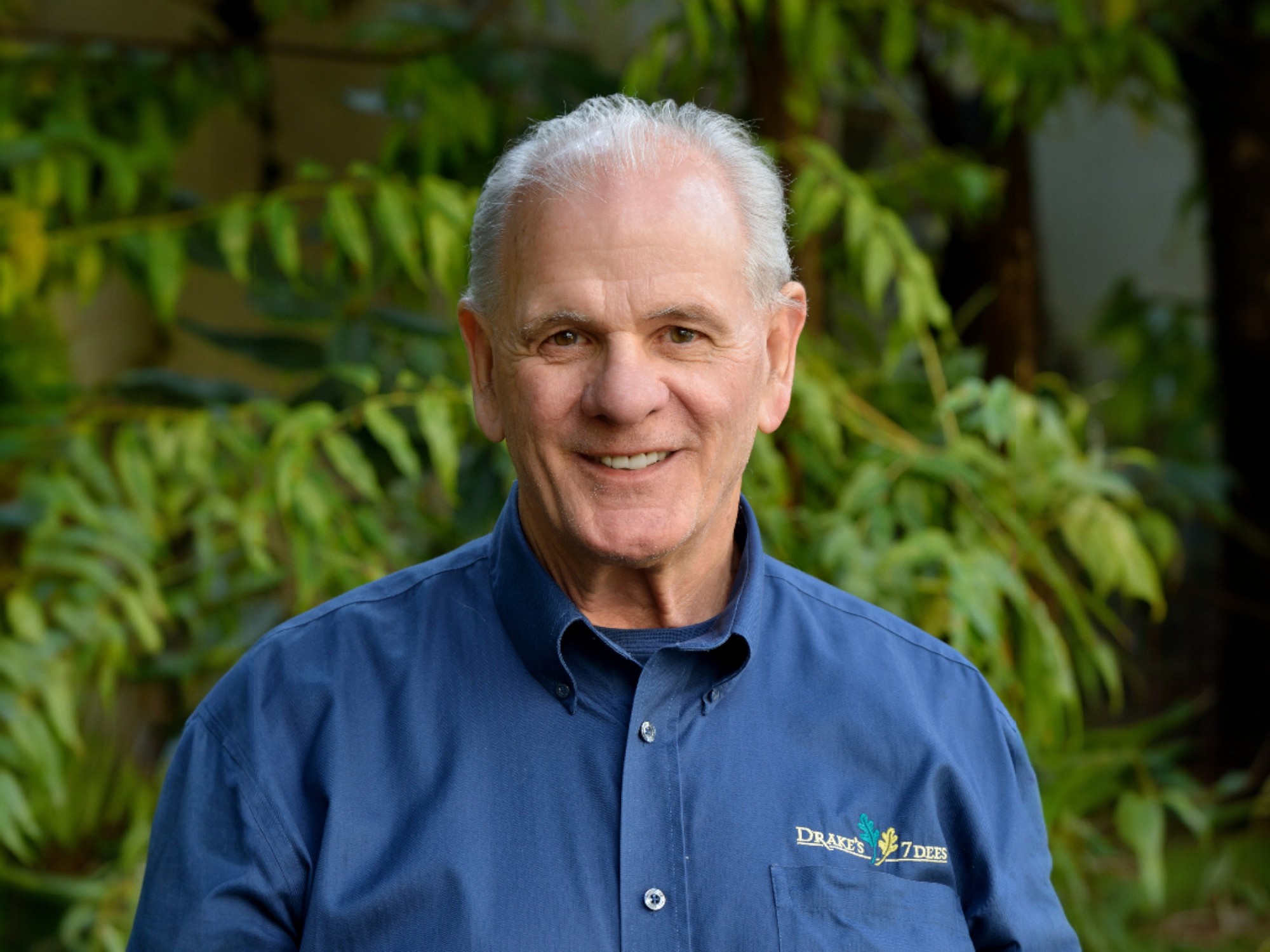
“Lithium has moved us to page 1 in Google search organically.”
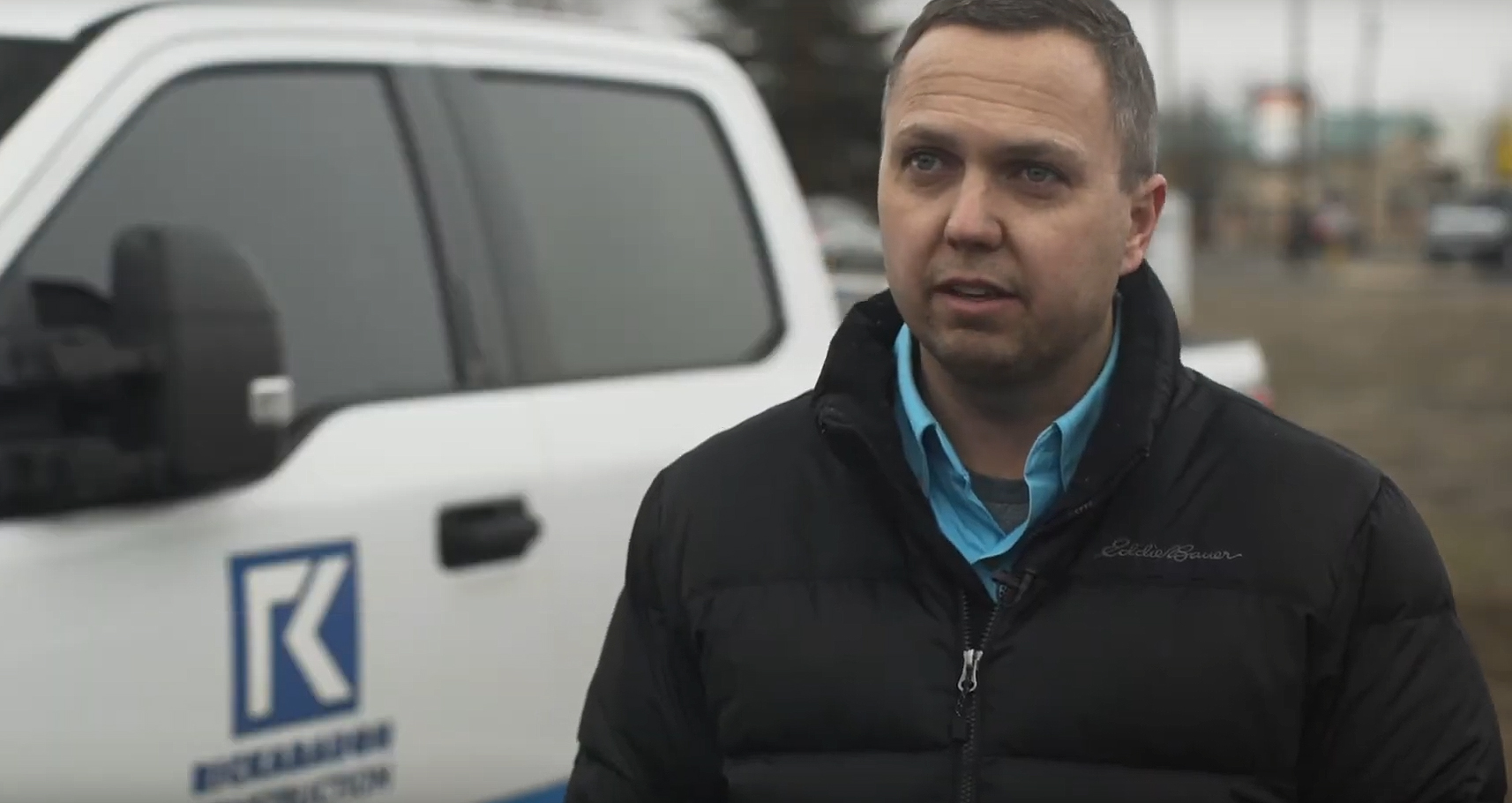
Rickabaugh Construction
“Working with Lithium Marketing has been awesome.”
Clinton SEO questions, answered plainly.
Early movement can appear in 60 to 90 days if the main issues are technical barriers, thin pages, or incomplete profile details. Harder searches usually take longer because content, reviews, local consistency, and authority need steady improvement.
Paid search can help test service offers quickly, especially when a business needs inquiries while SEO matures. Organic work then turns the best findings into stronger pages, clearer profile data, and content that keeps supporting future searches.
Many local service retainers land between $1,300 and $3,000 per month. Scope depends on site health, competition, service-page needs, profile cleanup, review support, reporting depth, and how valuable each qualified inquiry is to the business.
No honest SEO program can guarantee a specific ranking. It can guarantee completed work, clear reporting, and a strategy tied to the business goal. Search results still shift because Google, competitors, reviews, and customer behavior change.
SEO is classic organic visibility. AEO is direct-answer usefulness. GEO is clarity for generative systems. In practice, all three depend on accurate facts, well-structured pages, useful answers, schema, and public information that stays consistent over time.
Useful measurement includes impressions, clicks, profile activity, calls, forms, appointments, landing-page conversion rate, and organic activity in GA4. The report should explain what work was completed and whether the right actions are improving month to month.
A retainer may include monitoring, technical fixes, page updates, content writing, Google profile management, citation cleanup, review support, relevant mentions, reporting, and strategy calls. The mix depends on where the account is weakest in local search.
Yes, but the early focus should be foundational. A new business needs a crawlable site, accurate profile, citations, first reviews, core service pages, and realistic lower-competition targets before it can pursue harder terms with clearer proof.

Your SEO strategy call is led by DJ Van Zanten.
DJ Van Zanten co-founded Lithium in 2018 and leads client strategy. During the review, he connects SEO findings to business priorities while Kurt Schell guides technical and content execution from more than two decades of digital marketing work.
Get a free 30-minute Clinton SEO review.
The review covers Core Web Vitals, crawl health, organic keywords, Google profile accuracy, backlink quality, schema, indexation, and content gaps against relevant competitors. You leave with a written priority list whether or not Lithium is the right fit.
- No-obligation 30-minute call with DJ Van Zanten, not a junior
- Written priority list of the top 5 to 10 changes that will move leads
- Google Partner with a 5.0 rating across 30+ Google reviews