
 Commercial glass
Town & Country Glass
13Xorganic traffic
145 to 1,849 visits a month
- top-3 rankings, up from 1
- 109
- top-3 rankings, up from 1
- Google Ads conversion rate
- 29.9%
- Google Ads conversion rate
Search visibility for Tulsa trades
Reach customers searching for your services in Tulsa with SEO that includes monthly lead reporting and content built for AI search.

 Google PartnerView our Partners listing
5.0on Google · read our reviews
Google PartnerView our Partners listing
5.0on Google · read our reviews
Businesses
we’ve worked with
Businesses we’ve worked with
Start with a service people search for
Lithium Marketing improves search visibility for Tulsa service businesses through their websites, business profiles and listings. Consider the 1,600 searches a month for “pest control tulsa”: a company selling those services needs pages that explain its treatments and how to arrange a visit. Your SEO plan begins with the jobs you want customers to find.
The work applies across home services, including roofing, plumbing and electrical. We check what Google can read, which services lack a strong page and how your business appears in local listings. Then we connect that work to calls and quote requests so you can judge progress in terms your business uses.
The results your customer compares
“Roofing company tulsa” also attracts about 1,600 monthly searches. A roof repair page and a replacement page answer different buying questions, even when both sit under the same broad search term. We write around your services, project experience and estimate process, with direct answers that search engines can read.
When we checked “plumber tulsa”, the Map Pack businesses had 757, 6,400 and 704 reviews. Yelp and the Better Business Bureau also appeared among the organic results. Your plan should include a way to ask customers for reviews and a check for outdated contact details across those listings. Google controls placement; the work is to make your business accurately described and easier to evaluate.
| Search | Searches a month | Cost per click |
|---|---|---|
| seo tulsa | 260 | $23.80 |
| seo company tulsa | 210 | not reported |
| seo services tulsa | 90 | not reported |
| seo agency tulsa | 20 | not reported |
Source: Google Ads keyword data, average monthly U.S. searches. "Under 10" = below Google’s reporting floor.
Source: one Google results page for “plumber tulsa”, as Google showed it to a searcher located in Tulsa. Search ad counts exclude sponsored local listings. Results shift by searcher and day.
Coverage customers can recognize
Tulsa city covers about 197.7 square miles of land. Put your service coverage in plain language, especially if some jobs are available only in part of that area. We can build pages around the locations you serve, adding completed projects and answers that help a customer decide to contact you.
Maple Ridge, Swan Lake, Cherry Street, Brookside and Lortondale are Midtown neighborhoods. If you work in them, a Midtown service page can draw on your own job photos and customer questions. A neighborhood name earns its place when it helps explain coverage or a project, so area pages need more than a changed heading.
Sources: U.S. Census Bureau 2025 population estimates, ACS 2020–2024 and 2023 County Business Patterns.
Make your specialty visible
Painting contractors make up 72 establishments in Tulsa County. An interior repaint, exterior project and cabinet finish each deserve an explanation if you sell them. Search content should let a customer identify the job they need and see examples before requesting an estimate.
The electrical category contains 182 Tulsa County establishments. A business offering both troubleshooting and installations can organize those services separately, with the right profile categories and consistent contact details. That approach gives the owner control over which work the site emphasizes as the business grows.
County Business Patterns
Trade and home service businesses in Tulsa County
Establishments by industry, 2023
Source: U.S. Census Bureau, 2023 County Business Patterns (NAICS establishment counts).
What happens inside the retainer
The starting point is your existing website and listings; we preserve strong pages and concentrate on the gaps.
We inspect crawl access, page speed and existing rankings, then identify services that need better content or a clearer place on the site.
We review your profile, service categories and directory records. A review request process helps your team ask customers for feedback after a job.
You supply service details and completed projects. We turn them into service and area pages, with schema and internal links that explain how they relate.
Monthly reporting covers search performance and leads. Your feedback on the jobs coming in helps determine the next content and link-building work.
What every SEO retainer includes
The same eight parts go into every SEO retainer, wherever the business is.
Search as part of a wider program
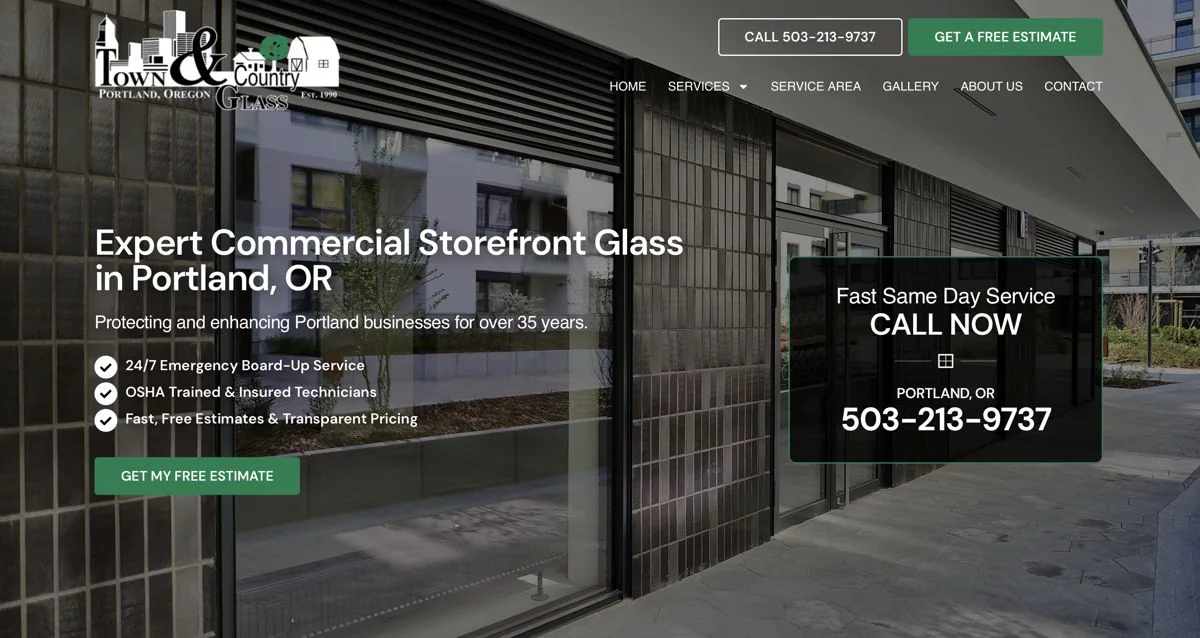
For Portland's Town & Country Glass, Lithium built a website and handled SEO and Google Ads; the case covers that full program. Nathan Boos of Hillsview Building describes his experience working with the team on websites and SEO in the quote beside it.
Commercial glass13Xorganic traffic
145 to 1,849 visits a month
“A lot of options out there for websites and SEO. I’ve worked with this team for years now and would highly recommend them. They know their stuff and deliver results. More importantly to me- they care about service and follow through on what they say they will do. Easy to work with and communicate with. Thank you!”
 Nathan BoosHillsview Building
Extend the search plan
Check Broken Arrow, Edmond and Oklahoma City if those Oklahoma markets are part of your coverage. Separate SEO pages cover Fayetteville, Arkansas, Springdale, Arkansas, and Rogers, Arkansas; the state link opens the rest of the Oklahoma locations.
Published price
$1,300–$3,000
per month
Typical local SEO retainer, scoped against what a lead is worth to you, with AI search optimization included.
FAQ

Still curious?
Call (503) 766-5964 or email [email protected].
The proposal reflects your site's starting condition, competition, service coverage and revenue per lead. A few weak service pages require a different workload from a full site with technical problems and several markets to reach. We explain where your business falls within the published range before you hire us.
Look for technical improvements, stronger visibility for your services and a growing record of search leads. Around 30 days is the usual starting point for movement from technical fixes. Local and long-tail search improvements generally take 60 to 90 days. Monthly reports show progress against those expectations without promising a ranking.
It can use accurate service pages and its existing business profile to pursue searches in the areas it serves. We describe your coverage truthfully and build content around work you can perform there. Google decides map visibility, so a service-area page should also be strong enough to answer a buyer's question on its own.
AI search work is included with SEO. We structure answers so they are easy to read, add schema and keep business facts consistent across the site. The work also strengthens pages for people comparing contractors. AI tools choose their own sources, so a citation is never part of the promise.
We need accurate service details, examples of completed work and the questions customers ask before hiring. You review the technical claims for accuracy while we handle the writing. Your staff's feedback about which leads fit the business helps us refine the pages over time.
Free action plan
Send the service you struggle to get found for, the areas you cover and your site's address. During a short video call with a co-founder, we will compare that goal with your existing pages and listings. You leave with a free SEO work plan.
What we’ll cover
2000 NE 42nd Ave Ste D Unit 2370, Portland, OR 97213
Prefer to pick a time? Book a 30-minute call with DJ