
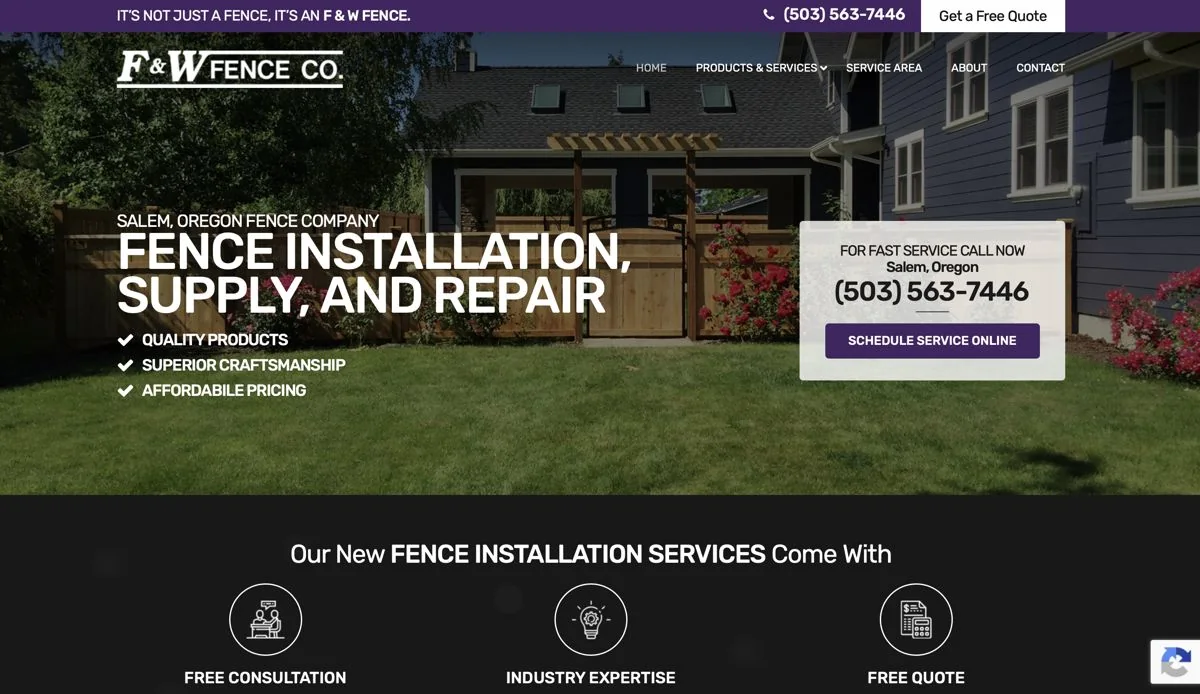
 Fence
FenceF&W Fence Co.
4Xmore ranking keywords
190 to 745 keywords
- top-3 rankings (3 to 28)
- 9X
- top-3 rankings (3 to 28)
- core search conversion rate
- 27.78%
- core search conversion rate
Help customers find the building service behind the home
Help Midland home-building prospects find the construction offer your business accepts with SEO that explains the first project discussion.
 Google PartnerView our Partners listing
5.0on Google · read our reviews
Google PartnerView our Partners listing
5.0on Google · read our reviews
Businesses
we’ve worked with
Businesses we’ve worked with
A finished home can illustrate a hireable service
Lithium Marketing helps a Midland home builder explain the construction service behind its completed-home listings. A visitor may see an attractive finished property without knowing whether the company accepts a separate building project. We make the actual offer discoverable and give that customer a clear first discussion route.
Midland County has 43 home-building establishments. Your own service page can identify the construction relationship you accept and show genuine examples of the delivered work. The visitor gets a hiring answer as well as a home photograph, making the received project conversation more useful to the company.
Make the business service searchable beside the property
We research the building questions your accepted customers ask, then improve service-page access, indexing, internal links and accurate local business information. Relevant project content explains the company's contribution and how the initial discussion starts. A finished-property page can retain its own purpose while the construction service has a clear destination.
Included AI-search preparation uses direct answers, schema and consistent business facts within SEO. Reporting connects the agreed work with tracked inquiries and staff feedback on project purpose. Search positions and AI appearances cannot be promised; the company receives evidence of what was completed and the requests it prepared.
| Search | Searches a month | Cost per click |
|---|---|---|
| seo company midland | 10 | not reported |
| seo midland | 10 | not reported |
| seo agency midland | under 10 | not reported |
| seo services midland | under 10 | not reported |
Source: Google Ads keyword data, average monthly U.S. searches. "Under 10" = below Google’s reporting floor.
Source: one Google results page for “plumber midland”, as Google showed it to a searcher located in Midland. Search ad counts exclude sponsored local listings. Results shift by searcher and day.
Put genuine building experience beside a clear offer
For real completed-home examples in Midland, where 28.3% of housing was built in 2010 or later, we can describe the building work your company delivered. Identify the project's actual relationship and the first customer question. Another visitor sees service evidence without assuming the photographed property is currently available to buy.
A supplied county home example can likewise explain the construction contribution in Midland County, where 30.2% of housing was built in 2010 or later. The page should state the actual offer and give the customer a route to discuss their own project, instead of treating every completed-home image as a property listing.
Sources: U.S. Census Bureau 2025 population estimates, ACS 2020–2024 and 2023 County Business Patterns.
Prepare the project conversation the builder accepts
With owner-occupied homes making up 65.1% of Midland's occupied housing, a useful project inquiry can identify the customer's present property relationship and the home they want to discuss. The service explanation should make clear what the company invites them to request without assuming that owning a home establishes a building site.
For accepted county conversations, where owner-occupied housing represents 67.6% of Midland County's occupied homes, keep the person's role and intended project in the request. Staff can then review the actual building question rather than interpreting interest in an image as a ready property purchase.
County Business Patterns
Trade and home service businesses in Midland County
Establishments by industry, 2023
Source: U.S. Census Bureau, 2023 County Business Patterns (NAICS establishment counts).
Make construction discovery distinct from a listing visit
Explain the accepted building service, connect genuine evidence and assess the useful project requests.
Identify where a visitor sees the property but cannot find the construction service invitation.
Use the company's approved offer and genuine contribution to prepare the initial project conversation.
Small portions of Midland extend into Martin County. Retain the actual property and accepted territory instead of inferring a project's county from the city name.
Review tracked calls and forms with staff to distinguish project questions from interest in a listed home.
What every SEO retainer includes
The same eight parts go into every SEO retainer, wherever the business is.
Fence search work and historical landscape-business testimony
The case illustration is F&W Fence Co.'s combined website design, SEO and Google Ads work for its fence business. Matt Johnson supplies the separate historical owner account from the former On-Target Landscape business about his experience with Lithium Marketing.
Fence4Xmore ranking keywords
190 to 745 keywords
“Lithium Marketing is awesome to work with and the results you’ll get are outstanding. Once I started working with them I saw increase in my online presence and my sales increased too. I would highly recommend them to anyone looking for help with marketing!”
 Matt JohnsonOn-Target Landscape
Give the building offer its own coverage answer
Texas's SEO directory connects Midland with Odessa, San Angelo, Lubbock and Abilene. The builder's accepted project territory should be stated alongside its actual construction service, so a customer can check coverage before starting a discussion. The property's own location remains part of that request.
Published price
$1,300–$3,000
per month
Typical local SEO retainer, scoped against what a lead is worth to you, with AI search optimization included.
FAQ

Still curious?
Call (503) 766-5964 or email [email protected].
Yes, their property purpose can remain clear while the building service has its own destination. A visitor should be able to distinguish viewing a home from asking about construction.
The page can invite the initial project discussion your company accepts. It should keep open choices understandable rather than treating a pictured home as the customer's chosen specification.
Technical fixes usually move within 30 days, local and long-tail rankings typically take 60 to 90 days, and revenue compounding can begin from month four. Starting visibility, competition and completed work affect timing; search positions and inquiries cannot be promised.
Compare project value and the fraction of qualified inquiries you book with verified cost per acquired job. Actual marketing cost and confirmed booked work over a consistent period give the proposed scope a business test.
Yes, direct service answers, schema and consistent business information are included within the retainer. That preparation cannot guarantee an AI mention or search appearance.
Free action plan
Bring the building service you accept and a completed-home page to a short video call with a co-founder. We'll identify the search explanation that helps a prospect distinguish your construction offer from a property listing.
What we’ll cover
2000 NE 42nd Ave Ste D Unit 2370, Portland, OR 97213
Prefer to pick a time? Book a 30-minute call with DJ